
TL;DR

Get workout gear delivered free with Prime
- Fast, free delivery on millions of items
- Prime Video, Amazon Music and more included
- Member-only deals all year
Fit&Well published a yoga therapist’s seven-part seated movement sequence aimed at older adults and people who prefer or need chair-based exercise. The routine includes breathing, arm raises, twists, side bends and spinal movements; the therapist advises adapting each movement to individual capacity. The source does not provide clinical evidence, safety screening guidance or details about the therapist’s credentials.
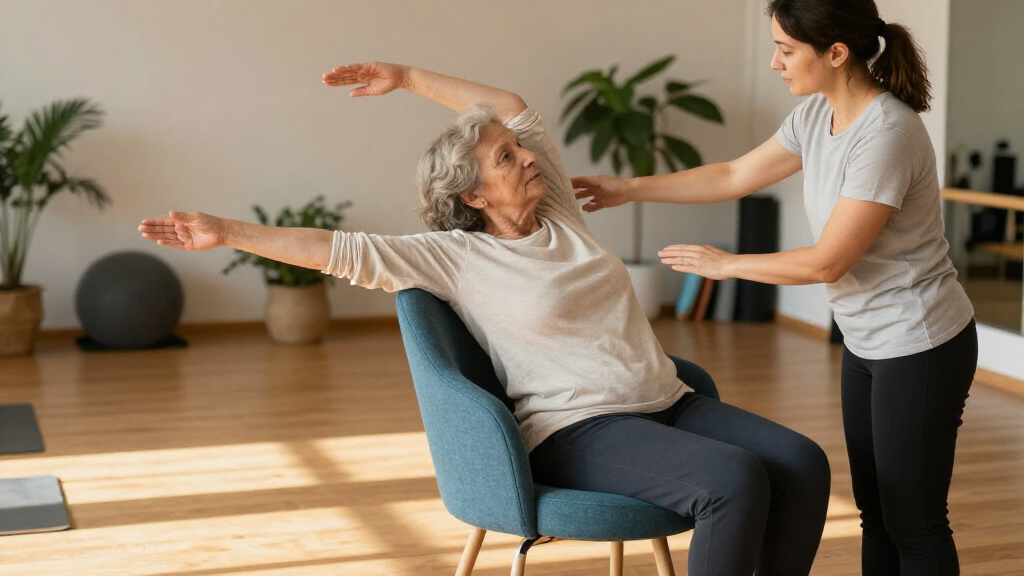
Fit&Well has published a seven-part chair-based movement sequence recommended by a yoga therapist who works with older adults, including people living with Parkinson’s, other movement disorders and chronic health conditions. The routine uses a sturdy chair and offers gentle seated movements for readers who do not have the mobility for floor-based exercise or feel more comfortable moving while seated.
The therapist describes using chair-based yoga with people who have limited mobility as well as those who simply prefer a chair. The sequence begins with one minute of settling: sit toward the back of a chair with feet flat, hands on the lap and shoulders relaxed, then allow the breath to find a natural rhythm.
The remaining movements are an arm sweep into prayer, seated torso twists, single and double arm raises, side bends, a seated cat-cow movement and a forward fold. Most are suggested for three to five repetitions, with twists and side bends performed three times on each side. The article says to move with the breath, but does not require a particular posture or range of motion.
Several options make movements easier: a person can hold the chair during a side bend for stability or rest their hands on their knees during the forward fold. The therapist says the routine requires a sturdy chair and enough clear space to raise the arms. These are recommendations in the Fit&Well report, not a finding from a clinical trial.
Seated Movement Without Floor Work
The sequence offers a practical alternative for people who find getting down to and up from the floor difficult, or who want to exercise from a supported position. Its instructions focus on accessible movement rather than achieving a standard pose, which may help readers understand that the exercises can be adapted instead of performed in one fixed way.
The therapist says participants in their groups stretch muscles, mobilize joints and feel calmer through mindful movement, and may leave feeling rested and uplifted. Those are the therapist’s descriptions of their experience, not independently verified outcomes or a promise that the sequence will produce the same effects for everyone. The report does not establish that the movements treat Parkinson’s or other health conditions.
For older adults and people with long-term conditions, the emphasis on a chair and optional supports may make the instructions easier to approach. Still, the article does not include an individualized assessment or advice for people whose balance, pain or other symptoms could affect safe participation.
Products Worth Considering

Garmin Forerunner 165 GPS Running Smartwatch, 43 mm, Black

BowFlex Results Series SelectTech Adjustable Dumbbells (Pair)

Garmin Venu® 3 Premium Fitness Smartwatch 45mm Black
As an affiliate, we earn on qualifying purchases.
How the Seven Moves Work
The routine progresses from settling into movement to broader stretches of the upper body and torso. After the opening breathing pause, participants sweep their arms overhead and bring their palms together, then rotate the torso gently from side to side. The arm-raise section alternates between lifting one arm and raising both.
Next come side bends, followed by seated cat-cow: the participant moves between lifting the chest and rounding the back. The final forward fold involves raising the arms and then hinging the upper body forward over the legs. The source recommends looking up at the hands only if comfortable, and gives chair or knee support as modifications.
The therapist says their work includes older adults with Parkinson’s, movement disorders and chronic health conditions, and characterizes the postures as gentle. The source does not name the therapist in the supplied material or provide a detailed schedule, study results or a formal exercise prescription.
“There’s no particular shape or position to achieve.”
— The yoga therapist, as quoted in Fit&Well
Safety and Evidence Not Specified
The supplied report does not identify the therapist by name or include information about their qualifications beyond describing them as a yoga therapist. It also does not cite research testing this particular sequence or quantify its effects on mobility, mood or health.
Readers are not given screening instructions for conditions that may affect safe movement, including pain, balance difficulties or restrictions advised by a clinician. The article encourages people to stay within their own capacity, but does not say how to adjust or stop if a movement causes discomfort. Individual suitability is not established by the report, and its recommendations should not be read as treatment advice.
Adapting the Routine Safely
The Fit&Well article presents the sequence as something readers can try with a sturdy chair and clear space, but reports no planned follow-up study or further milestone. Anyone considering the movements can use the stated options—such as holding the chair during a side bend—and keep the range comfortable rather than forcing a stretch.
People with pre-existing conditions, pain, balance concerns or specific movement restrictions can seek guidance from a qualified health professional before trying the routine. The report does not say whether Fit&Well or the therapist will publish additional safety advice, evidence or modifications.
Key Questions
How many movements are in the chair routine?
The sequence has seven parts: settling and breathing, an arm arc into prayer, twists, arm raises, side bends, cat-cow and a forward fold.
What equipment and space are needed?
The report calls for a sturdy chair and enough clear space around it to raise the arms comfortably. It does not list additional equipment.
Are the exercises intended only for people with Parkinson’s?
No. The therapist says they use chair-based yoga with older adults, people with Parkinson’s and other movement disorders or chronic conditions, as well as anyone who prefers seated movement. The report does not claim the routine is suitable for every person in those groups.
What modifications does the article suggest?
For a side bend, hold the side of the chair if extra stability is needed. During a forward fold, place the hands on the knees for support. The therapist also advises moving within the range and capacity available to each person.
Does the report show that the routine improves health?
No clinical results are presented. The therapist describes participants as feeling stretched, calmer, rested and uplifted, but those observations are not supplied as independently tested outcomes.
Source: fitandwell.com