
TL;DR

Get workout gear delivered free with Prime
- Fast, free delivery on millions of items
- Prime Video, Amazon Music and more included
- Member-only deals all year
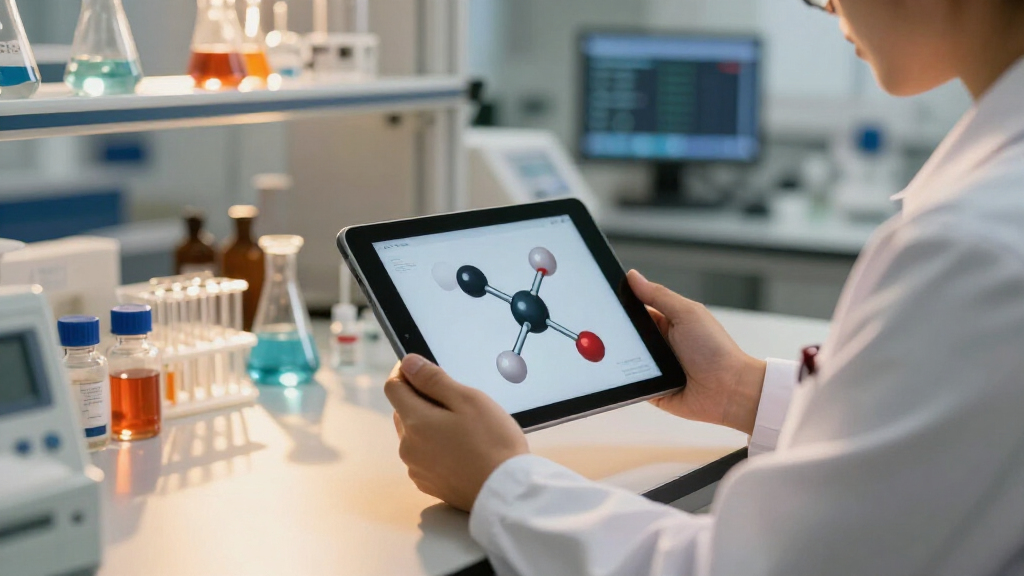
AI is increasingly used in drug discovery, with recent breakthroughs enhancing efficiency. However, challenges remain before widespread adoption. This report explores current progress and future directions.
Artificial intelligence is now a key tool in drug discovery, with recent breakthroughs demonstrating its potential to accelerate the identification of new compounds. These developments matter because they could significantly shorten the timeline for bringing new medicines to market and reduce costs, according to industry experts.
Several pharmaceutical companies and AI firms have reported successful applications of AI algorithms to predict drug-target interactions, optimize compound structures, and streamline clinical trial planning. Notably, in early 2024, a collaboration between DeepMind and GlaxoSmithKline resulted in the identification of a promising candidate for a rare disease, showcasing AI’s capacity to enhance traditional drug discovery processes.
Experts say these advances are supported by improvements in machine learning models, increased availability of biological data, and computational power. However, they also acknowledge that AI tools are not yet fully integrated into routine drug development workflows, and regulatory approval processes remain complex for AI-designed drugs.
Why AI’s Role in Drug Discovery Matters for Healthcare Innovation
AI’s growing role in drug discovery could revolutionize healthcare by enabling faster development of new treatments, especially for rare and complex diseases. This has the potential to reduce costs, improve success rates in clinical trials, and bring effective medicines to patients more quickly. However, it also raises questions about regulatory standards, data privacy, and the need for rigorous validation of AI-driven predictions, which are crucial for safe implementation.
As an affiliate, we earn on qualifying purchases.
Recent Advances and Industry Efforts in AI-Driven Drug Research
Over the past few years, AI has transitioned from experimental to increasingly practical in the pharmaceutical industry. Major firms like Pfizer and Roche have invested heavily in AI capabilities, integrating machine learning for target identification and drug repurposing. The COVID-19 pandemic accelerated interest and investment, highlighting AI’s potential to speed up responses to emerging health crises.
Recent collaborations, such as the one between DeepMind and GlaxoSmithKline, exemplify the trend of cross-sector partnerships aimed at harnessing AI’s power. Despite these advances, many AI models still face challenges related to data quality, interpretability, and regulatory acceptance, which slow broader adoption.
As an affiliate, we earn on qualifying purchases.
Unresolved Challenges and Regulatory Barriers to Widespread Adoption
While AI has demonstrated potential, it is not yet clear how quickly regulatory agencies will adapt to AI-designed drugs. Data quality and reproducibility of AI predictions remain concerns, and there is ongoing debate about validation standards. Additionally, the long-term safety and efficacy of AI-optimized compounds are still being evaluated, making widespread acceptance uncertain.
As an affiliate, we earn on qualifying purchases.
Next Steps for Integrating AI into Mainstream Drug Development
Researchers and industry stakeholders are working to establish regulatory guidelines for AI-driven drugs, with pilot programs and pilot approvals underway in some regions. Future efforts will likely focus on standardizing validation procedures, expanding high-quality biological datasets, and fostering collaborations between tech companies and regulators. Monitoring these developments over the next 12-24 months will be crucial to understanding how quickly AI can be fully integrated into drug discovery pipelines.
As an affiliate, we earn on qualifying purchases.
Key Questions
How is AI currently used in drug discovery?
AI is used to predict interactions between drugs and targets, optimize chemical structures, identify new drug candidates, and streamline clinical trial design, among other applications.
What are the main challenges facing AI in drug discovery?
Key challenges include data quality and availability, model interpretability, regulatory approval processes, and ensuring the safety and efficacy of AI-designed compounds.
Will AI replace traditional drug discovery methods?
AI is expected to complement and accelerate traditional methods rather than replace them entirely, helping to reduce development timelines and costs.
What role will regulators play in AI-driven drug development?
Regulators are working to develop standards and guidelines for validating AI-based predictions and ensuring safety, which will be critical for widespread adoption.
When can we expect AI to be fully integrated into routine drug discovery?
Full integration is likely within the next 3-5 years, pending regulatory developments, validation standards, and industry adoption efforts.
Source: hn
Fall Picks
fall essentials
As an affiliate, we earn on qualifying purchases.