TL;DR
Adjustable dumbbell sets combine multiple weight options into a compact handle-and-weight system, making them useful when you want a range of loads without a full rack of fixed dumbbells. Compare weight range and increments, adjustment speed, shape, storage needs, and safety instructions; the right choice depends on your exercises and room to train.
A pair of dumbbells can become a small home gym—or a cluttered row of metal, depending on how many weights you need. Adjustable dumbbell sets offer a middle ground: one handle can take several loads, so you can move from a lighter curl to a heavier row without lining up a dozen pairs on the floor.

Get workout gear delivered free with Prime
- Fast, free delivery on millions of items
- Prime Video, Amazon Music and more included
- Member-only deals all year
This guide explains what they are, how the different adjustment styles work, and what to check before buying. You’ll also see why the maximum weight alone doesn’t tell you whether a set fits your workouts, and how to make room for safe pickup and storage.
Imagine a press, a set of lunges, then rows in the corner of a spare room. A well-chosen pair can make those changes simple. A poorly matched one can feel awkward, take too long to adjust, or leave you short of the load you need.
Compare each dumbbell’s minimum and maximum weight, plus the size of each adjustment.
Choose between dial, selector-pin, and plate-loaded designs based on how quickly you need to change loads.
Check grip, dimensions, and balance against the exercises you plan to do.
Measure the area around the tray so you can pick up and return weights safely.
Follow the manufacturer’s instructions, inspect locks and moving parts, and avoid dropping a set unless it is rated for impact.
What adjustable dumbbell sets let you do in a small space
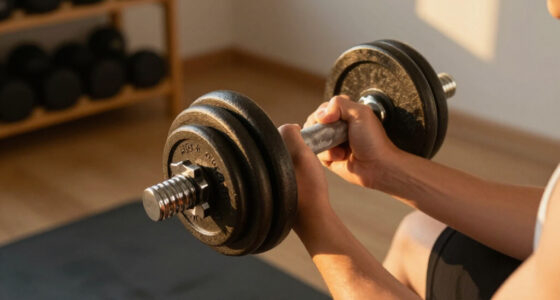
Adjustable dumbbell sets combine multiple weight options into a compact handle-and-weight system, letting you change the load instead of storing a separate pair for every exercise. You may select the weight with a dial or pin, or add and remove plates by hand. Most sets include two dumbbells and a tray or stand, though the exact setup varies.
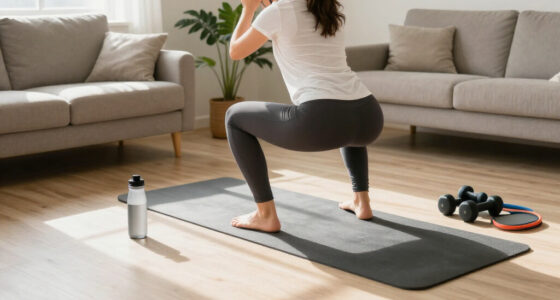
That space saving matters when your workout area is also the place where you fold laundry or roll out a yoga mat. Instead of a long rack of fixed pairs, a set might sit on a shelf or beside a bench. You still need clear floor space to lift and put the dumbbells down, but the storage footprint can be much smaller.
For example, you might choose a lighter setting for curls, increase the load for rows, then use a suitable weight for lunges. One pair covers several loads, though the handle shape and adjustment process may feel different from traditional dumbbells.
Think of the set as a flexible tool, not a promise that every movement will feel identical. The design may be bulky for exercises where you bring the dumbbells close together or need a broad range of motion. Try to match the equipment to your actual routine.
Products Worth Considering

Philips Sonicare DiamondClean 9300 Electric Toothbrush, 2 Brush Heads, Black

OMRON Complete 2-in-1 Upper Arm Blood Pressure Monitor with EKG

BowFlex Results Series SelectTech Adjustable Dumbbells (Pair)
As an affiliate, we earn on qualifying purchases.
Check the weight range and increments before the headline maximum
Choose a weight range that covers your current exercises, and check the increment between settings as carefully as the maximum load. The minimum weight matters for lighter movements, while smaller jumps can make it easier to progress without adding more load than feels manageable.
The spacing between settings affects how useful a set feels across different exercises. If the next available weight is a large jump, it might be suitable for a row but too heavy for a controlled shoulder press. Smaller steps give you more ways to match the load to the movement and build up gradually. They can also mean more settings or a more complex adjustment system, so consider whether that added flexibility is worth the price and setup.
There is no single ideal maximum for everyone. A beginner and an experienced lifter can have different needs, and one person may use much heavier weights for rows than for raises. List the exercises you plan to do and think about the loads you use now, with room for gradual progress. If a set reaches its maximum soon for your main movements, its compactness may not compensate for having to replace it as your training changes.
Before buying, compare the specs this way:
- Minimum and maximum per dumbbell: Confirm whether the listing describes each dumbbell or the pair together.
- Increment size: Check how much the load changes at each setting.
- Expansion options: Look for compatible kits if you expect your needs to change.
A number on the box can look impressive, but the useful range is the one you can train with safely and consistently.
Compare dials, selector pins, and plate-loaded designs
Dial and selector-pin models often change weight faster, while plate-loaded designs require more hands-on adjustment. The time and effort between settings can shape how smoothly a workout runs: quick changes are convenient when you alternate exercises with different loads, while a slower setup may be perfectly workable when you complete several sets at one weight before switching.
Picture moving from a light curl to a heavier row during a workout. With a selector system, you return the dumbbell to its tray and turn a dial or move a pin, then check that the setting is secure. The tray is part of that process, so the system needs a stable place and enough clearance to return the dumbbell correctly. With a plate-loaded model, you add or remove plates and secure them with collars; that takes more time, but the mechanism is easier to inspect directly. Neither approach is automatically best: weigh convenience against setup, storage, maintenance, and how confidently you can verify each load.
| Design | How you change weight | What to weigh up |
|---|---|---|
| Dial | Turn a dial to select a load | Fast changes; inspect moving parts and follow the tray instructions |
| Selector pin | Move a pin into the chosen setting | Quick selection; confirm the pin seats securely |
| Plate-loaded | Add or remove plates and secure collars | More manual work; a straightforward design can suit slower workouts |
Whichever style you choose, practice changing the load before your first workout. You should be able to tell that the setting is correct before lifting; a dial that sticks, a pin that does not seat, or a loose collar is a reason to pause and reset it. Convenience only helps when the selected weight stays secure.
Make sure the handle and shape suit your favorite exercises
Fit and balance can shape how an adjustable dumbbell feels in your hands, so consider grip, bulk, and plate position alongside the listed weight. Some adjustable models are wider or longer than fixed dumbbells. That extra size can get in the way when an exercise asks you to bring your hands close together or move through a large range.
For instance, a person doing floor presses may find that a wide dumbbell bumps the floor before their arms reach the position they expect. Someone doing rows may care more about a comfortable handle and a secure grip. The difference matters because equipment that limits your movement or feels unstable can make a familiar exercise awkward, even when the weight itself is right. The same equipment can feel fine in one movement and awkward in another.
If possible, try the set or read dimensions and demonstration details before deciding. Check how the dumbbells sit in the tray, whether you can lift them out without twisting your wrist, and whether the handle feels comfortable for the way you grip it. A tray that holds the weights neatly still needs enough clearance for easy pickup and return. A compact stored footprint can therefore come with a larger working footprint once you account for the tray and your movements.
Make a short list of your usual movements—presses, curls, lunges, rows—and consider where each dumbbell passes during the exercise. Training comfort depends on the full shape, not just the weight you select. When the form or fit feels uncertain, start with a light load and follow sound technique guidance; if you have a pre-existing condition or concerns about exercise, ask a qualified professional for advice.
Protect your investment with careful setup and storage
Use adjustable dumbbells according to the manufacturer’s instructions, and check that the chosen plates or selector parts are secured before lifting. Moving parts and locks need occasional inspection. If something looks damaged, missing, or loose, stop using the set until you can address it.
A simple routine helps. Before a set, confirm the weight setting; after training, return the dumbbells to their tray or store them as directed. Avoid dropping them unless the manufacturer specifically says the model is designed for that kind of impact. A hard thud can damage parts inside a selectorized system even if the outside looks fine, which may affect how the weights engage the next time you change settings.
Imagine reaching for a dumbbell and noticing a selector pin sitting slightly out of place. Take a moment to reset it and check again, rather than hoping it holds during a press. The check matters because a loose component can shift under load, while a brief pause lets you confirm the dumbbell is ready before it is above or beside you.
When comparing price, add the cost of the stand, expansion kit, shipping, or replacement parts where relevant. Warranty terms and parts support can matter for a product with moving components: if a part wears or breaks, support may determine whether the set remains usable. Value means more than the checkout price: consider how often you will train, what range you get, and whether the equipment suits the room you have.
Before each lift, check the setting, the locks, and your space to put the dumbbells down safely.
Use a five-step checklist to choose a set that fits your routine
A short checklist can help you compare adjustable dumbbell sets without getting distracted by a single headline feature. Start with the exercises you actually do, then check how the equipment handles those movements and fits your home. A set that looks compact online still needs enough space around it for safe training.
- Write down your exercises. Include presses, rows, curls, lunges, or other movements you plan to repeat.
- Check the useful weight range. Compare minimum, maximum per dumbbell, and each step between settings.
- Pick an adjustment style. Decide whether quick dial or pin changes matter more than loading plates by hand.
- Measure your workout spot. Leave room to lift the weights from the tray and set them down under control.
- Review care and total cost. Check instructions, warranty, expansion options, and any separate stand or shipping charge.
For example, if you train in a small apartment and switch loads often, fast changes and a tidy tray may matter a lot. If your sessions use just a few loads and you prefer a simpler setup, a plate-loaded pair may be a better match. In both cases, compare the actual adjustment steps and dimensions: a quick mechanism has little value if its shape does not suit your exercises, and a compact storage tray does not help if there is no room to lift the weights out.
Product designs, prices, warranties, and availability change. Verify current details with the manufacturer before relying on a product comparison. The best choice is the one that makes your planned workouts practical, not the one with the most dramatic specification.
Frequently Asked Questions
Are adjustable dumbbells worth it?
They can be a practical choice when a full rack would take too much space or cost too much. Their value depends on whether the weight range, increments, adjustment speed, and build fit the way you train.
How heavy should adjustable dumbbells be?
Choose a range that covers your present exercises and leaves room for gradual progress. Your useful load can vary by movement: you may need a different weight for rows than for raises, so check the range per dumbbell rather than relying on one maximum number.
Are adjustable dumbbells safe to use?
They can be used safely when you secure the weights, inspect the equipment, and follow the manufacturer’s directions. If a plate, pin, or lock looks loose or damaged, stop and reset the set before lifting.
Can you drop adjustable dumbbells?
Do not assume they can take a drop. Some selectorized designs have moving parts that can be damaged by impact, so check the manufacturer’s guidance and set the dumbbells down with control.
Are adjustable dumbbells as good as regular dumbbells?
Adjustable models can support many of the same movements, including presses, rows, and curls. Their size, balance, and shape may feel different from fixed dumbbells, so try to match the design to the exercises you plan to do.
What is the difference between dial, pin, and plate-loaded models?
Dial and pin systems select a load with a dial or selector, often making changes faster. Plate-loaded models ask you to add or remove plates and secure collars, which takes longer but may suit a simpler workout setup.
Conclusion
Choose a set by matching its weight range, adjustment style, shape, and footprint to the workouts you will actually do. Check the locking parts before each lift, store the weights as directed, and leave enough room to set them down with control.
The right pair can turn a bare corner into a useful training space: one quiet adjustment, one solid grip, and room to move.