

TL;DR
Sets, reps, rest, and tempo form the core of any effective strength workout. Manipulating these variables helps you build muscle, increase endurance, and prevent plateaus, especially when personalized to your goals.
Ever wonder why some workouts leave you sore and energized, while others feel flat?
It all comes down to the little details: how many times you lift, how long you rest, and how slow or fast you move. These elements shape your progress and shape your results.
In this guide, you’ll learn how to use sets, reps, rest, and tempo to craft smarter, more effective workouts—whether you’re aiming for muscle, endurance, or strength.
The Beginner’s Guide to Sets, Reps, Rest, and Tempo
The Four Workout Variables That Shape Every Result
Sets, reps, rest, and tempo are the control panel of strength training. Change them with purpose and you can build muscle, improve endurance, increase strength, and avoid the flat feeling that comes from doing the same workout forever.
Progress is not just heavier weights. It is smarter volume, cleaner reps, better recovery, and movement you can actually control.
Foundation
Match the rep range to the goal
Reps determine the kind of fatigue your muscles experience. More reps usually train endurance; fewer, heavier reps focus on force. The beginner sweet spot is controlled, repeatable effort before maximum intensity.
4–6 reps
Use heavier loads, longer rests, and pristine form. This range develops maximal force but demands more focus and recovery.
8–12 reps
The classic beginner target. It balances tension, volume, and technique practice without turning every set into survival mode.
12–20 reps
Lighter loads and shorter rest periods build muscular stamina, keep your heart rate up, and improve repeat effort capacity.
Comparison
How each variable changes the workout
The same exercise can become a strength set, a muscle-building set, or an endurance challenge depending on how you combine reps, sets, rest, and tempo.
| Training Focus | Reps | Sets | Rest | Tempo Cue | Beginner Fit |
|---|---|---|---|---|---|
| Muscle growth | 8–12 | 3–4 | 1–2 minutes | Slow 2–4 sec lowering | ✓ Strong default |
| Endurance | 12–20 | 2–4 | 30–60 seconds | Steady and repeatable | ✓ Great for stamina |
| Max strength | 4–6 | 3–5 | 2–5 minutes | Controlled down, powerful up | ~ Use with coaching |
| Too much volume | High | Many | Too short | Rushed and uneven | ✗ Recovery risk |
Routine Builder
A simple flow for programming your workout
Start with the goal, then choose the rep range, set count, rest period, and tempo that support it. Adjust the plan based on daily energy, soreness, and performance.
Pick goal
Choose muscle, endurance, strength, or general fitness before choosing the numbers.
Select reps
Use 8–12 for growth, 12–20 for endurance, or 4–6 for strength.
Set volume
Begin with 3–4 sets and increase only when recovery remains solid.
Time rest
Rest shorter for conditioning and longer for heavier, higher-force lifting.
Control tempo
Slow the eccentric phase and lift with clean intent, not sloppy speed.
Rest + Recovery
Rest is a training variable, not wasted time
Shorter rests raise workout density and fatigue. Longer rests restore power so you can lift heavier with better quality. The right pause depends on the adaptation you want.
Endurance
Keeps your heart rate elevated and teaches muscles to repeat effort under fatigue.
Hypertrophy
Balances recovery and tension, making it ideal for most beginner muscle-building work.
Strength
Allows more complete recovery so heavier sets stay powerful and technically clean.
Tempo + Auto-Regulation
Control the rep, then personalize the day
Recent training trends emphasize tempo and auto-regulation: use slower lowering phases to increase time under tension, then adjust volume or rest when fatigue is high.
Example hypertrophy set
3 sets per exercise
10 controlled reps
90 seconds between sets
3-second descent, brief pause, strong lift
Slowing the eccentric phase increases muscle tension without needing to add weight right away.
If you feel flat, reduce reps or rest longer. If you feel sharp, add a rep, a set, or a little load.
Persistent fatigue, lower performance, soreness that lingers, and falling motivation are signals to recover.
Traceability
How the variables connect
Progressive overload does not require changing everything at once. One smart adjustment can create a new stimulus while keeping technique consistent.
Key Takeaways
- Start with 3–4 sets of 8–12 reps for most beginner routines, adjusting based on your goals.
- Rest periods should match your focus: 30 seconds for endurance, 1–2 minutes for hypertrophy, longer for strength.
- Controlling tempo, especially during the eccentric phase, enhances muscle tension and growth.
- Adjust your variables regularly—progressive overload keeps your muscles adapting and growing.
- Listen to your body: overtraining signs include persistent fatigue and decreased motivation.

Hezeyferg 30.8LB Adjustable Dumbbell Set, Each Adjustable Weight Dumbbell with 6 Levels 4.4/6.6/8.8/11/13.2/15.4lb, Hand Weights Set for Men/Women Home Gym Exercise Workout (Beige)
- 6-in-1 Adjustable Weights: Six weight levels from 4.4 to 15.4 lbs
- Stable Square Design: Prevents rolling and enhances stability
- Reinforced ABS Material: Durable and reliable construction
As an affiliate, we earn on qualifying purchases.
As an affiliate, we earn on qualifying purchases.
What Are Reps and How Do They Shape Your Goals?
Reps, short for repetitions, are how many times you perform a specific move in a row. Want muscle size? Aim for 8–12 reps per set. Looking for endurance? Go for 12–20 reps. For raw strength, challenge yourself with 4–6 reps using heavier weights.
For example, doing 10 bicep curls in a row is 1 set of 10 reps. If you do 3 sets of 10, you’ve completed 30 reps total. Reps set the tone for your workout’s focus and intensity.
Adjusting reps influences fatigue and muscle engagement. Lighter weights with more reps boost endurance, while heavier weights with fewer reps build strength.
Choosing the right rep range is crucial because it determines the kind of fatigue your muscles will experience and the adaptation your body will make. For example, higher reps with lighter weights primarily improve muscular endurance but may not significantly increase muscle size or strength. Conversely, lower reps with heavier weights target maximal strength development but can also increase the risk of injury if not performed with proper form. Balancing reps with your experience level and goals ensures effective and safe progress.

Fit Simplify Resistance Loop Exercise Bands with Instruction Guide and Carry Bag, Set of 5
- High-Quality Resistance Bands: Set of 5 with varying resistance levels
- Suitable for All Fitness Levels: From beginners to advanced users
- Versatile Workout Compatibility: Ideal for various exercise routines
As an affiliate, we earn on qualifying purchases.
As an affiliate, we earn on qualifying purchases.
How Many Sets Should You Do? Finding the Right Volume
Sets are groups of reps. As a beginner, 3–4 sets per exercise hit that sweet spot for building strength without overdoing it.
Imagine doing 3 sets of 12 push-ups. That’s enough volume to challenge your muscles without risking burnout. If your goal is muscle growth, sticking to 3–4 sets helps you accumulate enough stimulus.
More sets can increase training volume, but they also demand more recovery time. Balance is key—listen to your body.
When considering your training volume, it’s important to recognize that increasing the number of sets can lead to greater muscle fatigue, which in turn can promote hypertrophy (muscle growth). However, excessive sets without adequate rest and recovery can lead to overtraining, increasing injury risk and reducing performance. Therefore, gradually increasing your sets over time while monitoring how your body responds allows for sustainable progress. The optimal number of sets depends on your experience, recovery capacity, and specific goals—more advanced lifters often perform higher volume, whereas beginners should prioritize quality over quantity to prevent injury and ensure proper technique.

TriggerPoint Grid 1.0 Foam Roller – 13" Multi-Density Massage Roller for Deep Tissue & Muscle Recovery – Relieves Tight, Sore Muscles & Kinks, Improves Mobility & Circulation – Targets Key Body Parts
- Enhances Muscle Recovery: Promotes tissue aeration and blood flow
- Comfortable Foam Construction: Designed with proprietary Distrodensity Zones
- Customizable Massage Experience: Varying ridges and nodules for targeted relief
As an affiliate, we earn on qualifying purchases.
As an affiliate, we earn on qualifying purchases.
Rest Periods: How Long Should You Recover Between Sets?
Rest is the pause between sets—crucial for recovery and performance. For endurance, 30–60 seconds works well; for hypertrophy (muscle growth), aim for 1–2 minutes; for pure strength, 2–5 minutes helps maximize power.
Picture resting 30 seconds after a set of squats, then feeling ready to go again. Shorter rests keep your heart rate high and increase calorie burn, while longer rests allow for heavier lifts.
Adjust your rest based on how you feel and your goals. Too little rest can cause fatigue, too much can cool down your momentum.
Choosing the appropriate rest period impacts not only your immediate performance but also your long-term progress. Short rest intervals maintain a high level of fatigue, which can stimulate hypertrophy and cardiovascular conditioning but may limit your ability to lift heavier weights in subsequent sets. Longer rest periods allow your muscles to recover fully, enabling you to perform at higher intensities, which is essential for maximal strength development. The tradeoff is that longer rests can reduce workout density and calorie burn. Strategically adjusting rest times based on your specific goals and how your body responds can optimize training efficiency and results.
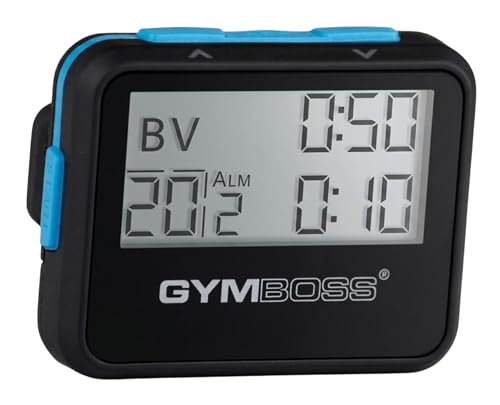
Gymboss Interval Timer and Stopwatch – Black/Blue SOFTCOAT
- Compact Interval Timer: Times 1 or 2 intervals from 2 sec to 99 min
- Includes Stopwatch and Clock: Built-in stopwatch and clock features with belt clip
- Auto Repeat Mode: Repeats intervals up to 99 times with notifications
As an affiliate, we earn on qualifying purchases.
As an affiliate, we earn on qualifying purchases.
What Is Tempo and How Can It Boost Your Results?
Tempo is simply how fast or slow you perform each repetition. It’s made up of phases: lowering the weight (eccentric), lifting (concentric), and pauses at the top or bottom.
For example, lowering a dumbbell over 3 seconds, then lifting it quickly, is a controlled tempo that increases muscle tension. Slowing down movements makes your muscles work harder and can lead to better gains.
Recent trends show that slowing your reps—like a 3-second descent—can be as effective as lifting heavier weights, especially for beginners aiming to improve control and muscle activation.
Understanding tempo is critical because it directly influences muscle tension and time under load, which are key drivers of hypertrophy and strength. A slower eccentric phase increases muscle damage and stimulates growth, while a faster concentric phase emphasizes power development. Mixing tempos can target different adaptations, but consistently applying controlled tempos ensures better technique and reduces injury risk. For beginners, mastering tempo helps develop proper movement patterns and muscle awareness, leading to more effective and safe training sessions.
Recent Trends in Training: Why Tempo and Auto-Regulation Matter
Tempo training is gaining popularity because it emphasizes control, increasing time under tension without necessarily adding weight. This approach boosts muscle growth and improves movement patterns.
Auto-regulation lets you adjust your reps, sets, and rest based on how you feel each day. If you’re tired, you might do fewer reps or rest longer. If energized, push a little more.
Technology like fitness apps and wearables now help track rest and tempo, making personalized adjustments easier than ever.
Both tempo and auto-regulation are about making your workouts adaptable and responsive to your body’s signals. This flexibility allows for optimal training stimulus without risking overtraining or injury. By paying attention to how your body feels and adjusting accordingly, you can maximize gains and reduce setbacks. The trend toward personalized programming reflects a deeper understanding that no two workouts—or days—are exactly the same, and that listening to your body’s cues leads to more sustainable progress.
How to Use Sets, Reps, Rest, and Tempo in Your Routine
Mastering these variables involves a simple step-by-step approach:
- Decide your goal: muscle, endurance, strength.
- Select reps: 8–12 for muscle, 12–20 for endurance, 4–6 for strength.
- Choose sets: 3–4 for beginners, more if advanced.
- Set your rest: 30 sec for endurance, 1–2 min for hypertrophy, 2–5 min for strength.
- Control your tempo: slow eccentric phases for better muscle tension, explosive lifts for power.
For example, if you’re focusing on hypertrophy, do 3 sets of 10 reps, rest 90 seconds, and lower weights slowly over 3 seconds each rep.
This framework keeps your workouts effective and adaptable as you progress.
Understanding the tradeoffs involved in manipulating each variable allows you to tailor your training to specific goals. For instance, increasing reps and reducing rest can boost muscular endurance and calorie expenditure but might limit your ability to lift heavy weights. Conversely, focusing on heavier weights with longer rest periods emphasizes strength but may reduce workout density. Balancing these variables based on your priorities ensures a comprehensive approach that promotes continuous improvement and minimizes risk of injury.
Comparison: How Different Variables Impact Your Workout
| Variable | Focus | Typical Range | Effect |
|---|---|---|---|
| Reps | Muscle size / Endurance / Strength | 8–12 / 12–20 / 4–6 | Determines intensity and focus of training |
| Sets | Volume | 3–4 for beginners, more for advanced | Increases workout stimulus and fatigue |
| Rest | Recovery & Intensity | 30 sec–5 min | Affects fatigue, power, and workout duration |
| Tempo | Muscle tension & control | Slow (3+ sec eccentric) to explosive | Enhances muscle activation and growth |
Frequently Asked Questions
How many sets and reps should I do as a beginner?
Most beginners find that 3–4 sets of 8–12 reps per exercise hits the sweet spot for building strength and muscle without overdoing it. Adjust based on how you feel and your specific goals.
How long should I rest between sets?
For general fitness and hypertrophy, resting 1–2 minutes works well. If you’re focusing on endurance, keep it shorter at around 30–60 seconds. For max strength, extend rest to 2–5 minutes.
What exactly is tempo training, and why should I care?
Tempo training is about controlling the speed of each repetition—slowing down the eccentric (lowering) phase increases muscle tension and can boost growth. It’s a simple way to make your workouts more effective without adding extra weight.
Can I change my workout variables as I improve?
Absolutely. Progressively increasing reps, sets, or reducing rest keeps your muscles challenged. Adjusting tempo and adding more weight over time ensures continuous gains and prevents plateaus.
How do I know if I’m overtraining?
Watch for persistent fatigue, soreness that doesn’t go away, decreased performance, or loss of motivation. If these happen, dial back your volume or rest more to let your body recover.
Conclusion
Thinking about your workout as a recipe helps: the right mix of sets, reps, rest, and tempo makes all the difference.
Focus on control, consistency, and gradual challenge. Before long, those small adjustments will add up to big gains—and a stronger, more confident you.
Remember, your workout is a conversation with your body. Keep it honest, keep it smart, and stay curious about what you can achieve.