TL;DR

Get workout gear delivered free with Prime
- Fast, free delivery on millions of items
- Prime Video, Amazon Music and more included
- Member-only deals all year
Fit&Well has published a beginner-friendly, 10-minute Pilates routine designed by instructor Andrew Griffiths. The six no-equipment movements include pelvic tilts, dead bugs and bird dogs; Griffiths recommends doing the routine three times a week, with a day off between sessions.
Fit&Well has published a 10-minute Pilates routine for beginners that uses six exercises and requires no equipment, offering a short home workout focused on core strength and movement control. The routine was created by Pilates instructor Andrew Griffiths, who recommends practising it three times a week with a day off between sessions.
The sequence moves from gentle floor exercises to positions that challenge balance and coordination. It starts with pelvic tilts, performed for eight to 10 repetitions, and the Hundred, for which Griffiths suggests beginners start with 40 or 50 arm pulses rather than aiming immediately for 100. A 30-second rest is listed after the Hundred.
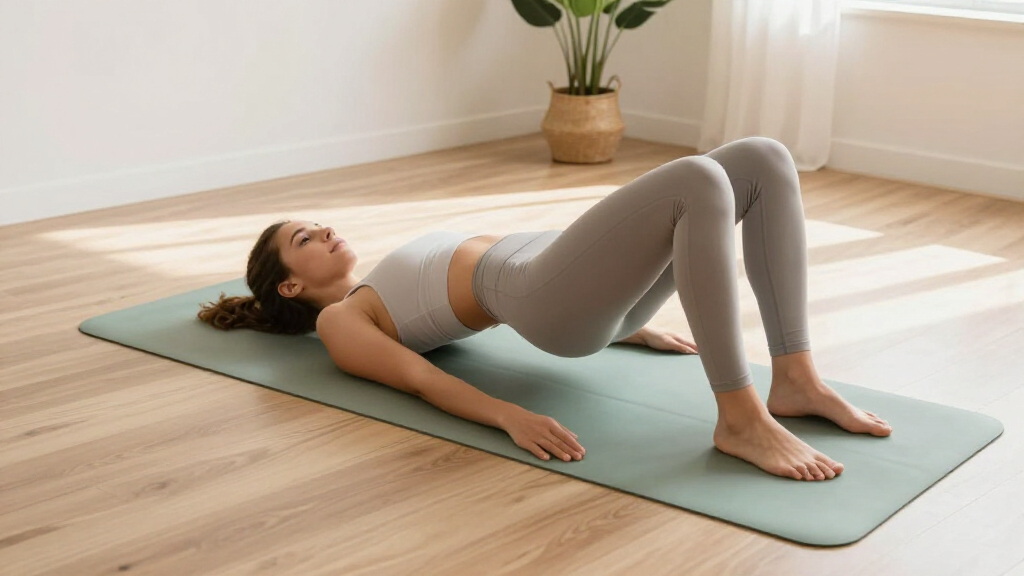
The middle of the routine includes dead bugs, glute bridges and bird dogs. The dead bug and bird dog are each prescribed for two sets of eight to 10 repetitions per side; glute bridges are two sets of 10 to 12 repetitions. The source lists 30-second rests between these exercises. The routine ends with a 30-to-60-second child’s pose.
Fit&Well’s instructions pair movement with breathing and emphasize a controlled pace. For example, the dead bug involves lowering the opposite arm and leg while keeping the lower back against the floor. During the bird dog, the exerciser reaches one arm forward and the opposite leg back while keeping the hips level. Griffiths advises that these movements reward control rather than speed.
A Short Routine With No Equipment
The workout’s practical appeal is its short duration and minimal setup: the exercises can be done on the floor, without weights or specialist equipment, and the source says no prior Pilates experience is required. That may make it easier for beginners to try a structured routine at home, though the report does not establish that 10 minutes is suitable for every person or fitness goal.
Griffiths says the exercises target the core and muscles that help stabilize the spine, while glute bridges and bird dogs also work the glutes and muscles supporting the back. These are the instructor’s explanations of the exercises, not a guarantee of improved posture, reduced back discomfort or other health outcomes. The supplied report does not cite clinical research or measured results for this specific workout.
The plan also gives readers a clear starting frequency: three sessions each week, separated by a rest day. Griffiths says the routine can be progressed when it starts to feel easy, but the article does not set out a specific next programme or progression schedule.
Products Worth Considering

Fitbit Versa Smart Watch – Black Aluminum, One Size (S & L Bands Included)

Levoit Core 400S-P Smart Air Purifier for Large Rooms

Fitbit Sense Advanced Smartwatch – Sage Grey/Silver (One Size, S & L Bands Included)
As an affiliate, we earn on qualifying purchases.
How the Six Moves Fit Together
The routine begins with pelvic tilts to practise awareness of pelvic position, then adds the Hundred, a breathing-and-arm-pulsing exercise performed on the back. The Hundred can be modified by keeping the head and shoulders on the floor or leaving the feet down, according to the instructions in the Fit&Well report.
Dead bugs and bird dogs add coordinated arm-and-leg movements while asking the exerciser to keep the trunk steady. Glute bridges involve lifting the hips while avoiding excessive arching of the lower back. The final child’s pose provides a slower finish, with the report advising readers to rest the forehead on the floor only if comfortable. Griffiths describes the movements as a way to practise control and connect breathing with movement.
For the bird dog, Griffiths offers a stability cue: “picture a glass of water balanced on your lower back that you’re trying not to spill”. For pelvic tilts, he says the movement should be small and controlled, coming from the pelvis rather than the legs. These cues are intended to guide technique; they do not replace individualized instruction.
““Small and controlled is the aim. The movement comes from the pelvis, not the legs.””
— Andrew Griffiths, Pilates instructor and fitness expert, as quoted by Fit&Well
Limits of the Workout Report
The supplied Fit&Well report does not include a publication date, independent testing, participant results or a comparison with other beginner workouts. It also does not specify how quickly users might notice changes, or provide evidence that this particular sequence produces a particular level of strength or stability.
Readers’ abilities and comfort levels may differ. The article offers easier options for the Hundred, but does not provide modifications for every exercise or guidance for people with injuries, pain or health conditions. It is not clear from the source whether Griffiths or Fit&Well recommends professional advice before starting for those readers.
Repeat, Rest and Adjust
Griffiths recommends following the sequence three times a week, with a day off between sessions, and says that a routine that begins to feel easy can be a cue to progress the programme. Fit&Well’s report does not specify what progression to use, so readers would need further instruction rather than assuming that adding repetitions or intensity is appropriate for everyone.
People new to exercise can use the listed easier option for the Hundred and keep movements controlled, stopping if an exercise causes pain or feels unsafe. Anyone with a pre-existing condition, injury or concern about whether Pilates is appropriate should seek guidance from a qualified health professional or instructor. The source provides a workout plan, not individualized medical or fitness advice.
Key Questions
What exercises are in the 10-minute Pilates routine?
The six moves are pelvic tilts, the Hundred, dead bugs, glute bridges, bird dogs and child’s pose. The routine is designed to be done on the floor without equipment.
How often does the instructor recommend doing it?
Andrew Griffiths recommends doing the routine three times a week, with a day off between sessions. This is his guidance in the Fit&Well report, not a schedule tailored to each reader.
Can beginners make the Hundred easier?
Yes. Fit&Well’s instructions say beginners can keep their feet on the floor; they can also keep their head and shoulders down if lifting them feels too challenging. Griffiths says 40 or 50 pulses can be a starting point rather than aiming for 100.
What should someone do if an exercise causes pain?
Stop the movement if it causes pain or feels unsafe. The report does not give individualized guidance for injuries or health conditions, so people with concerns should ask a qualified health professional or Pilates instructor before starting.
Source: rss