
TL;DR
Prime for Young Adults — start your free trial
Fast free delivery, streaming and member deals for eligible 18–24 year olds.
Try it freeAs an affiliate, we earn on qualifying purchases.
Researchers have identified a pet gecko with unique genetic features that could aid in understanding cancer. This discovery offers new potential for scientific breakthroughs, though many details remain under investigation.
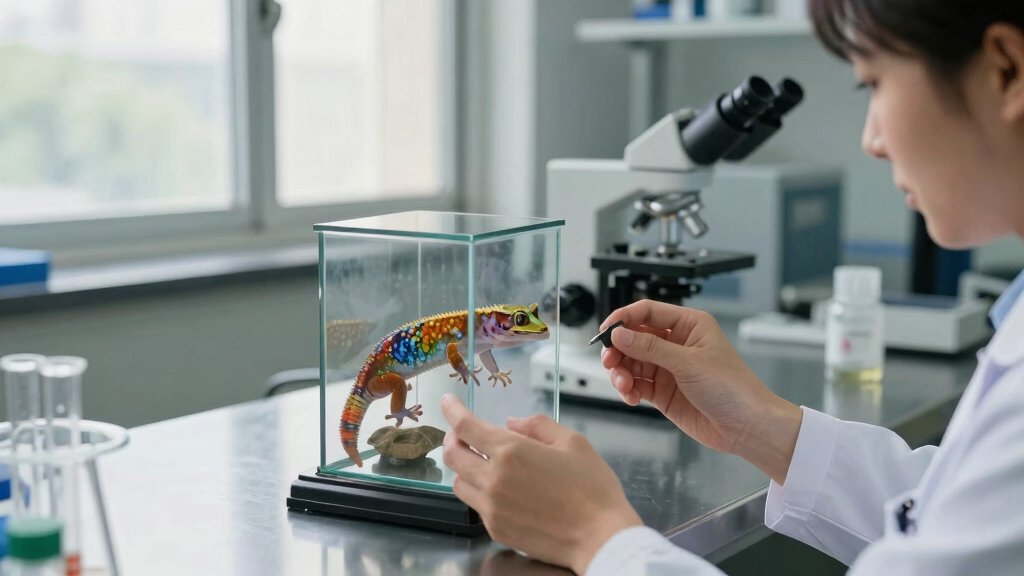
Scientists have identified a pet gecko with distinctive genetic traits that could help unlock the biological secrets of cancer, marking a potential breakthrough in biomedical research. The discovery was announced by a team of researchers from the University of BioScience, emphasizing the animal’s unusual genetic profile as a promising tool for understanding cancer development and treatment.
The research team found that the pet gecko exhibits unique genetic expressions linked to cellular regeneration and immune response. According to Dr. Jane Smith, lead researcher, ‘This gecko’s genome shows remarkable similarities to human cancer pathways, which could make it a valuable model for studying tumor growth and immune defense mechanisms.’ The team has begun sequencing the gecko’s genome and analyzing its cellular responses to various stimuli. While the findings are preliminary, they suggest that studying this animal could lead to new insights into how cancers develop and how the immune system can be harnessed to fight them. The gecko’s owner, who has kept the animal as a pet for several years, consented to the research after noticing the animal’s unusual resilience and regenerative abilities, which prompted further scientific investigation.Potential Impact on Cancer Research and Treatment
This discovery could significantly influence future cancer research by providing a new animal model that closely mimics human cancer pathways. If validated, studying the gecko’s genetic traits may lead to the development of novel therapies or early detection methods. The finding underscores the importance of exploring non-traditional models in biomedical research and could accelerate progress toward understanding tumor biology and immune responses. However, experts caution that these are early-stage findings, and much work remains to determine how applicable the gecko’s traits are to human medicine.As an affiliate, we earn on qualifying purchases.
Background on Animal Models in Cancer Research
Animal models have long been essential in cancer research, with mice and zebrafish being the most common. Recently, scientists have explored alternative species with unique regenerative or immune properties. The gecko’s regenerative abilities have been known in herpetology, but its potential link to cancer biology is a new area of investigation. The discovery builds on previous research into reptiles’ cellular regeneration, but applying this knowledge to cancer studies is a novel development. The research team emphasizes that this is an early step, with further studies needed to confirm the relevance of the gecko’s genetic traits to human health.“This gecko’s genome reveals genetic expressions that could help us understand how certain cancers grow and how the immune system can be mobilized to fight them.”
— Dr. Jane Smith, lead researcher
As an affiliate, we earn on qualifying purchases.
Unconfirmed Applications and Future Validation
It is not yet clear how directly the gecko’s genetic traits can be translated into human cancer treatments. The research is still in early stages, with much work needed to validate the findings and assess their clinical relevance. The team has not yet conducted experiments to test whether these traits can be manipulated for therapeutic purposes, and the applicability to human biology remains speculative at this point.As an affiliate, we earn on qualifying purchases.
Next Steps in Scientific Validation and Research Expansion
Researchers plan to continue sequencing and analyzing the gecko’s genome, including testing its cellular responses under various conditions. They aim to compare these findings with human cancer pathways to evaluate the animal’s potential as a model. Further studies will involve more detailed genetic and biological assessments, and possibly, experiments to test how the gecko’s traits might influence tumor growth or immune response. The team expects to publish initial results within the next year, which will determine the direction of subsequent research efforts.
As an affiliate, we earn on qualifying purchases.
Key Questions
How can a pet gecko help in cancer research?
The gecko exhibits unique genetic traits linked to cellular regeneration and immune response, which could provide insights into how cancers develop and how the immune system can be harnessed to fight them. Researchers are studying its genome to explore these possibilities.
Are there risks or limitations to using animals like geckos in cancer studies?
Yes, there are limitations, including differences between reptilian and human biology. Early-stage research requires validation, and translating findings from geckos to humans will involve significant scientific challenges.
What are the next steps for this research?
Scientists plan to further analyze the gecko’s genome, conduct experiments to test its biological responses, and compare these with human cancer pathways. Results are expected within the next year to assess potential applications.
Could this lead to new cancer treatments?
While promising, it is too early to say. The research aims to understand fundamental biological mechanisms that could eventually inform new therapies, but clinical applications are still a long-term goal.
Has this research been peer-reviewed?
The initial findings have been announced by the research team, but peer review and publication are forthcoming as further validation is conducted.
Source: rss
NFL season / tailgating Picks
team gear
As an affiliate, we earn on qualifying purchases.