
TL;DR

Get workout gear delivered free with Prime
- Fast, free delivery on millions of items
- Prime Video, Amazon Music and more included
- Member-only deals all year
Physical therapist Raj Suppiah recommends three stretches that target the front, back and inner side of the hip for people who feel stiff after prolonged sitting. He says stretching can support mobility but should not replace strength work, and advises stopping or seeking guidance if an exercise causes pain.
Physical therapist Raj Suppiah has recommended three stretches for people who feel hip stiffness after sitting for long periods: a half-kneeling hip flexor stretch, a figure-four glute stretch and an all-fours adductor stretch. In a report published by Fit&Well, Suppiah said the movements target the front, back and inside of the hip, while cautioning that stretching alone is not a substitute for building strength and capacity.
For the half-kneeling hip flexor stretch, kneel on one knee with the other foot planted in front and its knee bent. Gently tuck the pelvis and lean forward until there is a comfortable stretch at the front of the kneeling-side hip. Suppiah recommends five to six repetitions per side, holding each for 10 seconds, and cautions against arching the lower back. He said the position moves the hip in the opposite direction from the flexed posture common during sitting.
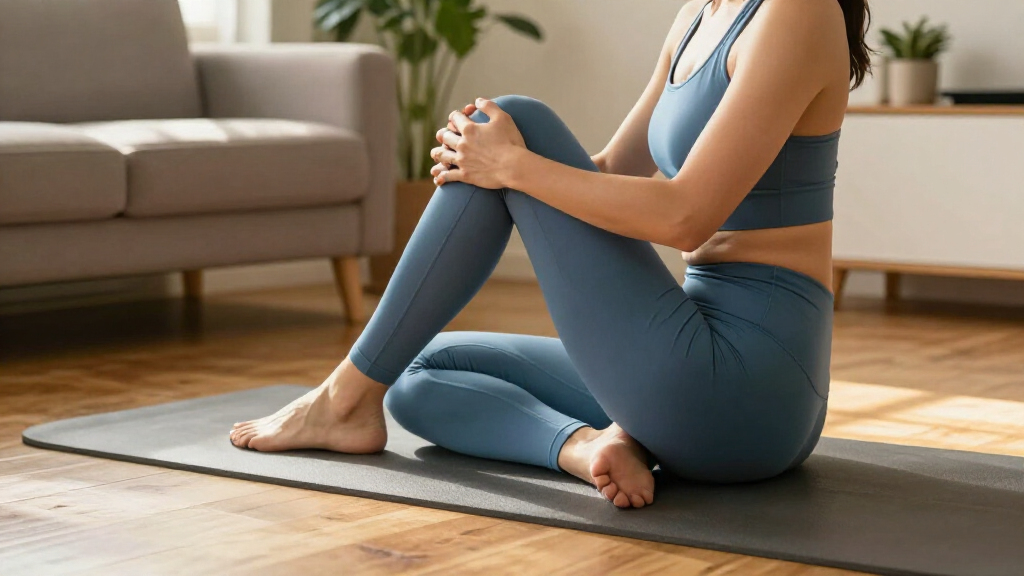
The figure-four glute stretch is done lying on the back with knees bent. Cross one ankle over the opposite thigh, hold behind the thigh of the uncrossed leg and gently draw it toward the body. Suppiah recommends five to six repetitions per side, held for 10 seconds. He said it works mobility at the back and outside of the hip, areas used in activities including walking, running, climbing stairs and standing from a chair.
For the all-fours adductor stretch, start on hands and knees, extend one leg sideways with the foot on the floor, then slowly rock the hips toward the heels while keeping the back neutral. The suggested amount is eight to 10 repetitions per side, held for six seconds. Suppiah said the movement addresses the inner-thigh adductors and takes the hip through a comfortable range of motion. His general advice is to stay within a comfortable range and seek advice if any movement causes pain.
Three Hip Areas, One Short Routine
The recommendations offer a brief routine for people who notice stiffness after remaining in one position, with each stretch aimed at a different part of the hip. The practical point is not that these exercises treat every cause of hip pain, but that they can provide a way to move the hip through several directions after prolonged sitting.
Suppiah also warns against treating stretching as the whole answer. He said mobility matters, but so do strength and capacity—the ability to tolerate the activities a person asks of their body. That distinction matters for people who sit for much of the week and then make a sudden jump in exercise, such as a long recreational sports session or a sharp increase in running mileage.
As an affiliate, we earn on qualifying purchases.
Why Sitting Is Not the Whole Story
Suppiah told Fit&Well that hip discomfort can reflect a mismatch between current capacity and activity demands, rather than sitting alone. He gave examples including playing several hours of pickleball after a largely sedentary week, increasing running mileage suddenly or starting a gym program at a much higher workload than the hips are used to.
He also noted that hip pain and stiffness can have other sources. In his account, arthritis may contribute with age, tendons around the hip can become irritated, and pain that feels as if it is in the hip may sometimes originate in the lower back. The report therefore presents the stretches as options for stiffness associated with sitting, not as a diagnosis or universal solution.
““I commonly recommend these three stretches because together they target the front, back and inside of the hip.””
— Raj Suppiah, physical therapist and co-founder of Foundation Physiotherapy & Wellness, speaking to Fit&Well
As an affiliate, we earn on qualifying purchases.
What the Stretches Cannot Establish
The report does not provide clinical trial results showing how much these specific stretches reduce stiffness, how quickly effects might be felt or whether they work for people with particular hip conditions. It also does not establish that sitting is the cause of an individual’s symptoms. Suppiah’s comments instead describe possible contributors, including changes in activity, arthritis, tendon irritation and pain referred from the lower back.
Readers experiencing pain cannot determine its source from the exercises alone. The report advises seeking help if a movement causes pain, but does not set out criteria for when symptoms require assessment or provide individual medical advice.
As an affiliate, we earn on qualifying purchases.
Pair Mobility With Gradual Strength Work
Suppiah’s next step for readers is to use the stretches within a comfortable range and avoid pushing through pain. He advises pairing mobility work with regular movement and strengthening, including exercises such as squats, rather than relying on stretching as the sole approach to hip health. Activity increases should reflect what the person is prepared to handle, rather than jumping suddenly to a much higher workload.
The report does not announce a study, treatment trial or follow-up date. People whose discomfort persists, worsens or is triggered by these movements should seek advice from a qualified health professional to discuss possible causes and suitable activity.
As an affiliate, we earn on qualifying purchases.
Key Questions
Which three stretches does Raj Suppiah recommend?
He recommends the half-kneeling hip flexor stretch, figure-four glute stretch and all-fours adductor stretch, aimed at the front, back and inner side of the hip.
How many repetitions should I do?
The report suggests five to six repetitions per side for the first two stretches, holding each for 10 seconds. For the all-fours adductor stretch, it suggests eight to 10 repetitions per side, held for six seconds.
Should I stretch if an exercise hurts?
No. Suppiah advises staying within a comfortable range and seeking advice if an exercise causes pain. The report does not diagnose the cause of a person’s symptoms.
Are these stretches a substitute for strength training?
No. Suppiah says stretching may help maintain mobility, but strength and capacity also matter. He points to regular movement and strength exercises, such as squats, as part of a broader approach.
Source: rss
Evergreen bestsellers Picks
bestsellers
As an affiliate, we earn on qualifying purchases.