
TL;DR

Get workout gear delivered free with Prime
- Fast, free delivery on millions of items
- Prime Video, Amazon Music and more included
- Member-only deals all year
Personal trainer Pippa Sealey says shorter rest periods and unilateral exercises can make home dumbbell workouts more challenging when heavier weights are unavailable. Her sample routine combines those approaches with supersets and tri-sets, but it is aimed at people already comfortable with basic strength movements.
Personal trainer Pippa Sealey recommends shorter rest periods and unilateral exercises to make home dumbbell workouts more challenging when heavier weights are not available. In a Fit&Well report, she also shares a routine built around supersets and tri-sets, aimed at people who already know fundamental movements such as squats and deadlifts.
Sealey says she uses shorter rests and movements that work one side of the body at a time rather than bilateral exercises, which use both sides together, when she does not have access to heavier loads at home. The report presents these as ways to increase a session’s challenge without buying more equipment; it does not provide comparative testing or evidence that the methods produce a particular training outcome.
A superset pairs two exercises: complete a set of the first and move directly to a set of the second before resting. Sealey also suggests agonist supersets, which pair exercises targeting the same muscle group. A tri-set follows the same idea with three exercises in sequence. In the sample routine, each group is completed three times before moving to the next group.
The listed routine begins with deficit calf raises, hamstring bridge marches and a wall sit, then moves to single-leg Romanian deadlifts and split squats. Later groups include push-ups and a single-arm dumbbell push press, followed by core exercises. The prescribed work includes 10–12 calf raises, six bridge marches per side and a 60-second wall sit; rest follows the sequence rather than each exercise, with 60–90 seconds listed after some groups. The report says push-ups should continue only as long as good form is maintained.
How the Workout Changes the Challenge
The advice addresses a practical problem for people who train at home: repeating the same exercises with the same dumbbells can make sessions feel less demanding, while buying heavier equipment may not be possible or desirable. Sealey’s approach changes the exercise sequence and rest timing instead of relying only on increased weight.
Unilateral movements, such as a single-leg deadlift or split squat, require the exerciser to work one side at a time. Supersets and tri-sets reduce the pauses between selected exercises. Together, these choices offer a structured way to vary a session using equipment many home lifters already own. The article does not establish that they are suitable for every person or that they guarantee continued progress.
The routine is not presented as a beginner program. The report says it is intended for people already confident with basic movements, and several exercises require balance, coordination or control. Readers should choose loads and variations they can perform safely, stop if they experience pain, and seek qualified guidance if they have an injury or health condition.
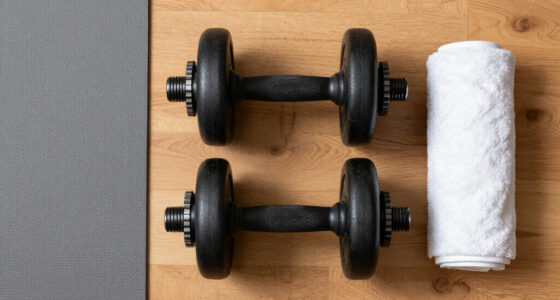
adjustable dumbbells for home strength training
As an affiliate, we earn on qualifying purchases.
As an affiliate, we earn on qualifying purchases.
Why Home Dumbbell Progress Can Stall
The Fit&Well report frames the workout around a common limitation of home strength training: a person may have only one pair of dumbbells, and lifting the same loads for months can make it harder to keep sessions challenging. It does not say that a stall happens to every lifter, or define a specific period after which it occurs.
Sealey’s stated alternatives are shorter rest periods and unilateral movements. The routine combines those with supersets and tri-sets, which organize exercises into blocks performed before a rest. The source gives exercise instructions and set or repetition targets for parts of the program, but the supplied material does not include complete instructions for every movement in the final sections.
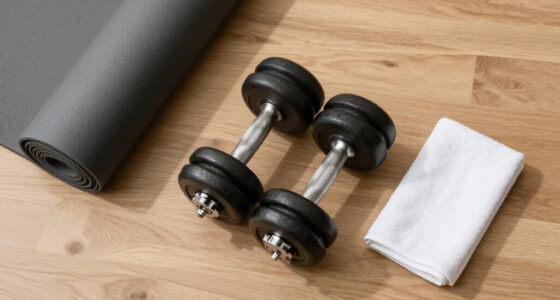
non-slip exercise mat for home workouts
As an affiliate, we earn on qualifying purchases.
As an affiliate, we earn on qualifying purchases.
Limits of the Published Routine
The supplied report does not state when it was published, provide research comparing the techniques with heavier dumbbells, or quantify how much the methods might affect strength or muscle growth. Its recommendations are attributed to Sealey as training advice, not presented as results from a controlled study.
The source material also ends partway through the instructions for the single-arm dumbbell push press. Although it lists later core exercises, the complete instructions, rest guidance and any modifications for different fitness levels are not included here. It is also unclear what dumbbell weights the routine assumes, how long a full session takes, or how often readers should repeat it.
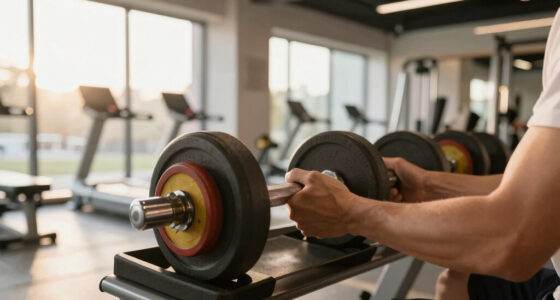
weight bench for dumbbell workouts at home
As an affiliate, we earn on qualifying purchases.
As an affiliate, we earn on qualifying purchases.
Choosing a Safe Starting Point
The source does not announce a follow-up, new research or a scheduled next development. For readers considering the routine, the immediate next step is to check that they can perform its foundational movements with control and adapt the work to their experience. That includes stopping push-ups when form breaks down and taking additional rest when needed rather than treating the listed no-rest intervals as a requirement.
Anyone unfamiliar with the exercises can seek instruction from a qualified trainer, particularly before attempting balance-demanding single-leg movements or overhead presses. People with injuries or pre-existing health conditions should consult an appropriate health professional about exercise choices. The material does not specify a progression plan for when the workout becomes easier.
Key Questions
What are the two methods Sealey recommends?
Sealey recommends shorter rest periods and unilateral exercises, which work one side of the body at a time, when heavier dumbbells are unavailable.
What is a superset in this workout?
A superset means doing a set of one exercise followed immediately by a set of another, then resting. A tri-set uses three exercises in sequence before the rest.
Is the sample routine intended for beginners?
No. The report describes it as a workout for people already confident with fundamental movements such as squats and deadlifts. Beginners may benefit from instruction and simpler variations.
Does the report prove these methods improve strength?
No. It presents Sealey’s training advice and a sample routine, but the supplied source does not include comparative research or measured results showing how much the methods affect strength or other outcomes.
Source: rss
Evergreen bestsellers Picks
bestsellers
As an affiliate, we earn on qualifying purchases.