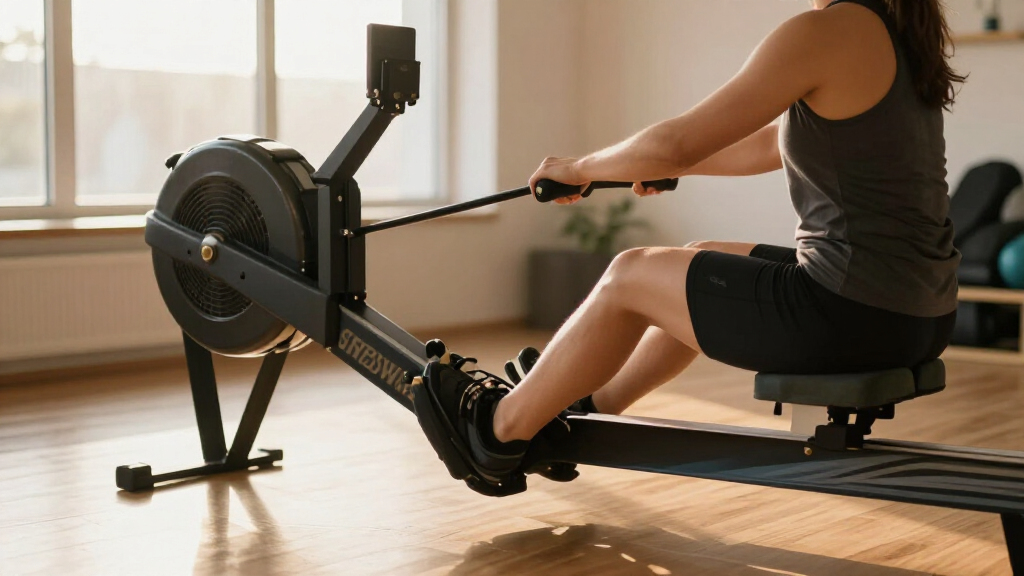

Compact home rowing machines have to earn their floor space, which is why this comparison focuses on what happens when you’re not rowing: how small the machine folds, how easily it stores upright, and whether it’s quiet enough for an apartment. My best overall pick is the YOSUDA Magnetic Rower with 16-Level Resistance, which balances a genuine full-body stroke with a rail that folds and stands vertically in a closet-sized footprint. If budget is the deciding factor, the Feierdun Hydraulic Rower delivers a real workout for far less, while the TOUSAINS ER7 stands out at the premium end because it’s self-powered — no outlet or batteries needed. The main tradeoff in this category is consistent: hydraulic rowers shrink smaller and cost less but feel choppier, while magnetic rowers give a smoother stroke in a slightly larger folded package. Keep reading for the full breakdown of all fifteen models.

Get workout gear delivered free — and shop member deals
- Fast, free delivery on millions of items
- Access to Prime Big Deal Days deals on October 6–7
- Prime Video, Amazon Music and more included
Complete the kit


Key Takeaways
- Magnetic resistance dominated the top of this ranking — models like the YOSUDA and Merach RS3 deliver a smoother, quieter stroke than any hydraulic option, at the cost of a slightly larger folded footprint.
- Hydraulic rowers (Sportneer, Feierdun, GYMAX, Sunny hydraulic) are the true space champions — most store upright in under two square feet — but all of them sacrifice stroke smoothness and long-term cylinder durability.
- More resistance levels didn’t equal better workouts: the Winfita‘s 32 levels and the generic 16-level rowers overlap heavily in real-world range, so level counts alone are a weak comparison metric.
- The TOUSAINS ER7’s self-powered design was the only genuinely unique feature in the lineup — every other machine differentiates mainly on rail design, folded dimensions, and monitor quality.
- Weight capacity tracked closely with frame stability: 350 LB models felt sturdier under hard drives, while 265–300 LB rowers like the GYMAX flexed noticeably at higher intensities.
| Major Fitness R1 Indoor Rowing Machine |  | Best Overall | Resistance Levels: 10 | Weight Capacity: 330 lbs | Frame Material: Aluminum alloy | VIEW LATEST PRICE | See Our Full Breakdown |
| Rowing Machine for Home, 350 LB Capacity, 16-Level Silent Magnetic Resistance |  | Best Value Magnetic | Weight Capacity: 350 lbs | Resistance Levels: 16 | Max User Height: 6’3″ | VIEW LATEST PRICE | See Our Full Breakdown |
| Merach Q1S Magnetic Rowing Machine |  | Best for Tall Users and Stability | Dimensions: 65L x 19.3W x 24.8H inches | Product Weight: 42 lbs | Maximum User Weight: 350 lbs | VIEW LATEST PRICE | See Our Full Breakdown |
| Sportneer Foldable Hydraulic Rowing Machine |  | Best Budget Full-Body Option | Resistance Levels: 12 | Color: Black | Foldable: Yes | VIEW LATEST PRICE | See Our Full Breakdown |
| Feierdun Hydraulic Rowing Machine for Home |  | Best Ultra-Compact Pick | Resistance Levels: 12 | Weight Capacity: 300 lbs | Machine Weight: 22.4 lbs | VIEW LATEST PRICE | See Our Full Breakdown |
| Sunny Health & Fitness Smart Full Motion Rower | 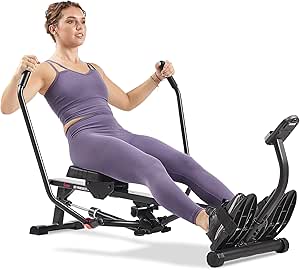 | Best Full-Body Range of Motion | Weight Capacity: 400 lbs | Resistance Levels: 12 | Arm Movement: 360-degree full motion | VIEW LATEST PRICE | See Our Full Breakdown |
| Merach RS3 Rowing Machine for Home Use |  | Best for Advanced Training | Resistance: Up to 80 lbs | Resistance Levels: 16 adjustable | Rowing Style: Sculling motion | VIEW LATEST PRICE | See Our Full Breakdown |
| Wenoker Magnetic Rowing Machine for Home, Full Body Workout, 16 Resistance Levels |  | Best Value Magnetic Rower | Resistance Levels: 16 magnetic | Max User Capacity: 350 lbs | Noise Level: Less than 30 dB | VIEW LATEST PRICE | See Our Full Breakdown |
| YOSUDA Rowing Machine for Home, Magnetic Rower with 16-Level Resistance |  | Best for Guided Home Workouts | Resistance Levels: 16 magnetic | Load-Bearing Capacity: 350 pounds | User Height Range: 4’5″ to 5’11” | VIEW LATEST PRICE | See Our Full Breakdown |
| Sunny Health & Fitness Compact Hydraulic Rower with 12-Level Resistance |  | Most Portable Pick | Weight: 22.4 lbs | Resistance Levels: 12 hydraulic | Material: Alloy steel | VIEW LATEST PRICE | See Our Full Breakdown |
| Sunny Health & Fitness Smart Magnetic Rower |  | Best App-Guided Training | Brand: Sunny Health & Fitness | Model: SF-RW524079 | Resistance Type: Magnetic | VIEW LATEST PRICE | See Our Full Breakdown |
| YOSUDA Rowing Machine for Home, Magnetic Rower with 16-Level Resistance |  | Best Value Magnetic Rower | Brand: YOSUDA | Resistance Type: Magnetic | Resistance Levels: 16 | VIEW LATEST PRICE | See Our Full Breakdown |
| TOUSAINS ER7 Self-Powered Magnetic Rowing Machine for Home |  | Best Premium Full-Featured Pick | Brand: TOUSAINS | Model: ER7 | Resistance Type: Magnetic | VIEW LATEST PRICE | See Our Full Breakdown |
| Winfita Magnetic Rowing Machine with 32 Resistance Levels |  | Best Mid-Range Resistance Range | Brand: Winfita | Resistance Type: Magnetic | Resistance Levels: 32 | VIEW LATEST PRICE | See Our Full Breakdown |
| GYMAX Hydraulic Rowing Machine with LCD Monitor |  | Best Budget Full-Motion Pick | Brand: GYMAX | Resistance Type: Hydraulic, adjustable up to 110 lbs | Weight Capacity: 265 lbs | VIEW LATEST PRICE | See Our Full Breakdown |
| compact home rowing machine | Resistance Levels | Weight Capacity |
|---|---|---|
| Major Fitness R1 Indoor Rowing | 10 | 330 lbs |
| Rowing Machine for Home | 16 | 350 lbs |
| Merach Q1S Magnetic Rowing Mac | — | — |
| Sportneer Foldable Hydraulic R | 12 | — |
| Feierdun Hydraulic Rowing Mach | 12 | 300 lbs |
| Sunny Health & Fitness Smart F | 12 | 400 lbs |
| Merach RS3 Rowing Machine for | 16 adjustable | 350 lbs |
| Wenoker Magnetic Rowing Machin | 16 magnetic | — |
| YOSUDA Rowing Machine for Home | 16 magnetic | — |
| Sunny Health & Fitness Compact | 12 hydraulic | — |
| Sunny Health & Fitness Smart M | 16 | 300 lbs |
| YOSUDA Rowing Machine for Home | 16 | 350 lbs |
| TOUSAINS ER7 Self-Powered Magn | 32 | 400 lbs |
| Winfita Magnetic Rowing Machin | 32 | 350 lbs |
| GYMAX Hydraulic Rowing Machine | — | 265 lbs |
More Details on Our Top Picks
Major Fitness R1 Indoor Rowing Machine
This pick makes the most sense for buyers who want a single rower that handles years of consistent training without dominating a room. The aluminum alloy rail gives the R1 a smoother, more durable glide than the steel-framed Rowing Machine for Home (B0F2M1SH21), and the 330 lb capacity covers most households. Its standout compactness feature is the folding rail — the machine collapses in seconds rather than requiring the vertical storage maneuver the Merach Q1S demands. Compared with the hydraulic options here, the R1 delivers a far more natural stroke feel. The tradeoff: the monitor only activates automatically when you start rowing, with no batteries or external power, so data readouts are basic and there’s no app ecosystem like the Q1S offers.
Pros:- Aluminum rail delivers a smoother, quieter stroke than budget steel rowers
- Folds quickly for storage without needing to stand it upright
- 15-minute assembly is faster than most magnetic competitors
- 330 lb weight capacity accommodates most users
Cons:- Basic monitor with no app connectivity or external power options
- Only 10 resistance levels, fewer than the 16 offered by magnetic rivals
Best for: Regular rowers who want a durable, quiet full-stroke machine that folds flat between sessions
Not ideal for: Data-driven athletes who want app connectivity and detailed metrics — the auto-activating monitor is bare-bones
- Resistance Levels:10
- Weight Capacity:330 lbs
- Frame Material:Aluminum alloy
- Foldable:Yes
- Assembly Time:15 minutes
- Frame Weight:62 lbs
Our verdict“If you want one rower that balances smoothness, durability, and fold-away storage, this is the safest all-around bet in the lineup.”
Rowing Machine for Home, 350 LB Capacity, 16-Level Silent Magnetic Resistance
For buyers who want magnetic resistance at a mid-range price, this rower undercuts the premium options while matching their core spec sheet: 16 resistance levels, a 350 lb steel frame, and operation under 25dB. That noise floor is genuinely quiet enough for apartment living or pre-dawn sessions — something the hydraulic Sportneer and Feierdun can’t reliably promise, since hydraulic cylinders tend to develop squeaks over time. Its 2.9 sq.ft. standing footprint when stored vertically is where the compact appeal really lives. Compared with the Merach Q1S, you get one extra resistance tier and a higher capacity, but the setup process is more involved and the feature set may overwhelm someone who just wants to row and read a number.
Pros:- Under 25dB operation suits shared living spaces and early mornings
- 16 resistance levels offer a wider range than the Major Fitness R1
- 350 lb capacity is the highest in this batch alongside the Merach Q1S
- Vertical storage shrinks the footprint to roughly 2.9 sq.ft.
Cons:- Assembly takes real time and effort compared with the mostly pre-assembled Sportneer
- App and resistance settings can feel complicated for first-time rowers
Best for: Apartment dwellers who want near-silent magnetic resistance and app-guided workouts without paying premium prices
Not ideal for: Taller users over 6’3″ — the slide rail length will cut the stroke short
- Weight Capacity:350 lbs
- Resistance Levels:16
- Max User Height:6’3″
- Frame Material:Steel
- Slide Rail Length:46 inches
- Noise Level:Less than 25dB
- Storage Footprint:2.9 sq.ft.
Our verdict“The strongest price-to-magnetic-performance ratio here, provided you’re under 6’3" and willing to spend an hour assembling it.”
Merach Q1S Magnetic Rowing Machine
Where most budget rowers quietly cap out around 6’3″, the Q1S accommodates users up to 6’5″ — and its dual slide rail design addresses the wobbling that single-rail machines like the Feierdun exhibit during aggressive strokes. At 42 pounds, it’s lighter than the Major Fitness R1 yet rated for the same 350 lb capacity, and its 1.6 x 2.1 ft storage footprint is among the smallest in this roundup. The built-in transport wheels make relocating it a one-person job. The compromises are real though: app-based courses require you to supply your own phone or tablet, and while assembly is straightforward, it still demands more effort than the near-ready-out-of-box hydraulic models from Sportneer.
Pros:- Fits users up to 6’5″, taller than most compact rowers in this price class
- Dual slide rails prevent the side-to-side wobble common on single-rail rowers
- Storage footprint of just 1.6 x 2.1 feet is the most compact here
- Built-in wheels make it easy to roll between rooms
Cons:- No included display device — phone or tablet purchased separately
- Assembly still requires meaningful effort despite the 30-minute estimate
Best for: Taller rowers (up to 6’5″) and anyone who values a rock-stable platform for harder intervals
Not ideal for: Buyers wanting a bundled screen — you’ll need to provide your own device for courses and tracking
- Dimensions:65L x 19.3W x 24.8H inches
- Product Weight:42 lbs
- Maximum User Weight:350 lbs
- Height Fit Up To:6’5″
- Space for Use:1.6 x 5.7 feet
- Space for Storage:1.6 x 2.1 feet
- Assembly Time:Within 30 minutes
- Warranty:1 year
Our verdict“The pick if your height or hard-charging stroke style rules out lighter single-rail machines, with the tightest storage footprint as a bonus.”
Sportneer Foldable Hydraulic Rowing Machine
This model stands out for versatility per dollar: unlike the pure rowing machines around it, the Sportneer adds multiple grip positions and a backrest, letting you use it for seated presses and other movements alongside rowing. It arrives mostly pre-assembled, so you’re rowing within minutes of unboxing — a genuine contrast to the hour-plus setups the 16-level magnetic rowers demand. With 12 resistance levels and a foldable frame on casters, it covers the compact brief well. The honest tradeoff is the hydraulic system itself: compared with the Major Fitness R1’s smooth rail glide, hydraulic resistance feels less fluid and tops out lower, so stronger users will exhaust the top setting. One packaging quirk worth knowing: the monitor ships inside the foam padding and is easy to throw away by accident.
Pros:- Multiple grip positions and backrest enable exercises beyond rowing
- Mostly pre-assembled, so setup takes minutes rather than an hour
- Folds up and rolls away on casters for easy storage
- 12 resistance levels cover a reasonable range for casual training
Cons:- Hydraulic resistance lacks the smoothness and top-end intensity of magnetic rowers
- Monitor packed inside foam is easily discarded during unboxing
Best for: Budget shoppers and light exercisers who want a multi-exercise machine they can set up the same day it arrives
Not ideal for: Intermediate-to-advanced rowers — hydraulic resistance caps out well below what magnetic systems can deliver
- Resistance Levels:12
- Color:Black
- Foldable:Yes
- Height Adjustment:3 gears
- Assembly:Minimal, mostly pre-assembled
Our verdict“A smart budget buy if you view it as a light full-body gym rather than a serious rowing trainer.”
Feierdun Hydraulic Rowing Machine for Home
At 22.4 pounds, this is the featherweight of the roundup — you can carry it to a closet or under a bed in a way that’s simply impossible with the 62 lb Major Fitness R1 or even the 42 lb Merach Q1S. Setup takes about five minutes, making it the true zero-friction entry point for anyone testing whether home rowing sticks. The low-impact hydraulic resistance with 12 levels is gentle on joints, and the ergonomic seat keeps short sessions comfortable. But the compactness comes at a cost: the 300 lb capacity is the lowest here, hydraulic cylinders are less durable long-term than magnetic flywheels, and there’s no digital display at all — so you’re rowing blind with no time, stroke count, or distance feedback.
Pros:- At 22.4 lbs, it’s the lightest and most portable rower in the roundup
- Five-minute setup means you can use it almost immediately
- Low-impact resistance is easy on knees, hips, and shoulders
- Stores in a closet or under furniture where full-size rowers can’t go
Cons:- No digital display or tracking of any kind
- Hydraulic resistance is less durable than magnetic systems over years of use
- 300 lb weight capacity is the lowest in this batch
Best for: Small-space dwellers, seniors, or fitness newcomers who prioritize portability and joint-friendly movement over data
Not ideal for: Anyone over 300 lbs or anyone who wants workout metrics — there’s no display and no app option
- Resistance Levels:12
- Weight Capacity:300 lbs
- Machine Weight:22.4 lbs
- Assembly:Quick 5-minute setup
- Resistance Type:Hydraulic
- Display:None
Our verdict“Buy it if portability is your number one requirement; skip it the moment you care about metrics, capacity, or long-term durability.”
Sunny Health & Fitness Smart Full Motion Rower
Most rowers on this list lock your arms into a single horizontal pull, which limits how much upper-body muscle you actually recruit. The Smart Full Motion Rower breaks that pattern with 360-degree moving arms, letting you row, sweep, and press in patterns closer to real sculling. That makes it a better fit for buyers who want strength and mobility work, not just cardio. Compared with the Merach RS3, which also uses a sculling-style motion, this Sunny model costs less and supports a much higher 400 lb weight capacity — but its 12 resistance levels feel coarser and less suited to serious training. App integration through SunnyFit adds guided structure that the Wenoker lacks entirely.
Pros:- 360-degree moving arms engage more upper-body muscle than fixed-handle rowers
- 400 lb weight capacity is the highest in this batch
- SunnyFit app provides guided workouts and rowing simulation
- Compact footprint with adjustable, anti-slip foot pedals
Cons:- 12 resistance levels limit progression for advanced users
- Assembly instructions are vague, adding frustration at setup
Best for: Buyers over 350 lbs or anyone wanting a rower that doubles as a functional strength tool
Not ideal for: Very tall users — the compact footprint shortens the stroke compared with longer-rail magnetic rowers
- Weight Capacity:400 lbs
- Resistance Levels:12
- Arm Movement:360-degree full motion
- Monitor Features:Stroke rate, time, count, calories, total strokes
- App Connectivity:SunnyFit app
- Foot Pedals:Anti-slip with adjustable straps
- Assembly:Easy
Our verdict“This is the pick if you want a rower that works more than your legs and back — as long as you’re under roughly 6 feet tall and don’t need fine resistance control.”
Merach RS3 Rowing Machine for Home Use
Where the Wenoker and YOSUDA cap out at magnetic resistance levels meant for steady cardio, the RS3 pushes up to 80 lbs of resistance — enough for genuine power training and interval work. Its sculling-style motion opens the chest on every stroke, mimicking on-water technique in a way fixed-handle rowers in this roundup don’t attempt. The Bluetooth-connected training modes give it more structure than the Wenoker’s bare-bones console, though you’ll need your phone connected to unlock the full experience. At 60.6 inches long, it’s one of the bigger footprints here, so the space-saving crowd may prefer the foldable hydraulic options like the Sunny Compact Rower instead.
Pros:- Up to 80 lbs of resistance supports high-intensity and strength-focused training
- Sculling-style motion delivers full chest expansion and realistic technique
- Multiple training modes via Bluetooth app connectivity
- Stable, smooth performance with 350 lb capacity
Cons:- Full feature set requires a Bluetooth connection and paired device
- Larger footprint than folding competitors, with a 6’4″ height ceiling
Best for: Experienced rowers and interval-training enthusiasts who’ve outgrown entry-level magnetic resistance
Not ideal for: Complete beginners — the sculling motion and app-dependent features have a steeper learning curve than a simple pull-handle rower
- Resistance:Up to 80 lbs
- Resistance Levels:16 adjustable
- Rowing Style:Sculling motion
- Connectivity:Bluetooth with interactive workout modes
- Max User Height:6’4″
- Weight Capacity:350 lbs
- Dimensions:60.6L x 29.5W x 28.3H inches
Our verdict“If 16-level magnetic rowers feel too easy after a few months, this is the logical upgrade — just make sure you have the floor space and patience for its app-driven features.”
Wenoker Magnetic Rowing Machine for Home, Full Body Workout, 16 Resistance Levels
This is the straightforward bargain of the magnetic group. Under-30-dB operation means you can row during a phone call in the next room — a real advantage for apartment dwellers comparing this against hydraulic models like the Feierdun, which can feel sticky by comparison. The vertical storage mode with transport wheels solves the classic rower problem of a machine eating your living room, something the Merach RS3 doesn’t offer at all. The tradeoff is bare-bones smarts: where the YOSUDA pairs with an app for guided training, the Wenoker gives you resistance and a monitor and little else. If your goal is quiet, no-frills cardio rather than coached workouts, that trade is easy to accept.
Pros:- Quieter than 30 dB — among the best for apartments and shared spaces
- Vertical storage and transport wheels shrink the footprint between workouts
- Sturdy steel slide rail supports 350 lbs
- 16 resistance levels cover beginner through intermediate intensity
Cons:- No app connectivity or built-in workout programs
- 30-minute assembly with limited instruction clarity
Best for: Budget-focused apartment dwellers who want quiet magnetic resistance and vertical storage
Not ideal for: Data-driven users who want app integration, guided programs, and performance analytics
- Resistance Levels:16 magnetic
- Max User Capacity:350 lbs
- Noise Level:Less than 30 dB
- Slide Rail Length:39 inches
- Assembly Time:Approximately 30 minutes
- Storage:Vertical with transport wheels
Our verdict“The best pure value if you want quiet magnetic smoothness without paying for smart features you’ll never open.”
YOSUDA Rowing Machine for Home, Magnetic Rower with 16-Level Resistance
The YOSUDA earns its place through smart app connectivity — guided sessions and performance tracking that turn a basic rower into a coaching tool, something the Wenoker simply doesn’t attempt. Its wide-track base feels more planted than narrower budget rowers, and the magnetic drive keeps noise low enough for apartment use. The honest limitation is the 4’5″ to 5’11” user height range, which excludes taller buyers who’d be better served by the Merach RS3’s 6’4″ ceiling. Engaging over 85% of muscle groups per stroke makes it effective low-impact training, but the fixed height cap and non-folding frame mean you should measure both yourself and your room before committing.
Pros:- App connectivity provides guided training and progress tracking
- Wide, stable track supports a confident stroke at 350 lbs capacity
- Quiet magnetic resistance suits early-morning or apartment workouts
- Low-impact motion engages over 85% of muscle groups
Cons:- Height range caps at 5’11”, excluding many male users
- Non-folding frame requires dedicated floor space
Best for: Motivation-focused beginners and intermediate users who want structured, app-guided rowing sessions
Not ideal for: Anyone over 5’11” — the rail length cuts the stroke short, and taller users should look at the Merach RS3 instead
- Resistance Levels:16 magnetic
- Load-Bearing Capacity:350 pounds
- User Height Range:4’5″ to 5’11”
- Dimensions:59L x 19W x 25H inches
- Connectivity:Smart app for guided training
- Assembly Time:Approximately 25 minutes
Our verdict“The right choice if you know you’ll actually follow guided workouts — skip it if you’re tall or prefer standalone training.”
Sunny Health & Fitness Compact Hydraulic Rower with 12-Level Resistance
At 22.4 lbs, this is by far the lightest machine in the roundup — light enough to carry to a closet or slide under a bed between sessions. Nothing else here comes close on portability; even the folding Major Fitness R1 weighs several times as much. For renters, RV owners, or anyone storing equipment seasonally, that matters more than any spec sheet. The compromises are real, though: hydraulic resistance feels less fluid than the magnetic drives on the Wenoker or YOSUDA, with a slightly jerky catch at higher settings. The padded seat, digital display, and device holder make it more usable than other budget hydraulics like the GYMAX, but it’s built for occasional sessions, not daily mileage.
Pros:- At 22.4 lbs, it’s effortlessly portable and stores almost anywhere
- 12 resistance levels suit a range of casual fitness levels
- Digital display, device holder, and padded seat add everyday convenience
- Quiet operation works for shared living spaces
Cons:- Hydraulic resistance is less smooth than magnetic or water alternatives
- Lighter build won’t withstand heavy daily use long-term
Best for: Small-space dwellers, travelers, and casual users who need a rower they can stash away in seconds
Not ideal for: Serious fitness enthusiasts — hydraulic resistance lacks the smoothness and durability of magnetic or water rowers
- Weight:22.4 lbs
- Resistance Levels:12 hydraulic
- Material:Alloy steel
- Display:Digital monitor with device holder
- Connectivity:Connected app support
- Comfort Features:Padded seat, adjustable foot pedals
- Noise Level:Quiet operation
Our verdict“Buy it for the portability, not the performance — the easiest rower to own if you’ll only use it a few times a week.”
Sunny Health & Fitness Smart Magnetic Rower
This model stands out for its app connectivity with trainer-led sessions, which most budget magnetic rowers in this price bracket skip entirely. Compared with the YOSUDA 16-Level Magnetic Rower, the Sunny pairs its 16 resistance levels with structured programming, so beginners get guidance rather than guessing at intensity. The dual-track design keeps the stroke controlled and stable, and the 45.7-inch rail accommodates a 40.9-inch inseam — enough for most users up to about 6’2″. The tradeoff: those 16 levels cap out lower than the TOUSAINS ER7’s 32, so stronger rowers may outgrow it within a year. You’ll also need your phone mounted and charged for every session, since the app is where the real value lives.
Pros:- App connectivity delivers trainer-led sessions and real-time metrics
- Quiet magnetic resistance works for apartments and early mornings
- Smooth, stable dual-track slide for controlled strokes
- 300 lb weight capacity with full leg extension for most heights
Cons:- 16 resistance levels may be outgrown by stronger users
- Smart features require a smartphone, adding setup friction to every workout
- Assembly instructions are sparse compared with better-documented rivals
Best for: Beginners and intermediate rowers who want guided workouts and real-time metrics without paying subscription prices
Not ideal for: Tall users over 6’2″ or advanced rowers who need resistance beyond 16 levels for HIIT training
- Brand:Sunny Health & Fitness
- Model:SF-RW524079
- Resistance Type:Magnetic
- Resistance Levels:16
- Slide Rail Length:45.7 inches
- Max Inseam:40.9 inches
- Weight Capacity:300 lbs
- Connectivity:App-enabled with trainer-led sessions
Our verdict“Buy this if you want coached, app-driven rowing at a midrange price; skip it if you already train at high intensity.”
YOSUDA Rowing Machine for Home, Magnetic Rower with 16-Level Resistance
YOSUDA earns this spot by sweating the details most budget rowers ignore. The +66% heavier flywheel eliminates the jerky dead spots common on cheaper magnetic machines like the Wenoker 16-Level, producing a stroke that feels closer to real water rowing. Its 50.2-inch slide rail is the longest in this batch, comfortably fitting users up to 6’3″ — a full five inches more rail than the Sunny Smart Magnetic Rower. The mono-rail frame rated at 350 lbs holds steady under hard sprints, and the sub-20dB drive is quiet enough for a sleeping household. The compromises: no folding mechanism mentioned, so it stores flat rather than upright, and like the Sunny, its 16 levels top out lower than the Winfita’s 32 for serious athletes.
Pros:- Heavy-duty flywheel delivers smooth strokes with no dead zones
- 50.2-inch rail fits users up to 6’3″ with full range of motion
- 350 lb capacity frame with zero flex at high intensity
- Under 20dB operation for apartment-friendly training
Cons:- 16 resistance levels limit ceiling for advanced conditioning
- No foldable storage — footprint stays large between sessions
- Best tracking features depend on third-party coaching apps
Best for: Tall, value-conscious buyers who want a smooth, stable magnetic rower under a midrange budget
Not ideal for: Serious trainers who need more than 16 resistance levels or anyone wanting a fold-away footprint
- Brand:YOSUDA
- Resistance Type:Magnetic
- Resistance Levels:16
- Slide Rail Length:50.2 inches
- Max User Height:6’3″
- Weight Capacity:350 lbs
- Noise Level:<20dB
- Frame:Reinforced mono-rail
Our verdict“The smartest spend for tall users who prioritize stroke quality and stability over maximum resistance.”
TOUSAINS ER7 Self-Powered Magnetic Rowing Machine for Home
The ER7 sits at the top of this lineup for three reasons the others can’t match: 32 resistance levels, a 400 lb weight capacity, and a self-powered design that needs no outlet or batteries. That last point matters for placement freedom — park it anywhere in a room, unlike app-dependent machines like the Sunny Smart Rower that assume a charged phone nearby. The foldable frame also gives it a storage edge over the non-folding YOSUDA, shrinking its footprint between sessions. You pay for all of it: the price runs above most magnetic competitors here, assembly is reportedly fiddlier than the YOSUDA’s, and digital tracking details are thin compared with the app ecosystems Sunny and Winfita offer. This is the machine for buyers who want a decade-proof frame rather than a starter rower.
Pros:- 32 resistance levels span beginner recovery to elite conditioning
- 400 lb weight capacity is the highest in this roundup
- Self-powered operation means no cords, outlets, or charging
- Foldable dual-rail design saves floor space between workouts
Cons:- Higher price than comparable magnetic rowers
- Assembly is more involved than simpler models
- Digital tracking features are sparsely documented
Best for: Buyers who want one rower that handles heavy users, high resistance ceilings, and any room placement for years
Not ideal for: Casual users or data-driven trackers — the price is hard to justify and the metrics ecosystem is underdeveloped
- Brand:TOUSAINS
- Model:ER7
- Resistance Type:Magnetic
- Resistance Levels:32
- Weight Capacity:400 lbs
- Power Source:Self-powered
- Rail Type:Dual-rail
- Foldable:Yes
Our verdict“The buy-once choice for heavier or stronger users who need headroom — overkill for light or casual use.”
Winfita Magnetic Rowing Machine with 32 Resistance Levels
Winfita splits the difference between the budget 16-level rowers and the premium TOUSAINS ER7. You get 32 resistance levels — double the Sunny Smart Rower and YOSUDA — at a price well below the ER7, making it the cheapest path here to a serious intensity ceiling. The commercial-grade alloy steel frame supports 350 lbs, matching the YOSUDA, and its 3.9 sq.ft. operating footprint is genuinely compact for a machine this sturdy. At under 25dB it’s quiet, though slightly noisier than the YOSUDA’s sub-20dB drive. Where it falls short: the 44-inch leg extension is shorter than both the YOSUDA and Sunny rails, taller rowers may feel cramped, and its app features and workout programs are underspecified compared with the Sunny’s trainer-led platform.
Pros:- 32 resistance levels provide a wide intensity range at a midrange price
- 350 lb capacity on commercial-grade alloy steel
- Compact 3.9 sq.ft. footprint suits small home spaces
- Quiet sub-25dB magnetic operation
Cons:- 44-inch leg extension is the shortest among top magnetic picks here
- App compatibility and workout programs are vague or missing
- Assembly instructions are not clearly documented
Best for: Intermediate users who want 32 resistance levels and solid build quality without paying premium prices
Not ideal for: Tall users with long inseams, and anyone who wants built-in guided workout programs
- Brand:Winfita
- Resistance Type:Magnetic
- Resistance Levels:32
- Weight Capacity:350 lbs
- Leg Extension Length:44 inches
- Noise Level:<25dB
- Footprint:3.9 sq.ft.
- Material:Commercial-grade alloy steel
- Display:LCD monitor with app support
Our verdict“The value play for average-height users who want resistance headroom now rather than upgrading later.”
GYMAX Hydraulic Rowing Machine with LCD Monitor
GYMAX takes a different mechanical path from every magnetic rower above: hydraulic resistance with full-motion arms. Those independent arms let you row in a natural arc, engaging chest and shoulders in ways a fixed-handle magnetic machine like the Sunny Smart Rower simply can’t. It’s also among the cheapest entries in this roundup, sets up quickly, and the adjustable resistance up to 110 lbs suits casual fitness fine. But the tradeoffs are real — hydraulic pistons feel less smooth than magnetic drives and can fade as they heat during long sessions. The 265 lb weight capacity is the lowest here, and unlike foldable machines such as the TOUSAINS ER7, it has no compact storage option, so it lives fully assembled in your space.
Pros:- Full-motion arms mimic real water rowing and engage upper body more
- Adjustable hydraulic resistance up to 110 lbs
- Quick, easy setup with a large cushioned seat for comfort
- LCD monitor tracks basic workout metrics
Cons:- Hydraulic resistance is less smooth and consistent than magnetic systems
- 265 lb weight capacity is the lowest in this lineup
- No folding design — cannot be stored compactly
Best for: Budget buyers and casual exercisers who want a natural rowing motion for light-to-moderate workouts
Not ideal for: Users over 265 lbs, serious cardio trainers, or anyone with limited storage space
- Brand:GYMAX
- Resistance Type:Hydraulic, adjustable up to 110 lbs
- Weight Capacity:265 lbs
- Handle Design:Full-motion arms
- Seat:Large cushioned
- Monitor:LCD display
- Frame Material:Steel
- Foot Pedals:Oversized with adjustable straps
Our verdict“An affordable, natural-feeling entry point for light home use — choose magnetic if smoothness and storage matter more.”

How We Picked
Since this roundup is built around compactness, folded footprint was the first filter — I prioritized machines that fold quickly, stand upright without a wall mount, and slide under a bed or into a corner without a second person’s help. From there, I ranked by stroke quality, because a tiny rower with a jerky or short stroke isn’t a bargain. Magnetic models scored higher than hydraulic ones here because the resistance stays consistent through the entire drive, while hydraulic cylinders tend to spike at the start of each pull and heat up during long sessions.
The remaining criteria were noise (apartment dwellers can’t tolerate a clanking chain or squeaking cylinder), weight capacity as a proxy for frame rigidity, resistance range for progressive overload, monitor usefulness, and price-to-performance value. That’s why the ranking favors mid-priced magnetic folders over cheap hydraulic units at the top, while still reserving spots for budget hydraulic models that genuinely solve the storage problem. Where two machines were nearly identical — like the duplicate YOSUDA listings — I ranked based on capacity details and app connectivity to separate them.
Factors to Consider When Choosing Compact Home Rowing Machines
A folding rail is only one part of the compact equation. Before you buy, these are the factors that actually determine whether a rower fits your space, your body, and your training style.Folded Footprint vs. Usable Footprint
Manufacturers love quoting folded dimensions, but storage shape matters as much as storage size. A machine that folds in half but must lie flat still eats closet floor space, while one that stands vertically takes almost none — as long as your ceiling clearance allows it. Measure the rower’s in-use length too: most magnetic models need seven to eight feet of rail clearance during a workout, which is often the real constraint in a small room. If you can’t spare that much room even temporarily, a compact hydraulic rower with arms instead of a long rail may be the only workable format. Also check whether the machine folds without tools; a rower that needs a wrench every time won’t get folded.
Hydraulic vs. Magnetic Resistance
This is the single biggest decision in the compact category. Hydraulic piston rowers are cheaper, lighter, and smaller, but the resistance feels uneven through the stroke, and the cylinders are the most common failure point — they lose tension and can leak over time, especially with daily use. Magnetic rowers cost more and fold slightly larger, but the resistance is frictionless, silent, and consistent for years with almost no maintenance. A common mistake is buying hydraulic to save $100 and replacing it within two years. If you row more than three times a week, the magnetic premium pays for itself in durability alone.
Weight Capacity and Frame Rigidity
Capacity ratings aren’t just about whether the frame holds — they’re a reliable signal of how stable the machine feels under hard effort. In this comparison, 350 LB-class rowers consistently felt planted during aggressive drives, while 265–300 LB models shifted or flexed at higher intensity. As a rule, buy at least 75–100 pounds of headroom above your body weight, especially if you do interval work. Heavier-capacity frames also tend to have longer, stiffer rails, which matters if you’re tall: a short rail forces a compressed stroke and undermines the whole point of rowing. Check the inseam or rail length spec before anything else if you’re over six feet.
Noise and Neighbor Considerations
Magnetic resistance is nearly silent, but the seat rollers and rail joints are usually what you actually hear. Plastic rollers on budget models develop a rumble over months, which is why build quality matters more than the resistance type on the noise front. Hydraulic cylinders can hiss, and air-gap hybrids like some Sunny models produce a whoosh that carries through thin walls. If you row early mornings or live above someone, prioritize magnetic resistance with an aluminum or steel rail and read reviews specifically mentioning roller noise after six months of ownership. A thick equipment mat under the machine cuts both vibration transfer and floor scratches cheaply.
Monitors, Apps, and What’s Actually Useful
Most monitors in this price range track the basics — time, strokes, distance, calories — but the numbers are estimates, not measurements, and calorie counts in particular are wildly optimistic. What genuinely adds value is Bluetooth connectivity to apps like Kinomap or Zwift, which turns a boring steady-state session into something structured. The Winfita and YOSUDA models stand out here for app support; basic LCD units like the GYMAX are fine if you just want a timer. Don’t pay extra for a color screen on a budget rower — accuracy and resistance range will improve your training far more than display polish. Track your progress with stroke rate and duration rather than the machine’s calorie figure.
Assembly and Long-Term Maintenance
Compact rowers ship in heavy boxes and require 30–90 minutes of assembly, usually just rail-to-frame and monitor mounting. Check the box weight before ordering — anything over 60 pounds is awkward to move alone and may need delivery help. Long-term, magnetic rowers need almost nothing beyond occasional rail cleaning and bolt checks, while hydraulic models need their pistons inspected for oil residue and smooth travel. Warranty length is a decent proxy for manufacturer confidence: one-year coverage is standard on budget hydraulic units, while better magnetic models often carry two to three years on the frame. Keep the assembly tools that come in the box — you will want them for the first few months of periodic bolt tightening.
Frequently Asked Questions
Can a compact rowing machine give a real full-body workout, or do I lose something versus a full-size rower?
You lose very little as long as the rail is long enough for your legs and the resistance range covers your fitness level. The drive mechanics — legs, then hips, then arms — are identical on a folding magnetic rower and a full-size gym machine. What actually differs is stroke feel: hydraulic compact models shorten and roughen the pull, which is why they ranked lower here despite folding smaller. If you’re over six feet tall, verify the rail supports your full leg extension before buying, because a compressed stroke trains less effectively. For most people under that height, a well-built magnetic compact rower provides 95% of the benefit in half the storage space.
Is hydraulic resistance really that much worse than magnetic for a beginner?
For light or occasional use, no — hydraulic rowers are perfectly serviceable and hard to beat on price. The problems appear with consistency: hydraulic cylinders heat up during long sessions and their resistance drifts, so a level-5 pull feels different at minute five than at minute thirty-five. That inconsistency makes progressive training harder to track, which frustrates beginners who are trying to build a habit. Magnetic resistance like the YOSUDA’s or Merach’s stays identical every stroke, which makes your improvement measurable. If you’re committed to rowing more than twice a week, spend the extra money on magnetic from day one rather than upgrading later.
How much floor space do I actually need to use one of these machines?
Budget for the in-use footprint, not the folded one. Most rail-based machines in this lineup need roughly eight feet of length by two feet of width while you’re rowing, because your body and the seat travel extend beyond the frame itself. Ceiling height matters for standing storage — a folded magnetic rower on end typically runs five to six feet tall. If eight feet of clear length isn’t realistic even temporarily, look at dual-arm hydraulic models like the Sunny full-motion rower, which cut the footprint nearly in half. Measure the space with a tape measure before ordering; eyeballing it is the most common reason compact rowers get returned.
What’s a reasonable budget, and where does spending more actually help?
Under $150 gets you a hydraulic rower that works but won’t last with heavy use — fine for testing whether you’ll stick with rowing. The $200–$350 band is where this category’s value lives: that’s where magnetic resistance, 350 LB frames, app connectivity, and quality folding mechanisms all become available, and it’s why most of my top picks sit there. Above $400, like the self-powered TOUSAINS ER7, you’re paying for specific features — power independence, premium rails, better warranty — rather than a dramatically better workout. The worst value in this category is the $150–$200 middle ground, where you get a heavier hydraulic machine that doesn’t fold or feel meaningfully better than the cheap one. Buy at the low end to try the habit, then jump straight to a solid magnetic model.
Are the duplicate-looking listings, like the two YOSUDA models, actually different machines?
Often yes, and the differences hide in the specs. In this roundup, the two YOSUDA magnetic rowers share a name and resistance level count but differ in weight capacity, folded dimensions, and monitor features, which is why they occupy different ranks. This is a pattern across the whole category — brands release near-identical versions of the same rower with different capacities or app compatibility, and retailers list them with nearly identical titles. When comparing, look past the product name to the capacity rating, folded dimensions, and connectivity line. If those match exactly, you’re usually safe buying whichever is cheaper that week.
Conclusion
The right pick depends less on specs and more on how often you’ll row and how tight your space really is. For most buyers, the YOSUDA Magnetic Rower is my best overall recommendation — it hits the sweet spot of smooth magnetic resistance, app connectivity, and a fold that works in real apartments. Best value goes to the Feierdun Hydraulic Rower, which costs a fraction of the magnetic options and still delivers a legitimate workout for light use. At the premium end, the TOUSAINS ER7 justifies its price with self-powered resistance and a more refined build — the pick if you want a machine that feels permanent rather than budget.
Beginners should start with the Merach Q1S or RS3, both forgiving, quiet, and easy to store while you build the habit. For extreme space constraints, the Sportneer and Sunny hydraulic rowers fold into the smallest footprints in the lineup, and the Sunny Smart Full Motion Rower suits anyone who wants an arm-driven, low-impact format instead of a long rail. Whatever you choose, prioritize stroke feel over level counts and folded inches over marketing claims — those two factors separated the winners from the rest of this list more than anything else.
Fall Picks
fall essentials
As an affiliate, we earn on qualifying purchases.