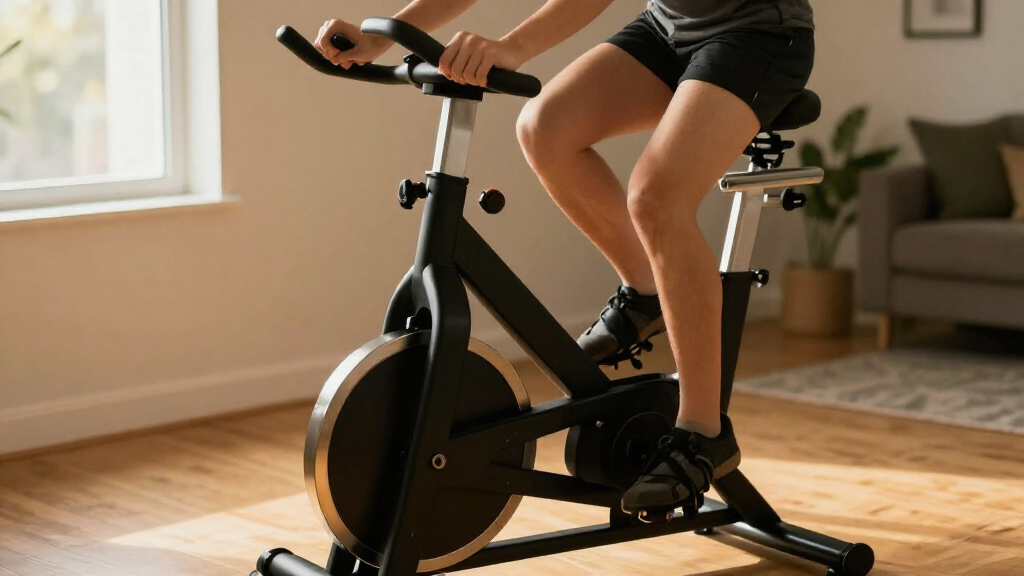
Among these spin bikes for home workouts, I rank the Peloton Cross Training Bike as the best overall for riders who want a large swivel screen and guided training, while the YOSUDA Pro Magnetic Exercise Bike stands out for a simpler, sturdier-feeling ride and the Birdfeel Foldable Exercise Bike suits homes short on space. The main tradeoffs are interactive features versus ongoing simplicity, and a broad resistance range versus a lower, more compact setup. Fit, noise, and the room needed around the bike can matter as much as screen size or app connectivity. My rankings weigh those everyday decisions alongside ride adjustability, build, and maintenance needs. Read on for the full breakdown and guidance on choosing a bike that fits your home and workout habits.

Get workout gear delivered free with Prime
- Fast, free delivery on millions of items
- Prime Video, Amazon Music and more included
- Member-only deals all year
Complete the kit


Key Takeaways
- The Peloton Cross Training Bike is the feature-led pick: Its 21.5-inch swivel touchscreen gives it a clear role for people who want guided workouts beyond cycling, while riders who prefer a screen-free routine may not need those extras.
- The YOSUDA Pro Magnetic Exercise Bike earns a different kind of appeal: It is the roundup’s simpler ride-focused alternative to the Peloton, for buyers who care more about indoor cycling than an integrated training ecosystem.
- App connectivity is not the same as a complete workout system: Several MERACH, YOSUDA, YPOO, OLIXIS, and pooboo models offer app features, so buyers should check what a specific app supports before treating connectivity as a reason to pay more.
- Resistance and space needs pull the shortlist in different directions: The Superun S1-Pro lists 32 resistance levels, while the Birdfeel folds for storage and has 8 levels; those specs serve different priorities rather than making one bike a clear replacement for the other.
- Fit and adjustability deserve a place beside features: Models such as the CURSOR and RELIFE foreground adjustable contact points, a practical consideration for shared homes where riders may differ in height or preferred posture.
| Peloton Cross Training Bike with 21.5-Inch Swivel Touchscreen |  | Best for Cross-Training | Model: BA05-DC07 | Screen: 21.5-inch rotating Full HD touchscreen | Resistance: Magnetic, 100 levels | VIEW LATEST PRICE | See Our Full Breakdown |
| MERACH S26 Magnetic Exercise Bike |  | Best for App Flexibility | Model: S26B2 | Resistance: Magnetic, adjustable from 0–100% | Weight capacity: 300 pounds | VIEW LATEST PRICE | See Our Full Breakdown |
| CURSOR Fitness Indoor Exercise Bike with Adjustable Seat and Handlebars |  | Best Lightweight Option | Model: CBE10 | Resistance mechanism: Friction, 100 listed levels | Drive system: Belt | VIEW LATEST PRICE | See Our Full Breakdown |
| RELIFE REBUILD YOUR LIFE EB801 Indoor Exercise Bike |  | Best for Shorter Riders | Model: EB801 (CA-EB801) | Drive system: Belt-driven | Resistance: Adjustable from 0% to 100% | VIEW LATEST PRICE | See Our Full Breakdown |
| YOSUDA Pro Magnetic Exercise Bike |  | Best for Quiet Tracking | Model: 002C | Resistance: Magnetic, 0–100 levels | Drive system: Belt drive | VIEW LATEST PRICE | See Our Full Breakdown |
| YPOO Magnetic Resistance Exercise Bike with App Connectivity |  | Best for Quiet App-Based Workouts | Resistance: Magnetic; 16 levels | Drive system: Belt | Noise level: Under 25 dB | VIEW LATEST PRICE | See Our Full Breakdown |
| MERACH Magnetic Resistance Exercise Bike with App |  | Best for Health-App Sync | Resistance: Magnetic, infinitely adjustable | Drive system: Multi-slot belt drive | Noise level: Below 25 dB | VIEW LATEST PRICE | See Our Full Breakdown |
| YOSUDA Indoor Exercise Bike with App Connectivity |  | Best for Flywheel-Focused Training | Flywheel weight: 25 lbs | Resistance: Friction; 100 levels listed | Drive system: Belt-driven | VIEW LATEST PRICE | See Our Full Breakdown |
| CHAOKE Indoor Exercise Bike with Adjustable Magnetic Resistance |  | Best for Shorter Riders | Resistance: Adjustable magnetic resistance, 0–100% | Maximum user weight: 300 lb | User height range: 4.7–5.9 ft | VIEW LATEST PRICE | See Our Full Breakdown |
| Superun S1-Pro Exercise Bike with 32-Level Magnetic Resistance |  | Best for Simple, Stepwise Resistance | Resistance: 32-level magnetic | Maximum user weight: 300 lbs | Adjustments: Four-way seat; two-way handlebars | VIEW LATEST PRICE | See Our Full Breakdown |
| Birdfeel Foldable Exercise Bike with 8-Level Magnetic Resistance |  | Best Compact Pick | Resistance: 8-level magnetic | Modes: Upright, semi-recumbent, foldable | Maximum user weight: 300 lbs | VIEW LATEST PRICE | See Our Full Breakdown |
| YOSUDA Magnetic Indoor Cycling Exercise Bike with App Connectivity |  | Best for App-Guided Training | Resistance: Stepless magnetic, 100 levels | Drive system: Belt | Flywheel: 25 lb | VIEW LATEST PRICE | See Our Full Breakdown |
| OLIXIS Indoor Exercise Bike with App Control and Quiet Magnetic Resistance |  | Best for a Cushioned Ride | Resistance: Infinite adjustable magnetic | Drive system: Belt drive | Maximum user weight: 300 lbs | VIEW LATEST PRICE | See Our Full Breakdown |
| Indoor Magnetic Resistance Exercise Bike |  | Best for Enclosed-Flywheel Safety | Resistance: Adjustable magnetic | Monitor metrics: Time, speed, distance, calories, odometer, heart rate | App connectivity: Kinomap, Zwift, Fitshow | VIEW LATEST PRICE | See Our Full Breakdown |
| pooboo Indoor Exercise Bike with Magnetic Resistance and App Connectivity |  | Best for Higher Weight Capacity | Resistance: 100-level magnetic | Drive: Belt drive | Noise level: Below 25 dB | VIEW LATEST PRICE | See Our Full Breakdown |
| spin bikes for home workout | Resistance | Maximum user weight | Drive system |
|---|---|---|---|
| Peloton Cross Training Bike wi | Magnetic, 100 levels | 297 pounds | — |
| MERACH S26 Magnetic Exercise B | Magnetic, adjustable from 0–100% | — | — |
| CURSOR Fitness Indoor Exercise | — | 300 pounds | Belt |
| RELIFE REBUILD YOUR LIFE EB801 | Adjustable from 0% to 100% | 280 pounds | Belt-driven |
| YOSUDA Pro Magnetic Exercise B | Magnetic, 0–100 levels | — | Belt drive |
| YPOO Magnetic Resistance Exerc | Magnetic; 16 levels | 300 lbs | Belt |
| MERACH Magnetic Resistance Exe | Magnetic, infinitely adjustable | 300 lb | Multi-slot belt drive |
| YOSUDA Indoor Exercise Bike wi | Friction; 100 levels listed | 300 lbs | Belt-driven |
| CHAOKE Indoor Exercise Bike wi | Adjustable magnetic resistance, 0–100% | 300 lb | — |
| Superun S1-Pro Exercise Bike w | 32-level magnetic | 300 lbs | — |
| Birdfeel Foldable Exercise Bik | 8-level magnetic | 300 lbs | — |
| YOSUDA Magnetic Indoor Cycling | Stepless magnetic, 100 levels | 300 lb | Belt |
| OLIXIS Indoor Exercise Bike wi | Infinite adjustable magnetic | 300 lbs | Belt drive |
| Indoor Magnetic Resistance Exe | Adjustable magnetic | — | — |
| pooboo Indoor Exercise Bike wi | 100-level magnetic | — | — |
More Details on Our Top Picks
Peloton Cross Training Bike with 21.5-Inch Swivel Touchscreen
The rotating 21.5-inch touchscreen makes this the broadest home-workout pick here: riders can follow cycling sessions, then turn the screen for strength, yoga, Pilates, or barre without relying on a separate display. Its 100 levels of manual magnetic resistance offer finer adjustment than a basic resistance setup, while adjustable seat and handlebars help tailor the bike to the rider. Compared with the MERACH S26, this Peloton is built around a more integrated on-screen workout experience rather than app compatibility across several platforms. The tradeoff is an ongoing All-Access Membership requirement for Peloton content and features, plus Wi-Fi access. At 178 pounds, it is also much harder to move or assemble than the lighter CURSOR Fitness bike, despite its compact footprint.
Pros:- Rotating touchscreen supports cycling and several off-bike workout types
- 100 levels of manual magnetic resistance allow gradual intensity changes
- Adjustable seat and handlebars support a more personalized riding position
- Compact footprint for a full-size bike with an integrated screen
Cons:- Peloton content and features require a paid All-Access Membership
- 178-pound weight makes assembly and relocation difficult
- Wi-Fi is required for the connected experience
Best for: Households that want guided cycling and off-bike workouts on one screen and are prepared to pay for Peloton membership content.
Not ideal for: Buyers seeking a low-maintenance, subscription-free bike, or anyone who needs to move the equipment frequently or lacks reliable Wi-Fi.
- Model:BA05-DC07
- Screen:21.5-inch rotating Full HD touchscreen
- Resistance:Magnetic, 100 levels
- Dimensions:54 x 23 x 61 inches (D x W x H)
- Bike weight:178 pounds
- Maximum user weight:297 pounds
- Connectivity:Bluetooth 5.2; Wi-Fi required
- Material:Alloy steel
Our verdict“Choose this Peloton if you want a screen-led cross-training setup at home and accept the membership and heavy frame as part of the package.”
MERACH S26 Magnetic Exercise Bike
The MERACH S26 suits riders who want connected tracking without being tied to one workout ecosystem. Its app support spans MERACH, Kinomap, and Zwift, with syncing to Google Fit and Apple Health, so it offers more platform choice than the screen-centered Peloton Cross Training Bike. The bike also includes a tablet holder, dumbbell rack, and dual bottle holders, useful details for riders who follow classes on their own device and keep small workout items close. Its stated 300-pound capacity and height range from 4 ft 8 in to 6 ft 2 in cover a broad range of users. The tradeoff is that the experience depends on a separate phone or tablet, and it needs assembly despite arriving 80% pre-assembled. Its under-25 dB noise claim is manufacturer-provided, not an independent guarantee.
Pros:- Works with several fitness apps and health-data platforms
- 300-pound stated weight capacity and a wide listed rider-height range
- Tablet holder, dumbbell rack, and two bottle holders are included
- Magnetic resistance and a design intended for quiet operation
Cons:- Requires assembly even though it arrives 80% pre-assembled
- Workout viewing depends on a separate tablet or phone
- The under-25 dB noise figure is a manufacturer claim
Best for: App-oriented riders who want to choose among compatible cycling platforms and sync workout data with Apple Health or Google Fit.
Not ideal for: Buyers who want an integrated workout screen or a bike that arrives ready to ride without assembly.
- Model:S26B2
- Resistance:Magnetic, adjustable from 0–100%
- Weight capacity:300 pounds
- User height range:4 ft 8 in–6 ft 2 in
- App compatibility:MERACH, Kinomap, Zwift, Google Fit, Apple Health
- Noise level:Under 25 dB (manufacturer claim)
- Frame material:Alloy steel
- Warranty:1 year
- Assembly:80% pre-assembled
Our verdict“Pick the MERACH S26 if app choice and health-platform syncing matter more to you than an integrated touchscreen.”
CURSOR Fitness Indoor Exercise Bike with Adjustable Seat and Handlebars
At 39.7 pounds, the CURSOR Fitness bike is the easiest choice in this group for riders who need to shift equipment around a room or prefer a less imposing home setup. Its belt drive is designed for quiet riding, and the frame is rated for users up to 300 pounds; the listed seat and handlebar adjustments also cover riders from 4 ft 8 in to 6 ft 2 in. Compared with the 178-pound Peloton Cross Training Bike, it gives up the large built-in screen and multi-workout format in favor of a simpler bike with a tablet mount and app support. One meaningful distinction is friction resistance: unlike the magnetic systems on the MERACH S26 and YOSUDA Pro, it uses a contact-based mechanism. It also runs on batteries, so it is not a fully power-free option.
Pros:- Light 39.7-pound frame is easier to reposition than the Peloton
- Seat and handlebar adjustments accommodate a listed 4 ft 8 in–6 ft 2 in range
- Reinforced steel frame has a 300-pound maximum user weight
- Belt drive is designed for quiet operation and assembly is listed under 30 minutes
Cons:- Friction resistance differs from the magnetic systems on the MERACH S26 and YOSUDA Pro
- Requires batteries
- App use relies on a separate device mounted on the tablet holder
Best for: Riders who want a lighter, easier-to-position bike with a broad listed height range and a place to mount their own device.
Not ideal for: Buyers who specifically want magnetic resistance, a built-in workout screen, or a heavier bike for a more substantial home setup.
- Model:CBE10
- Resistance mechanism:Friction, 100 listed levels
- Drive system:Belt
- Maximum user weight:300 pounds
- Item weight:39.7 pounds
- Seat adjustment:4-way; 7 vertical settings from 32.2–39.1 inches
- Handlebar adjustment:5 vertical settings from 36.2–46.85 inches
- Recommended rider height:4 ft 8 in–6 ft 2 in
- Power source:Battery powered
Our verdict“Choose the CURSOR if a lighter, adjustable bike matters more than magnetic resistance or an integrated screen.”
RELIFE REBUILD YOUR LIFE EB801 Indoor Exercise Bike
The EB801 is the most targeted fit in this group: its listed rider-height range ends at 5 ft 8 in, making it a clearer match for shorter riders than the MERACH S26 or CURSOR Fitness bike, both of which list users up to 6 ft 2 in. A six-way adjustable seat, six-level handlebar height adjustment, and shock-absorbing seat provide several ways to tune comfort for regular home rides. Its belt drive is listed below 25 decibels, and transport wheels make it easier to shift the bike than the much heavier Peloton. The limits are just as specific: taller riders should look elsewhere, and its 280-pound maximum user weight is lower than the 300-pound capacities listed for MERACH and CURSOR. It also has an LED display rather than a large class-ready screen.
Pros:- Six-way seat adjustment and six-level handlebar adjustment support fit customization
- Shock-absorbing seat is aimed at more comfortable home sessions
- Belt drive is listed below 25 decibels
- Transport wheels and a compact design help with repositioning
Cons:- Listed height range stops at 5 ft 8 in
- 280-pound maximum user weight is below the MERACH S26 and CURSOR ratings
- LED display does not provide the Peloton’s large rotating workout screen
Best for: Shorter riders who want an adjustable, compact home bike with transport wheels and a more forgiving seat.
Not ideal for: Riders taller than 5 ft 8 in, users above the 280-pound limit, or anyone seeking an integrated video workout screen.
- Model:EB801 (CA-EB801)
- Drive system:Belt-driven
- Resistance:Adjustable from 0% to 100%
- Maximum user weight:280 pounds
- User height range:4 ft 8 in–5 ft 8 in
- Seat adjustment:6-way adjustable
- Handlebar adjustment:6-level height adjustment
- Display:LED
- Assembly:80% pre-assembled
Our verdict“The EB801 makes the most sense for shorter riders who value comfort and easy repositioning over a broad height range or a built-in class screen.”
YOSUDA Pro Magnetic Exercise Bike
The YOSUDA Pro combines magnetic resistance and a belt drive with Bluetooth app support and an LCD that tracks time, speed, distance, calories, and heart rate. That gives riders useful workout feedback without requiring the Peloton’s large touchscreen or its membership-based content. Its stated noise level of 20 dB or less is quieter on paper than the under-25 dB claims for the MERACH S26, CURSOR, and RELIFE bikes, though those figures are not independently verified here. Six-way seat adjustment, two-way handlebar adjustment, a cushioned seat, and holders for a tablet and bottle make it well equipped for home sessions. The key caution is the conflicting weight-capacity listing: the description says 300 pounds, while the title says 350 pounds. I would not choose it for a rider whose safety depends on the higher figure until that discrepancy is confirmed.
Pros:- Magnetic resistance and belt drive are designed for quiet home workouts
- LCD tracks time, speed, distance, calories, and heart rate
- Bluetooth app support adds connected workout options
- Six-way seat adjustment and included tablet and bottle holders support routine use
Cons:- Weight capacity is inconsistent: 300 pounds in the description and 350 pounds in the title
- Two-way handlebar adjustment offers fewer adjustment directions than the six-level RELIFE setup
- Workout content requires a separate device rather than an integrated screen
Best for: Riders who want a quiet magnetic bike with basic workout metrics, Bluetooth app support, and room for a tablet and water bottle.
Not ideal for: Buyers who need a confirmed 350-pound capacity or want an integrated touchscreen and guided workouts on the bike.
- Model:002C
- Resistance:Magnetic, 0–100 levels
- Drive system:Belt drive
- Weight capacity:Conflicting listings: 300 pounds in description; 350 pounds in title
- Noise level:≤20 dB (listed)
- Seat adjustment:6-way
- Handlebar adjustment:2-way
- Connectivity:Bluetooth app support
- Display metrics:Time, speed, distance, calories, and heart rate
Our verdict“Choose the YOSUDA Pro for quiet magnetic resistance and straightforward tracking, but verify its weight limit before buying if capacity is a deciding factor.”
YPOO Magnetic Resistance Exercise Bike with App Connectivity
The YPOO BC710 suits home riders who want a quieter setup and guided app options without moving to a more feature-heavy bike like the Peloton Cross Training Bike. Its magnetic resistance and belt drive are rated below 25 dB, a practical advantage for workouts near other people or during quieter hours. Support for Zwift and KINOMAP adds virtual rides, while the LCD monitor covers basic metrics when you want to ride without an app. The seat and handlebars adjust for riders from 4’8" to 6’1", and the bike arrives 80% pre-assembled. The tradeoffs are a 300 lb weight limit and remaining setup work; riders taller than the stated range or seeking a fully assembled arrival should look elsewhere. Compared with the YOSUDA Indoor Exercise Bike, this model uses magnetic rather than friction resistance, though the YOSUDA lists a heavier flywheel.
Pros:- Magnetic resistance and belt drive are rated under 25 dB for quieter home sessions.
- Connects with YPOOFIT, KINOMAP, and Zwift for virtual training options.
- Seat and handlebars adjust for riders from 4’8" to 6’1".
- Includes an LCD monitor, tablet holder, bottle holders, and transport wheels.
Cons:- The 300 lb maximum user weight rules it out for some riders.
- 80% pre-assembled still means completing setup after delivery.
Best for: Apartment or shared-home riders who want quiet workouts, app-guided rides, and fit adjustments for a range of household users.
Not ideal for: Riders over 300 lb or taller than 6’1", and buyers who want a bike delivered fully assembled.
- Resistance:Magnetic; 16 levels
- Drive system:Belt
- Noise level:Under 25 dB
- Rider height range:4’8"–6’1"
- Maximum user weight:300 lbs
- App compatibility:YPOOFIT, KINOMAP, and Zwift
- Dimensions:32.9" D × 19.3" W × 44.5" H
- Assembly:80% pre-assembled
Our verdict“Choose the YPOO if quiet magnetic resistance and familiar cycling apps matter more to you than a heavier listed flywheel or a no-assembly setup.”
MERACH Magnetic Resistance Exercise Bike with App
The MERACH makes the most sense for riders who want workout data to follow them beyond the bike. Alongside its own app and compatibility with KINOMAP and Zwift, it can sync with Google Fit and Apple Health—an advantage over the YPOO BC710, whose listed app support focuses on cycling platforms. Its quiet belt drive is rated below 25 dB, and infinite resistance adjustment lets you make finer intensity changes than a bike with fixed steps such as the Superun S1-Pro’s 32 levels. Seat and handlebar adjustment, caged pedals, and bottle holders support regular home use. The compromise is that app features and tracking depend on compatible devices, and the bike still requires setup after delivery. Its one-year warranty is useful context, but not a substitute for checking device compatibility before buying.
Pros:- Syncs workout data with Google Fit and Apple Health as well as cycling apps.
- Infinite resistance adjustment allows gradual changes in effort.
- Quiet multi-slot belt drive is rated below 25 dB.
- Seat and handlebars adjust, with caged pedals and bottle holders included.
Cons:- App tracking and features depend on compatible devices.
- Requires setup after delivery despite arriving 80% pre-assembled.
- The 300 lb weight capacity may not suit every rider.
Best for: Riders who track fitness across Google Fit or Apple Health and want app-connected rides with smoothly adjustable resistance.
Not ideal for: Buyers who do not want to use a compatible phone or tablet, or who want a bike that needs little setup after delivery.
- Resistance:Magnetic, infinitely adjustable
- Drive system:Multi-slot belt drive
- Noise level:Below 25 dB
- User height range:4 ft 8 in to 6 ft 2 in
- Maximum user weight:300 lb
- App and health sync:MERACH, KINOMAP, Zwift; Google Fit and Apple Health
- Seat adjustment:4-way; 32.4–40.6 in
- Warranty:1 year
Our verdict“Pick the MERACH if health-platform syncing and continuous resistance adjustment are priorities, and you are comfortable using a compatible device.”
YOSUDA Indoor Exercise Bike with App Connectivity
The YOSUDA stands apart from the magnetic bikes here by pairing a 25 lb flywheel with friction resistance. That makes it a fit for riders who value a substantial flywheel and a familiar manual resistance setup, rather than the low-maintenance magnetic approach used by the YPOO BC710 and CHAOKE 520A. Its belt drive is designed for a smooth, quiet ride, while the steel frame and 300 lb capacity support regular home cycling. Four-way seat adjustment and two-way handlebar adjustment help more riders find a workable position; Bluetooth app support, an LCD, and a tablet holder add basic workout convenience. The main tradeoff is friction: it can require more maintenance than magnetic resistance. The listed dimensions also give an unusually narrow width, so check the actual setup footprint before planning storage.
Pros:- 25 lb flywheel provides a substantial rotating mass for home cycling sessions.
- Belt-driven system is designed for a smooth, quiet ride.
- Four-way seat and two-way handlebar adjustment help tailor the fit.
- Includes Bluetooth app support, an LCD display, and a tablet holder.
Cons:- Friction resistance may need more maintenance than magnetic systems such as the YPOO or CHAOKE.
- Assembly is required.
- The listed app support does not identify specific compatible platforms.
Best for: Home cyclists who prefer a heavier flywheel and manual friction resistance, with adjustable fit and basic Bluetooth app support.
Not ideal for: Riders seeking magnetic resistance with less routine maintenance, or buyers who need a clearly stated Zwift or KINOMAP compatibility list.
- Flywheel weight:25 lbs
- Resistance:Friction; 100 levels listed
- Drive system:Belt-driven
- Maximum user weight:300 lbs
- User height range:4 ft 8 in to 6 ft 0 in
- Adjustments:Four-way seat; two-way handlebars
- Connectivity and display:Bluetooth app support; LCD
- Dimensions:29.9 in D × 7.47 in W × 38.6 in H
Our verdict“Choose this YOSUDA if you want a 25 lb flywheel and accept the upkeep tradeoff of friction resistance.”
CHAOKE Indoor Exercise Bike with Adjustable Magnetic Resistance
The CHAOKE is a straightforward magnetic option for riders who fit its 4.7–5.9 ft height range and want a stable-feeling frame for home workouts. Its steel triangular and H-shaped construction is intended to support steady pedaling, while adjustable magnetic resistance and app compatibility cover basic intensity changes and virtual training. Against the YPOO BC710, CHAOKE gives a broader stated resistance span of 0–100% but a shorter rider-height ceiling; the YPOO lists riders up to 6’1" and specifies 16 levels. That makes fit the deciding difference for taller households. The digital display keeps workout information on the bike, and a one-year warranty is included. The product details do not specify a noise rating or an app list beyond Kinomap and other apps, and seat comfort on longer rides may vary.
Pros:- Adjustable magnetic resistance supports changes from warm-up effort to harder sessions.
- Steel triangular and H-shaped frame design is built for stability.
- App compatibility includes Kinomap.
- Includes a digital display and a one-year warranty.
Cons:- The stated height range tops out at 5.9 ft, below the YPOO BC710’s listed 6’1" limit.
- Seat comfort may be a concern during longer workouts.
- The supplied details do not state a noise level or specify all compatible apps.
Best for: Shorter riders who want magnetic resistance, basic app-compatible training, and a steel-framed bike for home use.
Not ideal for: Riders taller than 5.9 ft, or buyers who need a stated noise rating, detailed app list, or documented long-session seat comfort.
- Resistance:Adjustable magnetic resistance, 0–100%
- Maximum user weight:300 lb
- User height range:4.7–5.9 ft
- Frame:Steel, triangular and H-shaped design
- App compatibility:Kinomap and other apps
- Display:Digital
- Warranty:1 year
Our verdict“The CHAOKE is a sensible match for shorter riders who want magnetic resistance, but taller users should favor a bike with a higher stated fit range.”
Superun S1-Pro Exercise Bike with 32-Level Magnetic Resistance
The Superun S1-Pro suits riders who want clear resistance steps without making app connectivity the focus. Its 32-level magnetic resistance offers more graduated choices than a basic fixed-step setup, while the LCD tracks time, speed, distance, calories, and RPM. That makes workout progress easier to follow at a glance than on the CHAOKE, whose supplied details identify a digital display but not its metrics. The S1-Pro also has a four-way adjustable seat and two-way handlebars, plus transport wheels for moving it after a session. Compared with the MERACH, it does not list app or health-platform syncing, so it is less suited to riders who want connected data. At 43.1 lb, it is movable but not a featherweight, and assembly is required; its 300 lb capacity may also limit some buyers.
Pros:- 32 magnetic resistance levels provide stepwise control over workout intensity.
- LCD displays time, speed, distance, calories, and RPM.
- Four-way seat and two-way handlebar adjustment support a more tailored fit.
- Transport wheels help with moving and storing the bike.
Cons:- Assembly is required.
- No app connectivity is listed, unlike the MERACH and YPOO options.
- The 300 lb maximum user weight may not suit all riders.
Best for: Riders who prefer selectable resistance steps, clear on-bike workout metrics, and transport wheels for moving the bike at home.
Not ideal for: App-focused cyclists who want virtual training or health-platform syncing, and riders whose weight exceeds the 300 lb capacity.
- Resistance:32-level magnetic
- Maximum user weight:300 lbs
- Adjustments:Four-way seat; two-way handlebars
- Display metrics:Time, speed, distance, calories, and RPM
- Frame material:Alloy steel
- Item weight:43.1 lbs
- Dimensions:40.55 × 19.29 × 44.09 in
- Warranty:1 year
Our verdict“Choose the S1-Pro if you want graduated magnetic resistance and useful on-bike metrics without needing app-connected workouts.”
Birdfeel Foldable Exercise Bike with 8-Level Magnetic Resistance
The Birdfeel is the clearest choice here for homes where a dedicated bike footprint is hard to spare. Its three modes cover upright and semi-recumbent riding as well as folding for storage, while the magnetic resistance is described as quiet enough for shared living spaces. Dual resistance bands add a way to work the arms during lighter pedaling, a feature the more cycling-focused YOSUDA 002C does not list. The tradeoff is a simpler eight-level resistance range rather than the finer adjustments offered by bikes with 100 levels, such as the YOSUDA. The description also gives no bike or folded dimensions, so I would not choose it on storage fit alone without checking those details. Expect some assembly despite its partly assembled delivery.
Pros:- Folds for storage and offers upright and semi-recumbent riding modes.
- Quiet magnetic resistance suits indoor workouts near other household activity.
- Dual resistance bands add upper-body exercise without separate equipment.
- Seat adjusts across a stated rider-height range of 4’4″–6’6″.
Cons:- Eight resistance levels offer less fine control than the 100-level YOSUDA 002C.
- No overall or folded dimensions are provided to confirm storage fit.
- Assembly is required even though the bike arrives 70% pre-assembled.
Best for: Apartment dwellers who want a foldable bike for moderate cardio and occasional upper-body work, and can verify its folded footprint before buying.
Not ideal for: Riders seeking precise resistance adjustments for structured cycling sessions or shoppers who need confirmed folded dimensions before planning storage.
- Resistance:8-level magnetic
- Modes:Upright, semi-recumbent, foldable
- Maximum user weight:300 lbs
- Recommended rider height:4’4″–6’6″
- Noise level:<15 dB
- Monitor metrics:Distance, time, speed, calories
- Additional features:Dual resistance bands, phone holder, transport wheels
- Assembly:70% pre-assembled
Our verdict“Choose the Birdfeel if folding and multiple riding positions matter more than fine-grained resistance control.”
YOSUDA Magnetic Indoor Cycling Exercise Bike with App Connectivity
The YOSUDA 002C suits riders who want more control over workout intensity and a Bluetooth link for tracking or guided sessions. Its 100 resistance levels allow smaller adjustments than the Birdfeel’s eight settings, which can help when building a repeatable training routine. A 25 lb flywheel and belt drive round out a more cycling-oriented setup than the Birdfeel’s foldable, multi-position design. The four-way memory foam seat adjustment and stated 4’8″–6’2″ fit range make rider positioning more adaptable, though taller or shorter riders fall outside that range. The tradeoff is that it is not presented as foldable, and its warranty coverage is split: three months on the frame and 12 months on parts. Assembly remains part of setup despite 80% pre-assembly.
Pros:- 100 magnetic resistance levels support gradual intensity changes.
- Bluetooth connectivity supports workout tracking and guided training.
- Four-way adjustable memory foam seat helps tailor riding position.
- 25 lb flywheel and belt drive suit focused indoor cycling sessions.
Cons:- The stated rider-height range excludes some shorter and taller users.
- Warranty terms vary by component: three months on the frame and 12 months on parts.
- Assembly is required, and the bike is not described as foldable.
Best for: Home cyclists between 4’8″ and 6’2″ who want app-connected training and frequent, fine resistance adjustments.
Not ideal for: People who need a folding bike, fall outside the listed height range, or prefer a single, longer warranty term across components.
- Resistance:Stepless magnetic, 100 levels
- Drive system:Belt
- Flywheel:25 lb
- Maximum user weight:300 lb
- Rider height range:4’8″–6’2″
- Seat:4-way adjustable memory foam
- Connectivity:Bluetooth app connectivity
- Dimensions:37.01″ D × 7.48″ W × 29.92″ H
- Warranty:3 months on frame; 12 months on parts
Our verdict“Pick the YOSUDA 002C for app-linked cycling and more precise resistance control, provided its fit range works for you.”
OLIXIS Indoor Exercise Bike with App Control and Quiet Magnetic Resistance
The OLIXIS puts comfort and app choice ahead of storage flexibility. Its spring-suspension seat is a distinct feature in this group, intended to soften the feel of longer indoor sessions compared with the straightforward adjustable seat on the YOSUDA 002C. It also offers infinite-adjustable magnetic resistance and compatibility with FITSHOW, KINOMAP, and Zwift, giving app-oriented riders several options without naming a single required platform. The belt drive is intended for quieter home use, and adjustable seat and handlebar heights help tailor the position. Its 43.1 × 20.5 × 47.6-inch footprint is stated, unlike the Birdfeel’s unspecified dimensions, but it is not described as foldable. One uncertainty is pulse tracking: the display lists pulse, but the supplied details do not explain how it is measured.
Pros:- Spring-suspension seat adds cushioning for indoor workout sessions.
- Infinite-adjustable magnetic resistance supports gradual changes in effort.
- Compatible with FITSHOW, KINOMAP, and Zwift.
- Seat and handlebars adjust, with stated overall dimensions for space planning.
Cons:- Pulse is listed as a display metric, but the measurement method is unspecified.
- The 43.1 × 20.5 × 47.6-inch bike is not described as foldable.
- The supplied details do not state a warranty or rider-height range.
Best for: Home riders who prioritize a cushioned seat, adjustable riding position, and access to several cycling apps.
Not ideal for: Buyers needing a folding frame, or anyone who requires a clearly specified heart-rate sensor before choosing a bike.
- Resistance:Infinite adjustable magnetic
- Drive system:Belt drive
- Maximum user weight:300 lbs
- App compatibility:FITSHOW, KINOMAP, Zwift
- Display metrics:Time, speed, distance, calories, pulse, scan
- Handlebar height:35.4–40.2 inches
- Seat height:33.5–41.3 inches
- Overall dimensions:43.1 × 20.5 × 47.6 inches
Our verdict“Choose the OLIXIS if seat cushioning and several app options matter more than folding storage or clarified pulse tracking.”
Indoor Magnetic Resistance Exercise Bike
This bike is a practical match for households that want adjustable positioning and an enclosed flywheel rather than a foldable design. The fully enclosed flywheel adds a physical barrier around a moving part, while magnetic resistance supports a quiet indoor ride. Its seat moves up, down, forward, and backward, giving riders more ways to adjust their reach than the Birdfeel’s listing, which does not specify multi-direction seat travel. App support for Kinomap, Zwift, and Fitshow overlaps with the OLIXIS, while the six-metric display adds an odometer and handlebar-based heart-rate sensing. The listed fit range is 4’8″–6’2″, so it is less accommodating on paper than the Birdfeel for riders outside that span. Assembly is required, and the supplied data provides no independent evidence about long-term reliability.
Pros:- Enclosed flywheel provides a barrier around the moving wheel.
- Seat adjusts up, down, forward, and backward for position changes.
- Connects with Kinomap, Zwift, and Fitshow and tracks six metrics.
- Handlebar sensors are specified for heart-rate monitoring.
Cons:- Assembly is required.
- The listed 4’8″–6’2″ height range may not suit shorter or taller riders.
- No long-term reliability information is supplied.
Best for: Riders from 4’8″ to 6’2″ who value an enclosed flywheel, multi-direction seat adjustment, and basic app connectivity.
Not ideal for: People outside the stated height range, shoppers seeking a foldable bike, or buyers who want reliability evidence beyond the listed specifications.
- Resistance:Adjustable magnetic
- Monitor metrics:Time, speed, distance, calories, odometer, heart rate
- App connectivity:Kinomap, Zwift, Fitshow
- Heart-rate monitoring:Handlebar sensors
- Maximum weight capacity:300 lbs
- Seat adjustment:Up, down, forward, backward
- Recommended rider height:4’8″–6’2″
- Frame:High-carbon steel
- Warranty:1 year
Our verdict“This is a good fit for riders who want an enclosed flywheel and adjustable seat but do not need a folding frame.”
pooboo Indoor Exercise Bike with Magnetic Resistance and App Connectivity
The pooboo stands apart for riders who need more stated capacity than the other bikes in this batch: its 350 lb limit exceeds the 300 lb ratings on the OLIXIS and YOSUDA 002C. It pairs that capacity with 100 magnetic resistance levels, a belt drive, and Bluetooth links to MERACH, Kinomap, and Zwift. That makes it a more adjustable app-connected choice than the Birdfeel, whose eight settings favor simplicity and compact storage. The pooboo’s triangular steel frame and noise specification below 25 dB suit home use, but it is not described as foldable, so it is less suited to rooms that need to reclaim floor space after workouts. Its listed rider range of 4.9 to 6.3 feet also leaves some shorter riders outside the stated fit guidance. Heart-rate tracking is listed, though its sensor method is not explained.
Pros:- 350 lb capacity exceeds the 300 lb ratings of the other bikes in this batch.
- 100 resistance levels allow detailed adjustments to workout intensity.
- Bluetooth connects with MERACH, Kinomap, and Zwift.
- Belt drive and a stated noise level below 25 dB suit indoor use.
Cons:- The 4.9–6.3 ft rider-height range may not fit shorter users.
- The bike is not described as foldable for storage.
- Heart-rate tracking is listed without a specified sensor method.
Best for: Riders who need a stated capacity up to 350 lbs and want app-connected workouts with finely adjustable magnetic resistance.
Not ideal for: People who need a fold-away bike, are shorter than the listed rider range, or require a clearly identified heart-rate sensor.
- Resistance:100-level magnetic
- Drive:Belt drive
- Noise level:Below 25 dB
- Weight capacity:350 lbs
- Rider height range:4.9–6.3 ft
- Connectivity:Bluetooth; MERACH app, Kinomap, Zwift
- Workout tracking:Time, distance, calories, speed, heart rate
- Frame:Triangular steel frame
- Warranty:12 months
Our verdict“Choose the pooboo if its higher capacity and broad app support matter more than a folding design or clarified heart-rate sensing.”
How We Picked
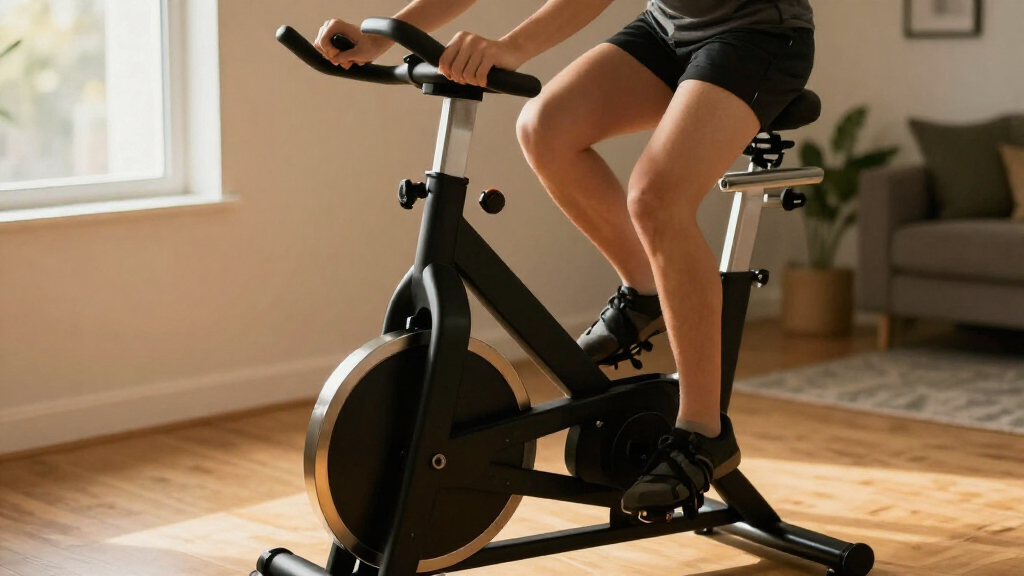
I compared these 15 bikes through the needs of a home rider: whether the bike offers usable resistance for steady rides and harder intervals, whether its seat and handlebars allow a workable fit, and whether its controls and setup seem straightforward for regular use. I also looked at the practical costs of owning an indoor bike, including floor space, storage, noise expectations, routine upkeep, and dependence on an app or screen. A listed feature matters most when it changes how easily a buyer can train at home.
The ranking gives the lead spot to the Peloton because its swivel touchscreen and training focus offer the broadest guided-workout proposition in this group. The YOSUDA Pro ranks as a ride-first alternative, while options such as the Birdfeel and Superun S1-Pro rise for narrower needs around storage and resistance choice. The other models are distinguished by their stated features, including adjustable fit, app connectivity, or magnetic resistance; where the provided product details do not establish a clear advantage, I avoid assuming one. A buyer should verify dimensions, rider limits, warranty, assembly requirements, and app terms on the current listing before deciding.
| spin bikes for home workout | Drive system |
|---|---|
| Peloton Cross Training Bike wi | — |
| MERACH S26 Magnetic Exercise B | — |
| CURSOR Fitness Indoor Exercise | Belt |
| RELIFE REBUILD YOUR LIFE EB801 | Belt-driven |
| YOSUDA Pro Magnetic Exercise B | Belt drive |
| YPOO Magnetic Resistance Exerc | Belt |
| MERACH Magnetic Resistance Exe | Multi-slot belt drive |
| YOSUDA Indoor Exercise Bike wi | Belt-driven |
| CHAOKE Indoor Exercise Bike wi | — |
| Superun S1-Pro Exercise Bike w | — |
| Birdfeel Foldable Exercise Bik | — |
| YOSUDA Magnetic Indoor Cycling | Belt |
| OLIXIS Indoor Exercise Bike wi | Belt drive |
| Indoor Magnetic Resistance Exe | — |
| pooboo Indoor Exercise Bike wi | — |
Factors to Consider When Choosing Spin Bikes For Home Workouts
Choosing a home spin bike is less about collecting the most features and more about matching the bike to the way you will use it. I would settle the room, fit, and training questions before comparing screens or app names.
Match Resistance to Your Training, Not Just the Number of Levels
A high level count can make small adjustments easier, but it does not tell you how heavy the hardest setting feels or how smoothly resistance changes. If you plan to alternate easy rides with challenging intervals, look for clear details about resistance control and test whether the adjustment method suits your routine. Riders doing steady cardio may get more practical value from smooth, predictable changes than from a long list of levels. A common mistake is treating the Superun S1-Pro’s 32 levels as proof that it offers more useful intensity than every lower-count bike. Compare the resistance mechanism and range where that information is available, not only the number. If the product listing is vague, avoid buying on level count alone.
Check Fit Before You Compare Workout Screens
Seat height, fore-aft adjustment, and handlebar position shape comfort over every ride, especially when more than one person will use the bike. Measure the range of adjustment and compare it with each rider’s body and preferred posture rather than relying on a general claim that a bike is adjustable. Also check the listed rider weight limit and whether the seat can be replaced if it does not suit you. A bike that feels stable but cannot be set to a comfortable position may end up unused. Shared households should make a short fit checklist for every rider before choosing a model. This can matter more than app access, which cannot correct a poor riding position.
Treat App Connectivity as a Feature With Ongoing Requirements
App-compatible bikes can add guided sessions, tracking, or workout variety, but the word “app” alone does not say which functions work or whether they require a subscription. Check device compatibility, what data the bike sends, and whether basic resistance control still works without an account or internet connection. If you already use a fitness platform, confirm that the bike can connect to it rather than assuming every app-enabled model supports the same services. A screen-free bike may be a better fit if you prefer your own tablet, music, or independently planned workouts. A frequent buying mistake is paying extra for connectivity that never becomes part of the rider’s routine. Decide which specific app function you will use before making it a ranking factor.
Measure the Whole Setup, Including Storage and Movement
Measure the bike’s footprint and leave space for mounting, dismounting, and handlebar movement; the listed frame dimensions alone do not describe the room it needs in use. Check the floor surface and whether you will need a mat to protect it or limit vibration. For a shared or multipurpose room, also consider how easily the bike can be moved and where it will sit between workouts. The Birdfeel’s folding design gives it a storage role that a conventional stationary frame may not fill, though compactness should not replace a check of fit and stability. Buyers often measure the storage nook but forget the clearance needed to ride safely. If the bike will live in a bedroom or shared living space, account for sound and daily access as well.
Budget for Ownership, Not Just the Bike Itself
The purchase decision can bring extra costs and chores: a floor mat, replacement pedals or saddle, device mount, app membership, or eventual maintenance. Read the warranty and return terms, and find out which parts are considered wear items before you commit. Magnetic resistance is often selected for a quieter ride, but noise can still come from the drivetrain, floor, or loose assembly, so no resistance type guarantees silence. If you live above another household, placement and vibration control may matter as much as the bike’s stated resistance system. Paying more makes sense when the extra feature will see regular use or addresses a real limitation, such as needing guided workouts or a fold-away footprint. Skip costly extras that duplicate equipment or services you already own.
Frequently Asked Questions
Is the Peloton Cross Training Bike worth choosing if I mainly want to cycle?
It can make sense if you want guided cycling plus the flexibility of a swivel screen for other workouts. If your routine is almost entirely self-directed cycling, its screen-led training focus may offer less value than a simpler bike with the fit and resistance you need. Compare any membership requirements and supported features with how often you expect to use them. I would choose it for an integrated workout experience, not just because a large screen looks appealing. A ride-first option such as the YOSUDA Pro may suit buyers who want fewer built-in training commitments.
Should I choose an app-connected bike if I do not want a subscription?
Not automatically: app connectivity and paid coaching are separate questions, and the available functions vary by bike and software. Check whether the app offers useful free features, whether a subscription is optional, and whether the bike can still be ridden normally without a phone connection. If your main goal is to track basic workouts, a separate device or app may already cover that need. Treat app support as a bonus unless you have confirmed the exact function you want. This helps avoid paying for connectivity that does not change your routine.
Will a folding bike work for regular, challenging home workouts?
A folding design can be a smart space solution, but it does not by itself tell you how stable the bike will feel or whether its resistance suits your training. Check the frame’s riding position, rider limits, and resistance range against your intended workouts. The Birdfeel is the clear storage-oriented choice in this group, while the Superun S1-Pro emphasizes a wider listed resistance range. Those are different benefits, so decide whether you need frequent storage or more adjustment steps first. If high-intensity standing efforts are part of your plan, verify stability details and fit before choosing a compact model.
What should I check if several people in my home will share one bike?
Start with the seat and handlebar adjustment ranges, then compare those ranges with the tallest and shortest riders. Confirm the rider weight limit and check whether changing positions between users is quick enough for your household. If riders have very different proportions, a bike with more usable adjustment may be a better choice than one chosen mainly for app features. Also consider pedals and saddle compatibility, since a comfortable fit can vary from person to person. A brief fit check before purchase can prevent a shared bike from being comfortable for only one rider.
How much room should I leave around a home spin bike?
Use the listed dimensions as a starting point, then leave extra space to mount, dismount, and move freely while riding. Measure the spot where the bike will be used, not only the place where you plan to store it. In a compact home, account for the bike’s movement path and whether it can be relocated without blocking a doorway or walkway. A folding option may simplify storage, but still needs a safe riding area when open. A mat can protect flooring and help manage vibration, though it does not replace stable placement.
Conclusion
My best overall pick is the Peloton Cross Training Bike for buyers who want an integrated, screen-led training experience beyond cycling. For a best premium choice, I would also point to Peloton when its guided workouts and swivel display match your routine; skip that feature set if you want a straightforward bike. The best value direction is a ride-first model such as the YOSUDA Pro, provided its fit and current listing details meet your needs. Beginners should prioritize comfortable adjustment and simple controls, making the CURSOR or RELIFE worth comparing for their fit-focused features. For a specific space need, the Birdfeel’s foldable design is the standout, while riders who want more resistance steps can look at the Superun S1-Pro. Choose based on the feature that will solve your everyday problem—not the longest specification list.