TL;DR

Get workout gear delivered free with Prime
- Fast, free delivery on millions of items
- Prime Video, Amazon Music and more included
- Member-only deals all year
Adjustable dumbbell sets combine multiple weight options into one compact pair, making them useful when you want to train at home without storing a full rack. Compare weight increments, adjustment speed, grip and balance, footprint, locking instructions, warranty, and the complete price; then choose a set that fits your real workouts and use it exactly as directed.
A crowded corner can hold one pair of adjustable dumbbells instead of a row of metal weights. That space-saving trick works because adjustable dumbbells combine several weight options into one compact system: you select a load by turning a dial, inserting a pin, or adding plates.
This guide explains what they are, how the main designs differ, and what to check before you buy. You’ll learn how to match the weight range and adjustment style to your routine, spot costs hidden in a listing, and use the equipment with care. The right set can make a small home workout area feel ready for presses, rows, curls, and more; the wrong one can leave you wrestling with a clunky selector between sets.
Adjustable dumbbells replace several fixed-weight pairs with a single system, but their shape and balance can feel different.
Compare minimum and maximum load per dumbbell and every weight increment, not just the biggest number in the listing.
Choose a dial, pin, plate-loaded, or block-style design according to how often your workouts require weight changes.
Measure the storage spot and confirm whether the price includes two dumbbells, a stand, shipping, and needed accessories.
Follow the maker’s locking and care instructions, and do not drop a set unless the manufacturer permits it.
What Adjustable Dumbbell Sets Give You in a Small Space
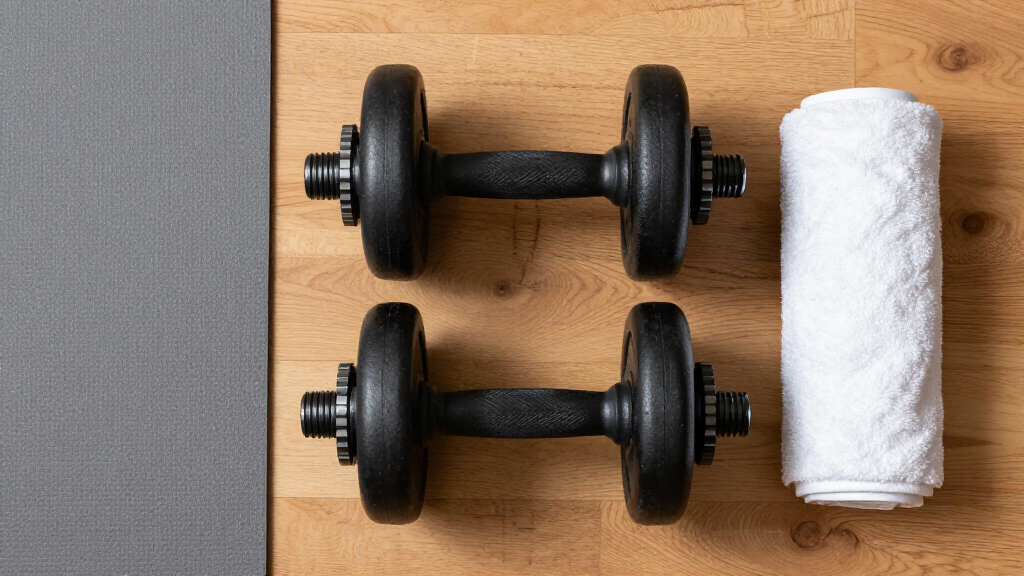
Adjustable dumbbell sets are weight-training equipment that lets you change the load on a handle rather than store a separate pair for every weight. A typical set includes two handles and a tray or stand, though you should check the listing because some sellers price a single dumbbell. The practical benefit is simple: several working weights share one storage footprint.
Think of it like a small tool kit replacing a drawer full of single-purpose tools. You still need the right tool for the job, but the kit takes up less room. For example, someone doing shoulder raises with a lighter setting and then moving to heavier rows can use the same pair without lining up four separate sets across the floor.
That convenience comes with trade-offs. Adjustable models can feel wider or less balanced than traditional fixed dumbbells, and some rely on brand-specific plates or handles. They may cost less than buying a comparable range of fixed weights, but the value depends on the set’s weight range, construction, included stand, and total price—not just the headline number.
Before shopping, list the movements you plan to do and where you’ll store the equipment. A renter who works out beside a sofa may prize a compact tray, while someone with a dedicated gym may care more about a familiar handle feel. Match the set to your room and routine, not an imaginary version of both.
adjustable dumbbell set with stand
As an affiliate, we earn on qualifying purchases.
As an affiliate, we earn on qualifying purchases.
Choose the Adjustment Style That Fits Your Workout Pace
Adjustment style determines how you change weight, how quickly you can move between exercises, and how much care the mechanism needs. Dial and selector systems are designed for convenient changes; plate-loaded sets trade speed for a more hands-on, mechanically simple approach. The right choice depends on whether your workout flows through many weights or stays at one load for longer stretches.
Imagine alternating light raises with heavier presses. A selector may make that change easier than removing collars and plates, especially when your rest period is short. But if you repeat a few exercises at one weight, taking an extra moment to load plates may matter very little.
| Type | How it works | Trade-off to check |
|---|---|---|
| Dial or selector | Turn a dial or choose a setting to select plates. | Quick changes, but more moving parts and careful handling. |
| Selector pin | Insert a pin to choose the plates you lift. | Fast adjustment; confirm the pin is fully seated. |
| Plate-loaded | Add or remove plates and secure them with collars. | Often straightforward, though changes take longer. |
| Block-style | Fit a handle into a stack or block of plates. | Compact, but the shape may feel unlike a traditional dumbbell. |
Do not assume a selector is automatically better because it looks faster. Check how the handle sits in the tray, whether the instructions make the locking process clear, and whether the set suits your common exercises. A feature that saves seconds is useful only if the weight change feels secure and easy to repeat.
compact adjustable dumbbells for home gym
As an affiliate, we earn on qualifying purchases.
As an affiliate, we earn on qualifying purchases.
Match the Weight Range and Increments to Your Exercises
Choose a weight range that covers your current exercises and gives you room to progress, while checking the smallest step between settings. The maximum load alone cannot tell you whether a set fits: a dumbbell may be heavy enough for rows yet offer increments too large for a controlled shoulder raise. Needs vary by movement and training experience.
Start with the exercises you genuinely expect to do. If your plan includes curls, presses, lunges, and raises, note that those movements may call for different loads. A beginner might prefer smaller increases for a movement that feels challenging, while a stronger trainee may need a higher maximum for rows or lower-body exercises.
- Write down your exercises. Include the movements you do now, not only future goals.
- Check the minimum and maximum weight per dumbbell. Listings can confuse per-dumbbell and combined-pair totals.
- Read every increment. Confirm how much the load changes between settings.
- Leave practical room to progress. Consider whether the set can meet your likely training needs without paying for capacity you will not use.
For example, if a product jumps from one setting to a much heavier one, that gap might feel awkward on a small, controlled movement. Conversely, a set with many light options may frustrate you if its top load is too low for your intended work. Compare the full range and steps against your routine; there is no single weight range that suits everyone.
dumbbell weight plates and handles
As an affiliate, we earn on qualifying purchases.
As an affiliate, we earn on qualifying purchases.
Check Grip, Shape, and Storage Before You Click Buy
Grip and shape affect how a dumbbell feels in your hand and against your body, while the footprint determines whether you can store and handle it safely. Product photos rarely show the whole experience, so check grip diameter, knurling, balance, plate shape, and the dimensions of both the weights and their stand. A compact set still needs enough room for you to pick it up and return it.
Picture setting up in a narrow apartment: a tray fits beside a cabinet, but the dumbbells need extra clearance when you lift them out. Measuring only the tray would miss the space your arms and hands need. Measure the storage spot, then check the equipment dimensions and leave room to move without bumping a table or wall.
Use this quick check before ordering:
- Measure the floor or shelf area where the set will live, including stand dimensions if included.
- Check the handle details for grip diameter and surface, then read user descriptions of balance and shape.
- Confirm what arrives: one dumbbell or a pair, a stand or no stand, and any accessories you need.
- Review compatibility before assuming another brand’s plates or attachments will fit.
A block-style model may store neatly but feel unfamiliar when held close to your shoulder. A wider plate shape may affect how a dumbbell rests against your body during a press. If you can try a similar design in person, do; if you shop online, inspect dimensions and return terms rather than relying on a polished product image alone.
best adjustable dumbbells for small space
As an affiliate, we earn on qualifying purchases.
As an affiliate, we earn on qualifying purchases.
Compare the Full Cost, Not Just the Price Tag
Total cost includes more than the number beside the product name. Account for whether the price covers a pair, the stand, shipping, taxes, and any accessories required for the set to work as you intend. Then compare the warranty, replacement-part availability, and weight range with the price of buying a similar selection of fixed dumbbells.
For example, a low listing price may turn out to cover one dumbbell, with the stand sold separately. Another set may cost more upfront but include two handles and a tray. Without checking what’s in the box, those prices do not describe the same purchase.
- Potential advantage: one adjustable pair may take less floor space than many fixed pairs.
- Potential advantage: one system can support several exercises at different loads.
- Potential drawback: a more complex selector can require careful handling and may need brand-specific service.
- Potential drawback: plate-loaded options can take longer to change between exercises.
- Purchase check: confirm return terms, warranty coverage, and compatible replacement parts.
Product specifications and availability can change, so verify the latest details directly with the manufacturer before ordering. Newer designs may offer faster selectors, compact stands, broader ranges, or app-linked features. Digital tracking is optional, though; it does not replace a suitable weight range or a clear, dependable adjustment process.
Use the Locking Mechanism Carefully Every Time
Safe use starts with the maker’s instructions: choose the load as directed, confirm the plates are locked, and make sure the dumbbell is seated correctly in its tray during adjustment. Keep your hands clear of moving parts and inspect the handle, collars, pins, and tray regularly. If a locking mechanism looks damaged or behaves unreliably, stop using the set until it has been repaired or replaced.
Build a brief check into the moment before your first repetition. If you have just changed from a light curl setting to a heavier press setting, pause and confirm the selector is in place rather than rushing to keep your workout moving. A few seconds of attention beats discovering a loose plate while the dumbbell is overhead.
Do not drop an adjustable dumbbell unless the manufacturer explicitly says that model is designed for it. Impact can damage a selector or compromise a lock.
Follow the manufacturer’s cleaning, inspection, and storage guidance, and never force a dial or use incompatible parts. If your set includes collars or a pin, check that each is seated as instructed before lifting. When a selector jams, stop and consult the manual or manufacturer instead of trying to free it with force.
Like checking a seat belt before pulling out of a driveway, these checks become a small habit that helps you use your equipment as intended. Adjustable dumbbells can support home strength training, but they do not remove the need for sound lifting technique. If you have a pre-existing condition or questions about starting a fitness routine, seek guidance from an appropriate health or fitness professional.
Make Your Final Choice With a Simple Buyer’s Checklist
A good buying decision starts with your actual routine, then checks the set against your space, budget, and comfort. No feature wins on its own: a very wide weight range is wasted if the dumbbells are awkward to adjust, and a fast selector is less useful if the available increments do not suit your exercises. Treat the product page like a checklist, not a sales pitch.
Say you have a small spare room, train three times a week, and change weights several times in a session. You might prioritize a compact stand and convenient selector, then inspect how the set locks and what its warranty covers. If you mostly do a few exercises at one load, a plate-loaded option could be a reasonable fit even if it takes longer to change.
- Range: Are the minimum, maximum, and increments suited to your exercises?
- Convenience: How often will you change loads, and does this mechanism suit that pace?
- Feel: Do the grip, balance, and shape seem comfortable for your movements?
- Space: Does the set and stand fit, with room to lift and return the weights?
- Value and support: Does the price include a pair, stand, and useful warranty or replacement parts?
- Safety: Are locking steps and care instructions clear and easy to follow?
Use those answers to rule out poor fits before comparing brands. If you cannot confirm whether the listing includes a pair or whether expansion plates are compatible, ask the seller or manufacturer. That small check can save you from paying for a setup that does not match the one you thought you were buying.
Frequently Asked Questions
Are adjustable dumbbells worth it?
They can be a good fit if you want several weights but have limited storage space. Compare their price, range, feel, and durability with the fixed weights you would otherwise buy; value depends on the set and your routine.
Are adjustable dumbbells suitable for beginners?
They can suit beginners when the available weight range and increments match the planned exercises. Learn the selector or loading process, follow the maker’s directions, and confirm the plates are locked before lifting.
Can you drop adjustable dumbbells?
Do not drop them unless the manufacturer specifically says the model is designed for impact. A drop can damage the adjustment system or compromise the lock, so set them down with control.
Do adjustable dumbbell sets come as a pair?
Some listings include two dumbbells, while others sell one. Check the product details and price carefully, and confirm whether a stand or tray is included.
Can I add more weight to my adjustable dumbbells later?
Only if the manufacturer offers compatible expansion kits for that exact model. Do not assume plates, handles, or accessories from another brand will fit; check compatibility directly before buying.
How much space do adjustable dumbbells need?
Measure the dumbbells and their stand, then leave room to lift them out and return them safely. A tray may fit beside a cabinet while the space needed to handle the weights does not, so check the whole setup.
Conclusion
Choose adjustable dumbbells by matching the weight steps, adjustment style, grip, and footprint to the workouts you will actually do. Check the full price and locking instructions before you buy, then take a moment to confirm the load before each lift.
A tidy pair can turn a bare corner into a useful training spot—but the best set is the one you can use comfortably, store safely, and reach for again next week.
Halloween Picks
halloween
As an affiliate, we earn on qualifying purchases.