TL;DR

Get workout gear delivered free with Prime
- Fast, free delivery on millions of items
- Prime Video, Amazon Music and more included
- Member-only deals all year
Fit&Well has published a five-minute routine from Pilates instructor and barre coach Vanessa Michielon, designed as a short movement break when a full workout will not fit into the day. It includes four positions with suggested repetitions and easier options; the source does not report research showing specific health outcomes from this routine.
Fit&Well has shared a five-minute movement routine from Pilates instructor and barre coach Vanessa Michielon, offering a short exercise option for people who cannot fit a longer workout into their day. The sequence uses four positions to work the core, shoulders and glutes, and the instructor describes ways to make several moves easier.
The routine comprises plank knee drives, a kneeling forearm foldover with leg extension, kneeling side kicks and side planks with rotation. Fit&Well presents it as an exercise snack: a brief period of movement that can be done instead of skipping activity when time for a full workout is limited. The report does not specify equipment, a warm-up beyond the first movement, or rest periods between exercises.
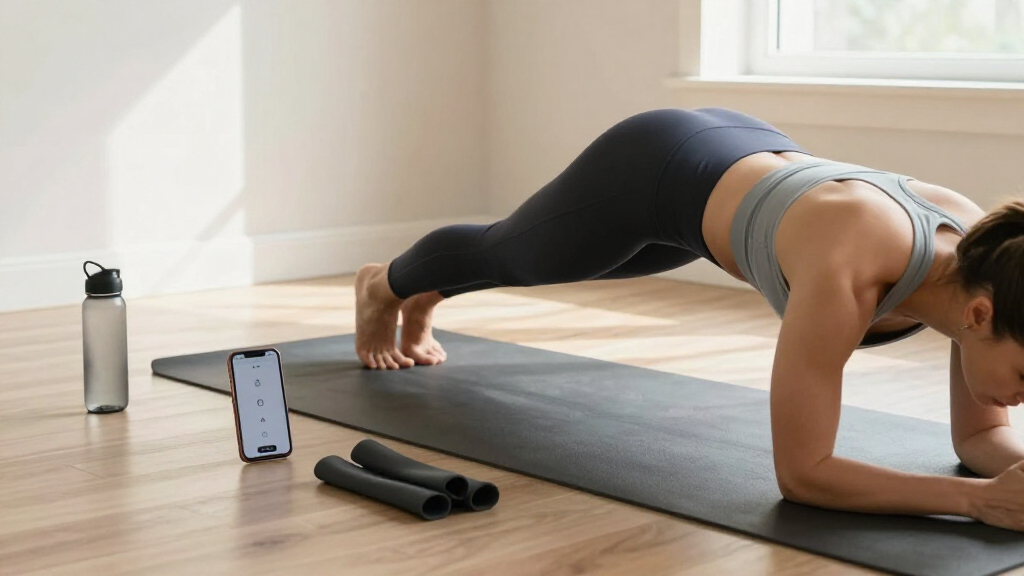
For plank knee drives, the suggested count is five repetitions per side. Starting in a high plank, the exerciser brings one knee toward the same-side shoulder and then across toward the opposite shoulder before returning to plank. Michielon suggests doing the move from hands and knees as a gentler alternative, keeping one knee on the floor while the other leg moves.
The kneeling forearm foldover and leg extension is listed at 10 repetitions per side. The sequence combines a knee drive toward the shoulder with a backward leg extension and lift. Fit&Well says participants can simplify it by doing only the knee-in and knee-out portion. The kneeling side kick calls for eight sweeps, 10 small pulses and eight bicycle movements per side; a supported variation is to lower the supporting hip and bend the bottom knee. The final move is a rotating side plank, with eight repetitions and an eight-second hold per side. A forearm-supported version is offered for people seeking to reduce wrist loading.
A Short Option for Busy Days
The routine’s immediate value is practical: it gives readers a defined sequence and repetition counts for a brief activity break, rather than requiring them to plan a longer class or workout. That may make movement easier to fit into a day spent sitting, the circumstance the Fit&Well report identifies as a reason to consider exercise snacks.
However, the article describes the workout as an option, not as a proven substitute for a full exercise program. Its claims about the muscles involved come from Michielon’s explanations of the movements; the supplied report does not cite a study testing this particular five-minute sequence or establish a health benefit from doing it. Readers should treat it as a short bout of activity, with the intensity and suitability depending on their ability and circumstances.
The included modifications are relevant because the routine places weight on the hands or forearms and asks participants to control hip and trunk movement. Choosing the supported versions, working within a comfortable range, and stopping if a movement causes pain are sensible ways to approach an unfamiliar sequence. The source does not provide individualized screening or coaching.
adjustable kettlebell for home workouts
As an affiliate, we earn on qualifying purchases.
As an affiliate, we earn on qualifying purchases.
How the Four Moves Fit Together
Fit&Well frames the sequence around the idea of exercise snacks—short bursts of movement during the day—particularly for people who spend substantial time sitting. It does not say that the routine must be completed at a particular time, repeated a certain number of times per day, or combined with another specific program.
The four positions progress from a high plank into kneeling movements and then a side plank. Michielon says the plank knee drives prepare the body for the sequence and challenge coordination. She describes the kneeling combination as engaging the trunk while the leg moves, and the side kick as working the outer hip while the supporting shoulder and core stabilize the body. The rotating side plank adds a chest rotation while asking the participant to keep the pelvis controlled. These are the instructor’s descriptions, not independently measured results.
The source provides movement instructions and alternatives but no video or individualized assessment in the material supplied here. It also does not explain how to adjust the routine for pregnancy, injury, chronic conditions, or other specific health needs. The reported five-minute duration is the workout’s stated length; the article does not clarify whether that estimate includes changing sides, transitions or rest.
“The cross-body action also challenges coordination and control through the trunk.”
— Vanessa Michielon, Pilates instructor and barre coach, as quoted by Fit&Well
As an affiliate, we earn on qualifying purchases.
Limits of the Workout Report
The Fit&Well report does not cite clinical or fitness research to verify that this particular routine improves health, nor does it compare the sequence with longer workouts. It also does not provide evidence that five minutes is sufficient for a person’s overall activity needs. The reported benefits and muscle targets are presented through the instructor’s comments and the publication’s framing.
Several practical details remain unspecified, including the pace to use, how much rest to take, and whether the five-minute estimate includes all repetitions on both sides. The source also offers no guidance tailored to people with wrist, shoulder, back or hip concerns. It is unclear whether the routine was independently reviewed by a medical or exercise-science specialist.
People with injuries, pain, balance concerns or a health condition may need professional guidance before trying weight-bearing or rotational movements. The modifications are general options, not a guarantee that a move will be appropriate for every reader. Stop if an exercise causes pain or unusual symptoms.
As an affiliate, we earn on qualifying purchases.
How Readers Can Try the Sequence
Readers can follow the four movements using the counts in Fit&Well’s report, starting with the easier alternatives if the standard versions are uncomfortable or difficult to control. The source does not announce a follow-up study, a scheduled class, or a planned update, so no further development is confirmed.
Before starting, readers can check that they have enough clear floor space and can move without being forced into a painful range. Those who are new to these positions can use the supported variations and take breaks as needed. Anyone with a pre-existing condition or an injury should seek advice from a qualified health professional or exercise instructor familiar with their needs. Whether the routine suits an individual—and how it fits alongside their broader activity—is not established by the article.
As an affiliate, we earn on qualifying purchases.
Key Questions
What does the five-minute workout include?
Fit&Well’s routine includes plank knee drives, a kneeling forearm foldover with leg extension, kneeling side kicks and rotating side planks. Each move has a suggested number of repetitions or a timed hold.
Who recommended the routine?
The sequence is attributed to Vanessa Michielon, described by Fit&Well as a Pilates instructor and barre coach. The report does not identify an independent research team behind the workout.
Can the exercises be modified?
Yes. The report suggests, among other options, doing knee drives from hands and knees, limiting the kneeling leg-extension move to its knee-drive portion, lowering the supporting hip for side kicks, and using a forearm rather than a hand for the side plank.
Does the report prove that this routine improves health?
No. Fit&Well presents the routine as a short movement break and includes the instructor’s descriptions of the muscles and movement demands. The supplied report does not cite research testing this specific workout or establish its health effects.
Should someone with an injury try the workout?
The report does not give individualized medical advice. People with an injury, pain or a pre-existing condition should consult a qualified health professional or instructor before trying the weight-bearing and rotational movements, and stop if an exercise causes pain.
Source: rss
Halloween Picks
halloween
As an affiliate, we earn on qualifying purchases.