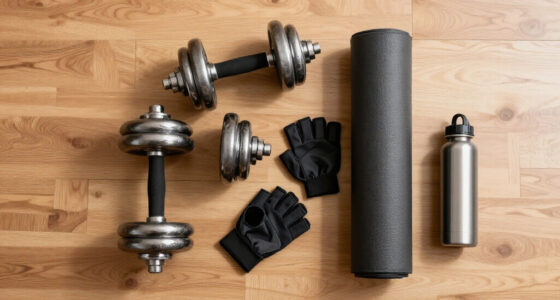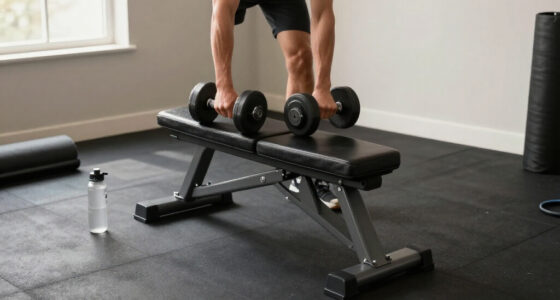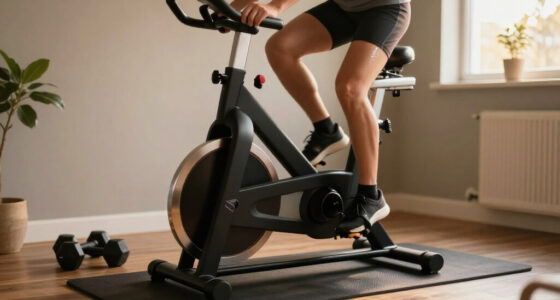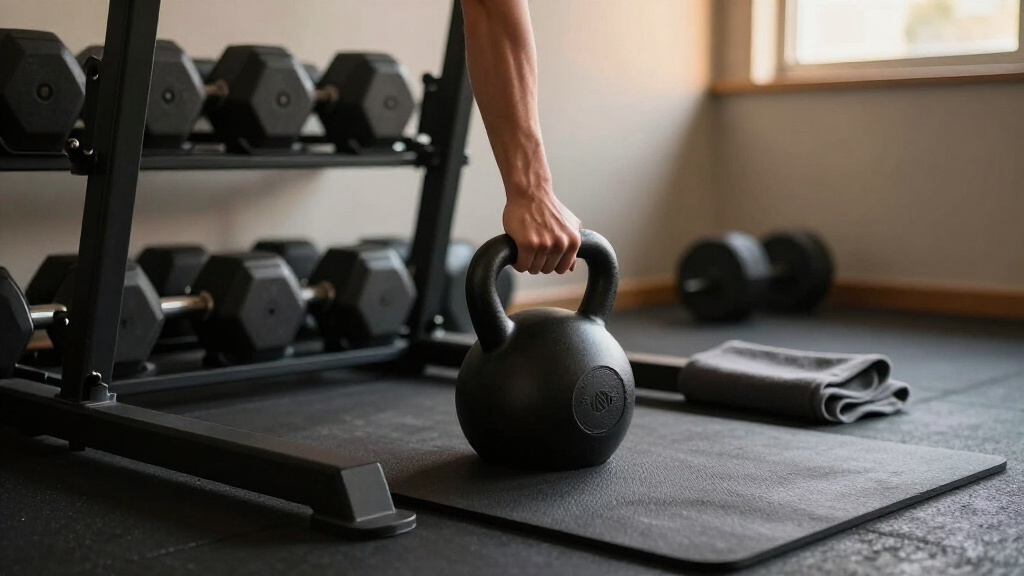
Choosing home gym equipment for weight loss is less about finding a machine that burns the most calories and more about deciding which kind of training you will repeat. Cardio equipment—such as a walking pad, treadmill, stationary bike, or rowing machine—supports sustained aerobic sessions. Strength equipment—such as adjustable dumbbells, resistance bands, or a compact weight bench—lets you train muscles against resistance. Neither category guarantees weight loss; changes in body weight depend heavily on maintaining a suitable calorie deficit over time.

Get workout gear delivered free with Prime
- Fast, free delivery on millions of items
- Prime Video, Amazon Music and more included
- Member-only deals all year

SincMill Home Gym – Multifunctional Full Body Workout Equipment
- ✔ Frame: Thick steel
- ✔ Weight guards: Included
- ✔ Leg station: Pedal targets multiple leg muscle groups

Marcy Home Gym System with 150 lb Weight Stack (MWM-988)
- ✔ Weight stack: 150 lb
- ✔ Unit weight: 280.5 lb
- ✔ Frame: 14-gauge heavy-duty steel tubing

Marcy Multifunction Steel Home Gym 150lb Weight Stack Machine
- ✔ Weight stack capacity: 150 lb
- ✔ Construction: Heavy-duty steel tubing
- ✔ Stack safety: Selectorized weight stack with safety lock
The practical tension is ease of getting your heart rate up versus building a routine that challenges your muscles. Cardio is usually simpler to measure and can suit people who enjoy steady movement. Strength training is more useful for maintaining or building muscle while weight changes, but it takes practice to learn movements and progress safely. This comparison focuses on affordable home setups rather than assuming every household needs a large machine. Choose cardio if you want straightforward aerobic sessions, strength equipment if progressive resistance is your priority, and a modest combination if you can afford and accommodate both.
At a Glance
| Criteria | Cardio equipment | Strength-training equipment | Winner |
|---|---|---|---|
| Best use for weight-loss routine | Supports steady aerobic sessions and activity targets | Supports resistance sessions that complement dietary weight loss | Depends |
| Ease of starting | Generally simple to use, especially for walking or cycling | Requires learning form, exercises, and ways to increase difficulty | A |
| Muscle retention and strength | Limited resistance stimulus on most basic machines | Strong fit for maintaining or building muscle with progressive training | B |
| Workout variety | Varies by machine; often repetitive without planned intervals | High variety across movements, loads, and training plans | B |
| Space and storage | Can take substantial floor space, though compact models exist | Bands and adjustable dumbbells store compactly; benches need room | B |
| Upfront cost | Ranges from inexpensive jump ropes to costly treadmills | Can start cheaply with bands or rise with adjustable weights | Depends |
| Progress tracking | Often displays time, distance, pace, and estimated calories | Progress is tracked through load, repetitions, sets, and movement quality | Depends |
SincMill Home Gym – Multifunctional Full Body Workout Equipment
The SincMill takes our top spot because its leg exercise pedal is described as targeting multiple leg muscle groups, giving this lineup’s strongest stated reason to vary lower-body work. For a weight-loss routine, that matters less as a direct calorie promise than as a way to make resistance sessions feel more complete and easier to repeat. Its thick-steel frame and weight guards also suggest a machine intended to stay set up for regular training, rather than a lightweight station to tuck away after every session.Compared with the Marcy models, the SincMill’s clearest point of difference is the leg station, not a documented advantage in resistance capacity: the supplied description does not state a stack limit. The Marcy Multifunction machine and MWM-988 both specify 150-pound stacks and dual-action press arms, so buyers who prioritize known load capacity and familiar chest movements have more concrete information with those options. SincMill instead emphasizes its pedal, with assembly hardware numbered and an instructional video included. The stated assembly time is about half an hour, though that estimate cannot tell us how easy the heavy frame will be for one person to handle.The tradeoff is its heavy steel construction: stability has a practical cost if the machine needs to be moved, and the description does not give unit weight or assembled dimensions for planning a tight room. We would choose it when leg variety is the deciding factor and the machine can remain in one place. We would not select it solely for a known resistance ceiling, because that specification is absent from the supplied details.
Pros:
- Leg pedal is described as targeting multiple leg muscle groups
- Thick-steel frame and weight guards support a durable, fixed-station setup
- Numbered hardware and an instructional video are provided for assembly
- Professional support is offered for usage questions
Cons:
- Heavy frame can be difficult to reposition
- The supplied specifications do not state weight-stack capacity or machine dimensions
Best for: Home exercisers who want a fixed, full-body station with added emphasis on multi-muscle leg work.
Not ideal for: People who need to move equipment frequently or want a clearly stated weight-stack capacity before buying.
Bottom line: Choose the SincMill when its more versatile leg pedal is the priority and you have room to keep a heavy machine in place.
“Choose the SincMill when its more versatile leg pedal is the priority and you have room to keep a heavy machine in place.”
Marcy Home Gym System with 150 lb Weight Stack (MWM-988)
The MWM-988 is the strongest choice here for shoppers who want more specific construction information before committing to a permanent home gym. Its 14-gauge steel tubing and stated 280.5-pound unit weight give a clearer picture of a substantial machine than the other Marcy listing provides. A selectorized 150-pound stack with a safety lock avoids the repeated plate handling that can interrupt a circuit, while the dual-action press arms, preacher curl pad, and leg developer cover several familiar resistance movements.Compared with the SincMill, the MWM-988 has a clearly specified resistance limit and a more fully itemized set of stations, but it does not have the SincMill’s described multi-muscle leg pedal. Compared with the Marcy Multifunction Steel Home Gym, the two share a 150-pound stack, dual-action press arms, and preacher-curl functionality; the MWM-988’s advantage in this comparison is its explicit frame gauge and unit weight, not a demonstrated difference in workout results. Those details help with expectations, but its 280.5-pound mass makes placement a real decision. We would arrange the assembly location in advance rather than count on moving it easily later.For weight loss, the stack can support progressive resistance work, but 150 pounds may be restrictive for experienced lifters, especially on movements where they can handle more. This is also not a substitute for aerobic activity or a complete training plan. Choose it if documented construction and a known selectorized load matter more than moving flexibility. Skip it if the machine must be portable, or if you already need resistance beyond its stated stack.
Pros:
- 14-gauge steel tubing is specified for the frame
- Selectorized 150-pound stack includes a safety lock
- Press arms, preacher curl pad, and leg developer offer several training stations
- Unit weight is stated, helping buyers plan placement
Cons:
- At 280.5 pounds, the unit can be difficult to move and assemble
- The 150-pound maximum may limit advanced strength training
Best for: Buyers who want a substantial, fixed-location home gym with a specified 150-pound stack and clearly stated frame construction.
Not ideal for: Advanced lifters who need loads beyond 150 pounds or anyone who expects to move the machine often.
Bottom line: The MWM-988 is the clearest choice when documented steel construction and a known selectorized stack outweigh portability.
“The MWM-988 is the clearest choice when documented steel construction and a known selectorized stack outweigh portability.”
Marcy Multifunction Steel Home Gym 150lb Weight Stack Machine
This Marcy is a practical pick for buyers who want a familiar cable-and-stack style home gym without needing the MWM-988’s more detailed frame information. Its 150-pound selectorized stack and safety lock make changing resistance straightforward, while dual-action press arms support chest-press and vertical-butterfly movements. The removable, adjustable preacher curl pad adds an isolation option, and the compact design is described as combining arm and leg stations for a broader routine than an upper-body-only bench.Against the MWM-988, this model has a similar stated stack capacity and press-arm format, but the MWM-988 provides extra decision-useful details: 14-gauge steel and a 280.5-pound unit weight. We therefore see this model as the simpler Marcy option, not a proven lighter or smaller alternative—the supplied information does not give its exact dimensions or unit weight. Compared with the SincMill, it offers more clearly stated resistance and press-arm functions, whereas SincMill has the more distinctive description of multi-muscle leg work.The main limitation is familiar across the lineup: 150 pounds may not be enough for advanced strength work, and the description does not quantify the number of exercises or range of adjustment. It is best suited to someone who values simple load selection and wants to build repeatable strength sessions at home. For weight loss, that consistency may help make resistance training part of a broader routine, but we would pair it with regular aerobic movement rather than expect the machine alone to drive results. If exact frame specifications or an explicitly described leg developer are important, the MWM-988 makes the comparison easier.
Pros:
- 150-pound selectorized stack has a safety lock for simpler load changes
- Dual-action press arms support chest press and vertical butterfly movements
- Removable, adjustable preacher curl pad enables isolated biceps work
- Compact design combines arm and leg stations
Cons:
- The 150-pound stack may be insufficient for advanced lifters
- The supplied details do not specify unit weight, dimensions, or frame gauge
Best for: Beginners and intermediate home exercisers who want a selectorized stack, basic upper-body variety, and a combined arm-and-leg station.
Not ideal for: Advanced lifters seeking more than 150 pounds of resistance or shoppers who need detailed dimensions and frame-gauge information.
Bottom line: Choose this Marcy for straightforward stack-based training, but favor the MWM-988 if documented frame specifications are more important.
“Choose this Marcy for straightforward stack-based training, but favor the MWM-988 if documented frame specifications are more important.”
As an Amazon Associate we earn from qualifying purchases.
Key Differences
Cardio equipment has an advantage when the main barrier is getting started. A stationary bike or walking machine gives the workout a clear format: choose a duration or pace and move. That can make it easier to build regular activity, particularly for people who prefer walking or cycling to floor-based workouts. Its readouts can help track pace and time, but calorie estimates are rough and should not be treated as a precise measure of food intake or fat loss.
Strength equipment is the stronger choice for training muscles directly. During weight loss, resistance exercise can help preserve muscle when paired with suitable nutrition, though it does not guarantee that result and cannot target fat loss in a particular body area. It also offers more exercise options in a small space. The tradeoff is that a useful strength routine requires learning safe technique and gradually adjusting resistance, repetitions, or sets. For many people, the best long-term setup is not an expensive machine or a full weight room: it is the least costly equipment that supports both regular movement and a manageable strength routine.
Detailed Comparison
Role in a weight-loss routine (major difference)
Cardio machines make it convenient to accumulate aerobic activity, which can contribute to energy expenditure and general fitness. Strength equipment supports resistance workouts and muscle development or maintenance. Neither directly overrides eating habits, and equipment alone does not produce weight loss. The winner depends on the gap in your routine: choose cardio if you are inactive and need a simple way to move more; prioritize strength if you already walk or do other aerobic activity but lack resistance training. For a balanced routine, combine both forms of exercise when time and budget allow.
Ease of starting and sticking with it (Cardio equipment wins — moderate)
Cardio equipment wins by a moderate margin for straightforward first sessions. Walking, cycling, or rowing can be scaled by pace and duration, though rowing technique takes practice and some machines may feel uncomfortable. Strength equipment asks more of a beginner: selecting exercises, learning form, and choosing a safe level of resistance. That learning curve is manageable, but it can be a real barrier. If you already enjoy lifting, the gap disappears; otherwise, pick the activity you are most likely to repeat rather than the one that looks most demanding.
Muscle retention and strength (Strength-training equipment wins — major)
Strength equipment wins clearly because it provides adjustable resistance that can challenge major muscle groups over time. This is especially relevant when losing weight, since resistance training can help maintain muscle alongside a sensible eating plan. Most basic cardio machines offer little direct stimulus for strength, although some, such as rowers, recruit multiple muscle groups while still functioning primarily as cardio tools. The difference matters if body composition, strength, or everyday lifting ability is a priority. It does not mean cardio is harmful or that strength work guarantees muscle retention.
Exercise variety and progression (Strength-training equipment wins — moderate)
Strength equipment wins moderately. A set of bands or adjustable dumbbells can support movements for the legs, hips, back, chest, shoulders, and arms; progression can come from changing resistance, repetitions, sets, or exercise difficulty. A cardio machine can still provide variety through intervals, pace, incline, or duration, but the movement pattern stays tied to that machine. This difference is meaningful for people who lose interest in repetition or want a broader training plan. Those who enjoy a familiar walk or ride may see the cardio machine’s narrower format as an advantage rather than a limitation.
Space and storage (Strength-training equipment wins — moderate)
Compact strength equipment usually wins, though the exact items matter. Resistance bands and adjustable dumbbells can fit in a closet, while a bench or full rack takes much more room. A treadmill or rower often occupies a fixed footprint and may be difficult to move; folding models reduce storage needs but still require a suitable place to use them. A small stationary bike can be a practical exception. Measure the workout area and storage space before buying: a machine that blocks daily living space is less likely to become a lasting habit.
Upfront cost and value (major difference)
There is no universal winner because both categories range from inexpensive to costly. Bands and a basic jump rope are low-cost starting points; adjustable weights cost more but replace several fixed pairs. A cardio machine may offer a ready-made workout, yet pricier screens or connected subscriptions do not make weight loss automatic. Pay more for a cardio machine only if its comfort, quiet operation, durability, or features will increase use. Pay more for weights only if the adjustment range fits your current ability and likely progression. For a tight budget, a low-cost setup plus walking outdoors may beat either large purchase.
Tracking progress (Cardio equipment wins — minor)
Cardio equipment wins for built-in session metrics: many machines show duration, pace, distance, or resistance level. Those figures are useful for comparing one workout with another, but displayed calorie burn is an estimate and can be inaccurate. Strength progress is tracked less automatically, usually by recording exercises, sets, repetitions, resistance, and technique. Neither set of numbers is a complete weight-loss measure. Use a consistent body-weight trend, waist or clothing changes if helpful, workout records, and how you feel; do not make purchase decisions based on a machine’s calorie counter.
Cardio equipment: Pros and Cons
Pros:
- Makes sustained walking, cycling, or other aerobic activity convenient at home.
- Often simple to start and straightforward to track by time or pace.
- Can suit users who prefer steady movement or structured intervals.
Cons:
- Many machines use considerable floor space and may be hard to store.
- Provides limited progressive resistance compared with weights or bands.
- Built-in calorie estimates can create false precision.
Strength-training equipment: Pros and Cons
Pros:
- Supports progressive training and direct work across major muscle groups.
- Can help maintain or build strength during a weight-loss program.
- Bands and adjustable equipment can offer broad exercise options in a small area.
Cons:
- Beginners need to learn safe form and plan how to progress.
- A compact set may not provide enough resistance for every exercise as strength improves.
- A bench, rack, or larger collection of weights can cost more and take significant room.
Who Should Choose What
Choose Cardio equipment if:
- You enjoy walking, cycling, or another aerobic activity and want a convenient indoor option.
- Your main goal is building a consistent movement habit with simple sessions.
- You have room for a machine and will use it often enough to justify its footprint and cost.
Choose Strength-training equipment if:
- You want to train strength and support muscle retention while losing weight.
- You need equipment that stores easily or allows many exercises from a small kit.
- You are comfortable learning basic movements or can follow qualified instruction.
Skip both if: Skip a large purchase if money or space is tight, or if you are not yet sure which activity you will sustain. Start with walking, body-weight exercises, or inexpensive bands, then buy equipment after a routine has formed.
Value for Money
Paying more is worthwhile only when it solves a real barrier. A quiet, comfortable cardio machine may earn its cost if weather, mobility, or scheduling makes outdoor activity unreliable and you will use it regularly. A sturdier adjustable-weight set can be good value if it covers a useful resistance range and replaces several purchases. A touchscreen, subscription library, or oversized feature package is not inherently valuable for weight loss.
For most budget-conscious beginners, the best value is a small, flexible setup: walking or another no-cost aerobic activity plus resistance bands or a manageable pair of weights. If you know you strongly prefer machine cardio, a basic model you can use consistently may be a better purchase than weights that remain untouched. Match the equipment to your habits, not the other way around.
Final Verdict
For most people seeking home weight loss, do not treat cardio and strength equipment as competing fat-loss technologies: consistency and nutrition matter more than the category. If you can choose only one and have no regular activity, choose the option that makes you most likely to exercise several times a week. For a compact, versatile purchase that adds a training quality many cardio routines lack, strength equipment—especially bands or adjustable dumbbells—is the better default. If you already strength train but struggle to get aerobic activity, cardio equipment is the clearer choice.
Choose cardio equipment for convenient indoor movement and simple session structure; choose strength equipment for progressive resistance, muscle-focused training, and flexibility in a small space. Do not pay a premium on the assumption that a machine burns fat by itself. If neither purchase fits your budget or room, start with walking and body-weight training and revisit equipment once you know what you will keep doing.
Frequently Asked Questions
Is cardio or strength training better for losing weight at home?
Neither is automatically better for weight loss. Cardio helps you accumulate aerobic activity, while strength training challenges muscles and can support muscle retention. A sustainable eating plan and regular exercise matter more than choosing a single equipment category. Many people benefit from including both.
Which home gym equipment burns the most calories?
Calorie use varies with body size, effort, workout duration, and the specific activity, so no machine has a reliable universal winner. Machine displays provide estimates, not precise totals. Choose equipment you can use consistently rather than buying based on a calorie-burn claim.
Can lifting weights help with weight loss?
Resistance training can contribute to an active routine and help maintain or build muscle, but it does not guarantee weight loss on its own. Weight changes depend on overall energy balance over time. Pair strength sessions with suitable nutrition and other regular activity.
What should a beginner buy first?
Start with equipment that matches an activity you already enjoy or are likely to repeat. Bands or a modest set of adjustable weights suit people seeking resistance training; a basic bike or walking machine may fit someone who prefers indoor cardio. If uncertain, begin with walking and body-weight exercises before making a larger purchase.
Fall Picks
fall essentials
As an affiliate, we earn on qualifying purchases.