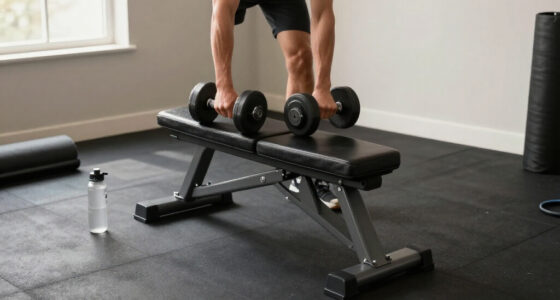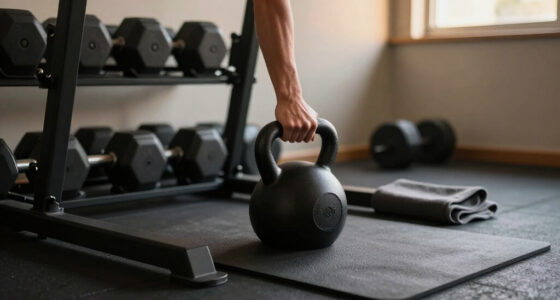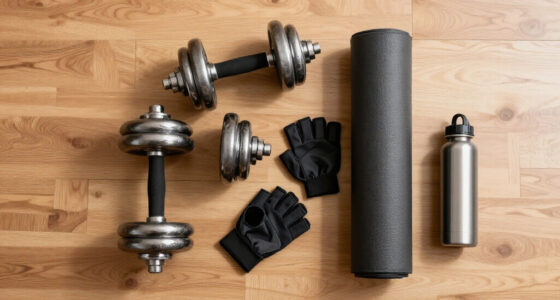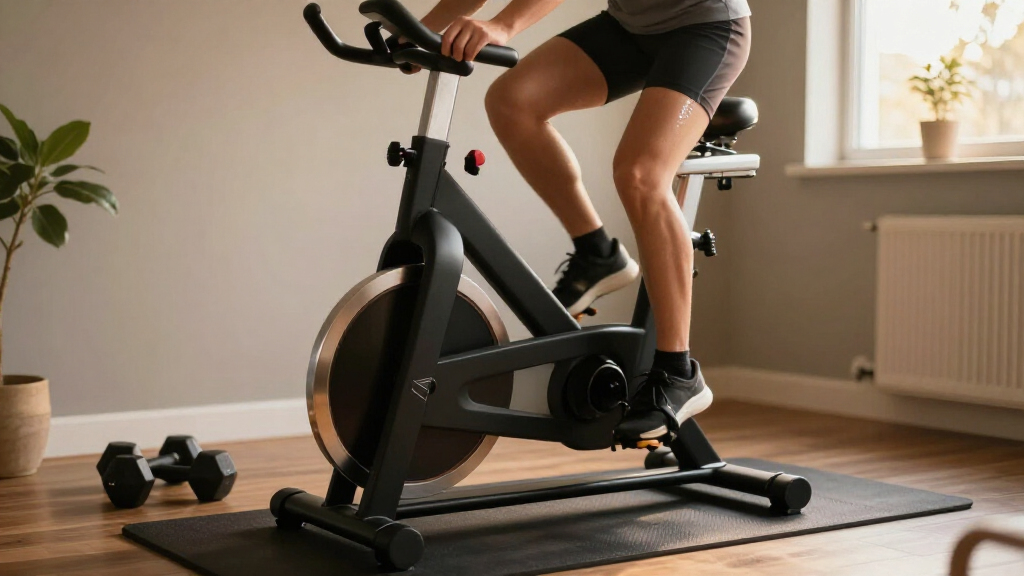

This guide helps beginners choose practical home gym equipment and build a routine that supports weight loss without buying a full gym. You will match equipment to your space, budget, fitness level, and preferred activities, then put it into a safe weekly plan. Expect about 1-2 hours to plan and set up, followed by 30-45 minutes per workout. Equipment can make regular exercise easier, but weight loss also depends on sustainable eating habits, daily activity, sleep, and individual health factors.

Get workout gear delivered free with Prime
- Fast, free delivery on millions of items
- Prime Video, Amazon Music and more included
- Member-only deals all year

SincMill Home Gym – Multifunctional Full Body Workout Equipment
- ✔ Frame material: Thick steel
- ✔ Weight guards: Included
- ✔ Weight-stack capacity: Not stated in supplied specifications

Marcy Home Gym System with 150 lb Weight Stack (MWM-988)
- ✔ Weight stack: 150 lb
- ✔ Unit weight: 280.5 lbs
- ✔ Frame material: Heavy-duty 14-gauge steel tubing

Marcy Multifunction Steel Home Gym 150lb Weight Stack Machine
- ✔ Weight stack capacity: 150 lbs
- ✔ Construction: Heavy-duty steel tubing
- ✔ Stack safety: Selectorized weight stack with safety lock
Difficulty: Beginner | Time: 1-2 hours to plan and set up; 30-45 minutes per workout
What You’ll Need
Tools & Materials:
- Tape measure and a clear floor area
- Phone or notebook to record workouts and activity
- Comfortable workout clothes and supportive shoes
- Water bottle
- Optional: exercise mat, resistance bands, adjustable dumbbells, or cardio machine
Knowledge:
- Ability to follow basic exercise instructions and stop if an activity causes sharp pain, dizziness, or unusual shortness of breath
- No prior gym experience required
Set a spending limit before shopping. Check the equipment’s dimensions, user weight rating, warranty, return policy, and required floor clearance. If you have a chronic condition, are pregnant or recently gave birth, or have been advised to limit exercise, ask a qualified health professional which activities are appropriate. You can start with walking and body-weight exercises; buying equipment is not a prerequisite for weight loss.
SincMill Home Gym – Multifunctional Full Body Workout Equipment
For a weight-loss routine built around repeatable full-body strength sessions, the SincMill takes our top position because its standout detail is its leg exercise pedal, described as targeting multiple leg muscle groups. That gives it a useful edge over the first Marcy, whose supplied description emphasizes the press arms and preacher curl pad, and makes it a credible alternative to the MWM-988, which names a leg developer but does not describe its range as broadly.The thick-steel frame and weight guards point toward a sturdy, contained setup, while numbered hardware and an instructional video are intended to make assembly more approachable. The stated assembly time is approximately 30 minutes, a helpful planning detail—but it is not a guarantee for every home or assembler. Once in place, a multifunction station can help us move between resistance exercises without changing plates, supporting a routine that is easier to repeat.The compromise is practical rather than subtle: the frame is heavy and difficult to move or reposition. We should choose its location carefully and check available floor space before assembly. The product details also do not specify the weight-stack capacity, so the two Marcy models have an advantage for buyers who want a clearly stated 150-pound limit. We would pick SincMill for its leg-focused versatility and setup guidance, not for a proven calorie-burning advantage or a known resistance range.
Pros:
- Leg pedal is described as targeting multiple leg muscle groups.
- Thick-steel frame and weight guards support a substantial home-gym setup.
- Numbered hardware and an instructional video are provided for assembly.
- Professional service support is offered for usage issues.
Cons:
- Heavy frame can be difficult to move or reposition.
- The supplied specifications do not state weight-stack capacity.
- Assembly time can vary despite the approximately 30-minute estimate.
Best for: Home trainees who want a multifunction station with an explicitly described multi-muscle leg pedal and can dedicate a fixed spot to it.
Not ideal for: People who need to move equipment often or require a clearly documented weight-stack capacity before buying.
Bottom line: We rank SincMill first for its specifically described leg-pedal versatility, provided we can commit to a fixed location and confirm the resistance details we need.
“We rank SincMill first for its specifically described leg-pedal versatility, provided we can commit to a fixed location and confirm the resistance details we need.”
Marcy Home Gym System with 150 lb Weight Stack (MWM-988)
The MWM-988 is the Marcy pick for buyers who want the exercise stations spelled out clearly. Its listed setup combines dual-action press arms, an adjustable preacher curl pad, and a leg developer, giving us a concrete upper- and lower-body menu for building repeatable resistance sessions. That makes its full-body case clearer than the other Marcy listing, which also has press arms and a curl pad but offers less detail about its leg station.A selectorized 150-pound stack with a safety lock avoids handling separate plates when we change resistance. This can make transitions more convenient during a home workout, although it is not a measure of calorie burn. Compared with SincMill, the MWM-988 gives us a precisely stated stack capacity and more detailed frame information; compared with the first Marcy, it explicitly names the leg developer and identifies the tubing gauge.Its main drawback is the 280.5-pound unit weight. That makes delivery, assembly, and final placement important decisions, especially if the intended workout area is upstairs or the machine may need to be moved. The 150-pound ceiling can also become restrictive for advanced lifters. We would choose this model for documented station coverage and straightforward weight selection, while accepting that it is not a portable or unlimited-resistance solution.
Pros:
- Includes dual-action press arms for chest press and butterfly movements.
- Leg developer and adjustable, removable preacher curl pad broaden exercise options.
- Selectorized 150-pound stack includes a safety lock.
- 14-gauge steel tubing and unit weight are specified.
Cons:
- The 280.5-pound unit weight can complicate assembly and placement.
- The 150-pound stack may limit advanced strength training.
- The supplied details do not establish dimensions or how much floor space is required.
Best for: Buyers who want a clearly described Marcy station with upper-body exercises, a leg developer, and a specified selectorized stack.
Not ideal for: Advanced lifters who need more than 150 pounds of resistance or households that cannot accommodate a heavy, difficult-to-move machine.
Bottom line: We recommend the MWM-988 when documented full-body stations and a known 150-pound stack matter more than easy repositioning.
“We recommend the MWM-988 when documented full-body stations and a known 150-pound stack matter more than easy repositioning.”
Marcy Multifunction Steel Home Gym 150lb Weight Stack Machine
This Marcy is a practical choice for buyers who value a familiar, guided resistance setup over a long list of specialized stations. It combines a 150-pound selectorized stack with a safety lock and dual-action arms for chest press and vertical butterfly movements. The removable, adjustable preacher curl pad adds a way to isolate biceps. Those details make upper-body training particularly clear, while the compact design is described as combining arm and leg stations.Compared with the MWM-988, this machine shares the 150-pound stack, safety lock, press-arm functions, and preacher-pad approach, but the MWM-988 listing is more explicit about its leg developer and frame gauge. Compared with SincMill, the Marcy has a stated capacity, whereas SincMill’s supplied specifications do not provide one; SincMill, however, gives a more specific description of its multi-muscle leg pedal. That difference matters if lower-body exercise variety is central to our plan.The heavy-duty steel construction and compact-design claim are appealing for a dedicated home workout area, but the product details do not give dimensions or unit weight, so we should not assume it will fit a particular room. Its clearest limitation is the 150-pound maximum stack, which may not challenge advanced lifters over time. We would favor it for accessible, guided resistance work rather than for someone seeking extensive station detail, portability, or a machine that supplies cardio.
Pros:
- 150-pound selectorized stack includes a safety lock for changing resistance.
- Dual-action press arms support chest press and vertical butterfly exercises.
- Removable, adjustable preacher curl pad allows isolated biceps work.
- Steel construction and combined arm-and-leg stations suit a dedicated home setup.
Cons:
- The maximum 150-pound stack may be insufficient for advanced strength training.
- Supplied details do not state unit weight or machine dimensions.
- Lower-body station functions are less specifically described than on the MWM-988 or SincMill.
Best for: Home users seeking a selectorized machine for guided upper-body and arm work, with a stated stack limit and combined arm-and-leg stations.
Not ideal for: Advanced strength trainees needing heavier resistance, or buyers who require detailed dimensions and explicit lower-body station specifications.
Bottom line: We would choose this Marcy for guided selectorized training and clear upper-body options, but prefer the MWM-988 or SincMill when lower-body detail is the deciding factor.
“We would choose this Marcy for guided selectorized training and clear upper-body options, but prefer the MWM-988 or SincMill when lower-body detail is the deciding factor.”
As an Amazon Associate we earn from qualifying purchases.
Before You Start
Think of equipment as a way to make repeatable exercise convenient, not as a device that causes weight loss on its own. Choose an activity you can do consistently and begin at a level that lets you recover between sessions. Keep walkways clear, place equipment on a stable surface, and follow its assembly and safety instructions. Do not use damaged equipment. If a movement causes sharp pain, stop and choose a gentler option.
Step-by-Step Instructions
Step 1: Set a budget and define your workout space
Write down the maximum amount you can spend, including delivery, accessories, and any floor protection. Measure the area where you plan to exercise, then check the machine’s footprint and the clearance needed to mount, move, and use it safely. Confirm that the floor is level and the equipment will not block doors or exits. If space or budget is limited, plan around a walking route, a mat, and one or two versatile pieces instead of a large machine.
Tip:Leave enough open floor space to step away from equipment and perform basic movements. Follow the product manual’s clearance requirements, which may exceed the machine’s footprint.
Check: You have a spending cap and a usable exercise area that fits your intended equipment with room to move safely.
Step 2: Choose equipment that matches activities you will repeat
Select one main form of activity you already enjoy or are willing to practice. For low-impact cardio, consider a stationary bike, elliptical, or treadmill used for walking. For strength training, consider resistance bands, adjustable dumbbells, or a stable bench and weights. If you prefer walking outdoors, you may not need a cardio machine at all. Start with one or two items that support your plan; avoid buying equipment because it promises unusually fast fat loss.
Tip:Try a machine in a store or use a return period when available. Check whether adjustments are easy to use and whether the movement feels comfortable. A low-cost item that gets used often is more useful than an expensive machine that sits unused.
Check: Each item has a clear role in your planned workouts, fits your space and budget, and feels usable at your current fitness level.
Step 3: Check safety, fit, and setup requirements
Before buying or assembling equipment, read its specifications and instructions. Confirm the maximum user weight, dimensions, resistance settings, power needs, and maintenance requirements. Assemble it on the intended surface, tighten the required connections, and test stability without exercising on it. Adjust seats, handles, straps, and resistance so they fit your body, following the manufacturer’s directions.
Tip:Do not guess at assembly or substitute unapproved parts. Ask the retailer or manufacturer for help if the instructions are unclear or the equipment wobbles.
Check: The equipment is assembled as directed, stable, correctly adjusted, and free of visible damage or loose parts.
Step 4: Build a manageable weekly activity plan
Schedule sessions you can maintain, such as three cardio workouts and two strength sessions each week, with rest or easier movement between harder days. If you are new to exercise, start with 15-20 minutes at a comfortable pace and add time gradually. Aim over time toward widely used adult guidance of 150 minutes of moderate-intensity aerobic activity per week, plus strength training on at least two days, if appropriate for you. This is a general target, not a requirement to meet immediately.
Tip:Use the talk test for moderate cardio: you can speak in sentences but would find singing difficult. Reduce the pace if you cannot talk comfortably.
Check: Your calendar shows specific workout days, realistic session lengths, and recovery time. The starting plan feels manageable rather than punishing.
Step 5: Combine cardio and strength work
For cardio, use your chosen machine or walk continuously at a pace you can sustain. For strength, choose movements that cover major muscle groups, such as chair squats, wall push-ups, band rows, and light dumbbell presses. Begin with one or two sets of 8-12 controlled repetitions per movement, using resistance that lets you keep good form. Rest as needed, and leave time to warm up gently and cool down. Follow the equipment manual and reputable instruction for unfamiliar movements.
Tip:Strength work helps maintain and build muscle while you become more active; it does not need to be fast or exhausting to count. Increase only one variable at a time, such as duration, repetitions, or resistance.
Check: You finish feeling that you worked, but you can move normally and recover without excessive soreness or warning symptoms.
Step 6: Track activity and review progress regularly
After each session, record the activity, duration, effort level, and any discomfort. Review the log every two to four weeks and make small changes if workouts feel consistently easy and recovery is good. If you choose to track body weight, use the same scale under similar conditions and look at the trend over several weeks rather than judging a single reading. You can also track waist measurement, stamina, strength, and how consistently you complete sessions.
Tip:Do not treat calorie estimates from exercise machines or watches as exact. Their numbers can be inaccurate and should not be used to justify extreme food restriction.
Check: You have a record of your workouts and a planned date to review consistency, comfort, and longer-term trends.
Common Mistakes to Avoid
- Buying a large or costly machine before testing whether the activity suits you. — Try the movement first, measure your space, and start with a low-cost option or one versatile item. Check return terms before purchase.
- Starting with long, intense workouts and then stopping because of soreness or fatigue. — Begin with short, comfortable sessions and add duration or resistance gradually. Schedule recovery days and stop for sharp pain or concerning symptoms.
- Relying on cardio equipment alone while skipping strength work and daily movement. — Include strength exercises on at least two days when suitable, and add ordinary walking or other movement that fits your routine.
- Expecting exercise equipment to produce weight loss without sustainable eating habits. — Pair regular activity with manageable food choices and avoid crash diets. Seek a registered dietitian or health professional for individualized nutrition support.
Troubleshooting
Problem: The equipment does not fit the room or blocks a walkway.
Solution: Stop using it in that location. Recheck the manual’s clearance needs and move it to a larger stable area, choose a foldable or smaller option, or return it if it cannot be placed safely.
Problem: A cardio machine feels uncomfortable or causes joint discomfort.
Solution: Stop and check the adjustment instructions, footwear, and resistance or incline settings. Try a gentler pace or a lower-impact activity. If pain persists, seek advice from a qualified health professional.
Problem: You keep missing planned workouts.
Solution: Reduce the session to 10-15 minutes, place it at a more reliable time, and choose an activity that feels less like a chore. Track completed sessions rather than aiming for perfect adherence.
Problem: Your body weight has not changed after a short period.
Solution: Review consistency over several weeks rather than reacting to daily fluctuations. Check whether activity and food habits are sustainable, and consider progress measures beyond weight. A health professional can help if you need personalized guidance.
What Success Looks Like
You have equipment that fits your available space and budget, is assembled and adjusted safely, and supports activities you are willing to repeat. Your weekly plan includes realistic cardio and strength sessions, a way to record them, and time for recovery. Success at setup means you can begin without unsafe equipment or unclear instructions. Longer-term progress is best judged by consistent activity and gradual changes in fitness or body-weight trends, not a guaranteed amount of weight lost by a specific date.
Next Steps
Complete the first week at an easy-to-moderate effort and note how you feel during and after each session. Keep the routine steady for two to four weeks before making small changes. Increase only one training factor at a time and keep equipment clean and maintained according to its manual. If you develop persistent pain, unusual symptoms, or uncertainty about safe exercise, pause the activity and contact a qualified health professional.
Frequently Asked Questions
What is the best home gym equipment for weight loss?
The best choice is equipment for an activity you can do regularly and safely. Walking may require only supportive shoes; a stationary bike, treadmill, or elliptical can support indoor cardio, while bands or dumbbells add strength training. No single machine guarantees weight loss.
Can I lose weight with no exercise machine?
Yes. Walking, stair climbing where safe, and body-weight strength movements can form a useful home routine. Weight loss depends on overall habits and individual factors, not on owning a machine.
How often should I use home gym equipment?
Start with a schedule you can recover from, such as three moderate cardio sessions and two strength sessions per week. Build up gradually toward general adult activity guidance if it suits your health and fitness level.
Should I buy a treadmill or an exercise bike?
Choose the one whose movement feels comfortable and whose use you are more likely to repeat. Compare the required space, noise, price, maintenance, user weight rating, and return policy. If possible, test both before deciding.
Fall Picks
fall essentials
As an affiliate, we earn on qualifying purchases.