
TL;DR

Get workout gear delivered free with Prime
- Fast, free delivery on millions of items
- Prime Video, Amazon Music and more included
- Member-only deals all year
Home gym equipment can make regular exercise easier, but weight loss comes from a sustained calorie deficit supported by eating habits, activity, sleep, and consistency. Choose cardio and strength options that suit your space, budget, and body, then build your routine gradually instead of trusting a machine’s calorie display or buying gear you will not use.
A treadmill can sit in your spare room for months without changing your weight; a pair of dumbbells you use every Tuesday might do more for your routine. Equipment helps you exercise, but it does not cause weight loss by itself. What matters is how your workouts fit into the rest of your week.
This guide will help you choose home gym equipment for weight loss without turning your living room into a showroom. You’ll see how cardio and strength tools serve different roles, what works in small spaces, and how to begin safely. The goal is a setup that makes movement feel easier to repeat—not a pile of gear that makes you feel guilty every time you walk past it.
Weight loss comes from a sustained calorie deficit, shaped by eating habits and everyday activity as well as exercise. A home setup can support that effort by cutting the drive to a gym or making a short workout possible between errands. Think of equipment as a helpful kitchen knife: it can make the task smoother, but it cannot decide what meal you make.
Choose equipment around activities you will actually repeat, not the number of features a machine offers.
Pair cardio with strength work when possible; they support different parts of a balanced exercise routine.
Build toward 150 minutes of moderate aerobic activity weekly and strength work on two days, increasing gradually.
Treat machine and wearable calorie counts as estimates, not exact measures of fat loss.
Check fit, stability, space, noise, maintenance, and ongoing costs before buying.
Choose equipment that makes regular exercise easier
Home gym equipment for weight loss works best when it fits your space, budget, physical needs, and preferred activities. Regular use matters more than fancy screens or a long list of features. A compact setup you reach for four times a week can be more useful than a premium machine that becomes a clothes rack.
Start with an honest question: what movement do you already enjoy, or at least dislike least? If you like walking, a treadmill or walking pad might help you get moving while it rains outside. If you prefer quiet, a resistance band routine can fit into a corner without the whir of a motor or the thump of jumping.
For example, imagine you have a small apartment and 25 minutes before dinner. A mat and bands stored beside the sofa make a quick session simple; a bulky elliptical may block the hallway and become a daily annoyance. The best choice is the one that removes friction rather than adding another chore.
Before buying, check the machine’s footprint, weight limit, stability, noise, maintenance needs, and return policy. These details affect more than convenience: a machine that is awkward to store or too noisy for your household can make missed workouts more likely, while poor stability or a mismatch with your body can make exercise uncomfortable or unsafe. Foldable equipment can save floor space, but its benefit disappears if setting it up feels like work. Connected screens and app workouts can add structure and motivation, though subscriptions bring ongoing costs and may be unnecessary if you already have a plan. Check current terms and product details, and ask whether each feature will solve a real problem in your routine before paying for it.
compact treadmill for small spaces
As an affiliate, we earn on qualifying purchases.
As an affiliate, we earn on qualifying purchases.
Compare cardio options by comfort, space, and impact
Cardio equipment helps you accumulate aerobic activity, and the right option depends on what feels comfortable enough to repeat. Treadmills, bikes, rowers, ellipticals, and jump ropes can all support a workout, but they differ in space, impact, and learning curve. No single machine earns the title of best for everyone; a theoretically intense workout is of little use if discomfort, noise, or setup keeps you from doing it.
| Equipment | Good fit when you want | Things to check |
|---|---|---|
| Walking pad or treadmill | Familiar walking or running at adjustable speeds | Storage, stability, noise, and running features |
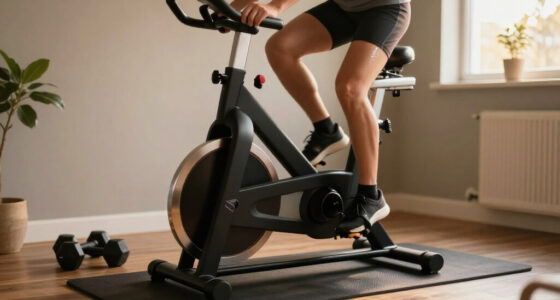
| Stationary bike | Low-impact movement with adjustable effort | Seat comfort and upright versus recumbent fit |
| Rowing machine | A full-body cardio session | Technique and comfort in the rowing position |
| Elliptical | Low-impact movement with arm and leg action on many models | Large footprint and available floor space |
| Jump rope | Inexpensive, compact intervals | Coordination, impact, and room overhead |
Say you want to exercise while watching a 30-minute show but have sensitive knees. A stationary bike may feel easier to manage than jump-rope intervals, though comfort varies from person to person. Lower impact can make it easier to exercise regularly, but it does not automatically make a workout more effective; effort, duration, and consistency still matter. Conversely, a compact rope is cheap and easy to store, but its impact and coordination demands may outweigh those advantages for some people.
A device’s calorie counter can offer a rough reference, not an exact reading of your personal energy use or fat loss. The number depends on estimates and may not account for individual differences, so it cannot reliably tell you how much weight a workout will change or what you should eat afterward. Use it to compare your own sessions if it helps, but don’t treat “400 calories” on a screen as a meal allowance. If a position causes pain or feels unstable, stop and reassess the equipment or seek appropriate guidance.
resistance bands set for home workouts
As an affiliate, we earn on qualifying purchases.
As an affiliate, we earn on qualifying purchases.
Build strength without buying a full rack of weights
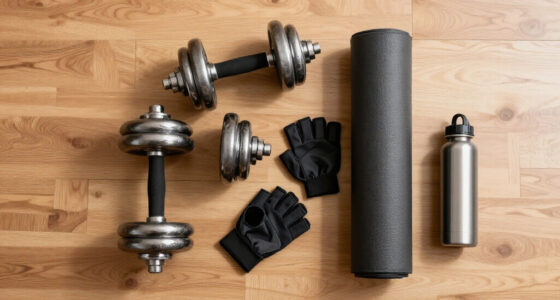
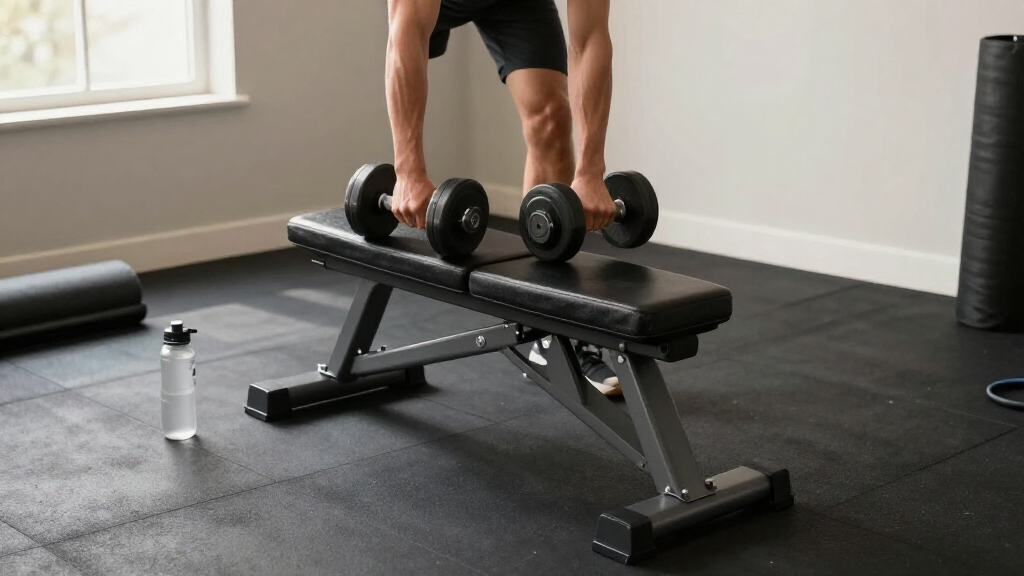
Strength equipment supports muscle-building and strength work, which can help you maintain a well-rounded routine during weight loss. You do not need a dedicated room or a wall of iron to get started. Bands, adjustable dumbbells, kettlebells, and bodyweight movements offer useful choices at different prices and skill levels. The practical tradeoff is between convenience and precise, expandable resistance: the simplest gear is easy to store, while equipment with a wider range of loads may cost more and take up more space.
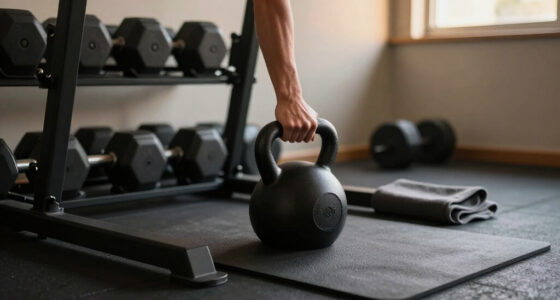
Resistance bands are light and easy to tuck into a drawer, though their resistance is harder to measure precisely than a marked dumbbell; as you get stronger, you may need a different band or a way to increase tension. Adjustable dumbbells offer several loads in one compact set, which can make gradual progression easier, but they cost more and need safe storage. A kettlebell can support movements such as deadlifts and carries when you know the technique, though its fixed weight may become limiting and some movements require coaching or practice. A bench or mat can add comfort and exercise options, but buy it only if you have room and a plan to use it.
For instance, a beginner could do sit-to-stands from a sturdy chair, wall push-ups, and band rows. Those movements need little space and can be adjusted as confidence grows. They also help you learn controlled movement before adding load, so your equipment does not become a substitute for sound technique. That is a better starting point than copying a fast kettlebell workout online with a weight that feels awkward.
Try this simple progression:
- Pick three or four movements that feel manageable, such as chair squats, wall push-ups, band rows, and step-ups on a stable low step.
- Start with a comfortable amount of repetitions, stopping while your form still feels controlled. This gives you room to repeat the routine without making soreness or fatigue a barrier.
- Repeat the routine consistently, then increase one factor at a time—repetitions, resistance, or sets. Changing one variable makes it easier to notice what your body tolerates and avoids sudden jumps in workload.
- Keep movements smooth and use a lighter band or weight if you cannot control the return phase. Control helps you train the intended movement rather than relying on momentum.
If you have a health condition, ongoing pain, or uncertainty about technique, ask a qualified professional for advice before taking on a demanding plan. A slow, well-controlled set is more useful than a heavy lift that leaves you sore or wary of trying again.
As an affiliate, we earn on qualifying purchases.
Combine cardio and strength for a more balanced routine
Cardio and strength training serve different purposes, so many people benefit from including both. Cardio helps you build aerobic activity into the week; resistance exercise helps you practice strength and supports muscle maintenance. Since they address different aspects of fitness, combining them can make a routine more balanced than relying on only one kind of exercise. You can mix them across the week without trying to make every workout exhausting.
Public-health guidance commonly recommends that adults work toward at least 150 minutes of moderate-intensity aerobic activity weekly, along with muscle-strengthening activity on two days. This is a goal to build toward, not a pass-or-fail test for your first week. Spreading activity across several days can make the total more manageable and leave room for recovery. A brisk walk that leaves you breathing harder but still able to talk can count as moderate activity for many people.
Here’s a realistic example: Maya starts with a 15-minute treadmill walk on Monday, Wednesday, and Friday, plus two short strength sessions using bands and bodyweight exercises. She adds five minutes to some walks when the schedule feels manageable. That gradual pattern is easier to repeat than suddenly committing to an hour every day, and it lets her adjust if fatigue, time, or soreness becomes a problem.
Exercise helps increase energy use, but equipment alone does not create a calorie deficit. Food choices, sleep, general movement, and consistency also matter, and individual results vary. This means a longer or harder workout does not guarantee weight loss if other parts of the routine offset the energy used. A machine’s calorie estimate is not a precise measure of fat loss, so track habits and fitness improvements as well as weight if those measures are useful to you.
As an affiliate, we earn on qualifying purchases.
Make a small-space setup work on a tight budget
You can start exercising at home without a full gym; a mat, resistance bands, and bodyweight movements may be enough for a useful routine. A small setup can also be easier to keep visible and ready, which reduces the effort between deciding to exercise and actually starting. Spend first on the activity you are most likely to do, rather than trying to buy one item from every category.
For a tight budget, begin with walking outdoors or in place, wall push-ups, chair squats, and step-ups on a sturdy step. If you want one purchase, bands are portable and flexible, but their resistance can be less straightforward to measure and progress than weights. Adjustable dumbbells cost more but provide a wider range of loads without a rack of separate weights, making them potentially useful as strength improves. A jump rope is compact and inexpensive, but its impact and coordination demands make it a poor fit for some people. The cheapest option is not always the best value if it does not suit your body or the way you prefer to exercise.
Imagine a bedroom with room for one folded mat. You could keep a band in a basket nearby and finish a 20-minute routine before a shower. If you later discover you enjoy cycling workouts, you can save for a bike and confirm that its dimensions and seat suit you before ordering. Waiting until you know what you enjoy can prevent spending on equipment that duplicates an activity you will not use.
Compact gear still needs a safe home. Check door anchors and band condition, use stable furniture only as intended, and leave enough clear floor space to move without hitting a table. Foldable machines and connected workout systems can be convenient, but compare storage dimensions and any subscription fees against how often you expect to use their features. A lower purchase price may be offset by maintenance, required accessories, or recurring costs, so consider the total cost alongside the space and convenience tradeoffs.
Stay consistent without letting the scale or screen run the show
A realistic schedule and easy access make home workouts easier to repeat. Motivation can dip, so build a routine that does not depend on feeling inspired every day. Put your mat where you can see it, choose a set time, and keep the first session short enough to start without a debate. These small choices reduce the number of decisions you have to make, which can help a new habit survive busy or low-energy days.
For example, someone who works late may schedule a 15-minute bike ride before dinner three evenings a week rather than plan for a daily hour. They can mark completed sessions on a calendar and notice other wins, such as walking longer or feeling steadier during a set of step-ups. Those signals can show progress even when the scale barely moves that week; weight can fluctuate, and fitness improvements may develop on a different timeline.
Wearables and workout apps can track activity and help you follow a plan, but their calorie-burn figures are estimates. Treat the number as a rough comparison between your own workouts, not a precise receipt for how much food you can eat. Focusing on a number that is inaccurate can create false confidence or needless discouragement. If an app adds pressure or a costly subscription, a simple timer and notebook can do the job.
Increase duration or effort gradually, changing one factor at a time. This makes it easier to identify what is manageable and reduces the chance of turning a new routine into an exhausting one. Stop if a movement brings sharp pain, and get professional guidance before starting a demanding routine if you have a relevant health condition or significant pain. Consistency should feel repeatable, not like a test you have to survive.
Frequently Asked Questions
What is the best home gym equipment for weight loss?
There is no single best choice. Pick equipment that matches your preferred activity, space, budget, and physical needs; a treadmill is useful if you like walking, while bands or adjustable dumbbells may suit a small room.
Can I lose weight using home equipment alone?
Equipment can support exercise, but it does not cause weight loss by itself. Weight loss generally involves a sustained calorie deficit, with eating habits, everyday activity, sleep, and consistency all playing a part.
Is cardio or strength training better for weight loss?
Both can help in different ways: cardio adds aerobic activity, while strength training builds strength and supports muscle maintenance. Many people find it practical to include both, starting at a level they can repeat.
Can walking on a treadmill support weight loss?
Yes, walking can contribute to energy use and help you build activity into your week. Results depend on your overall routine and eating pattern, not treadmill use alone.
How often should I work out at home?
Common public-health guidance recommends working toward at least 150 minutes of moderate aerobic activity weekly and muscle-strengthening activity on two days. If you are new to exercise, begin with shorter sessions and build up gradually.
Do home workout machines count calories accurately?
No machine can give an exact calorie-burn figure for an individual. Treat its display as a rough estimate or a way to compare your own sessions, not as a precise measure of fat loss.
Conclusion
Start with one activity you can imagine doing next week, then choose equipment that makes it easy to begin. A walking pad, a few bands, or no equipment at all can be a sensible first step; you can add more when your routine gives you a reason to.
Keep the gear simple, build gradually, and remember that exercise is one part of sustained weight loss—not a magic button. The best home gym is the one that stays ready for you, like a clear patch of floor inviting you to move.
Halloween Picks
halloween
As an affiliate, we earn on qualifying purchases.