
TL;DR

Get workout gear delivered free with Prime
- Fast, free delivery on millions of items
- Prime Video, Amazon Music and more included
- Member-only deals all year
Fit&Well reported a six-exercise warm-up recommended by NASM-certified trainer Kelsey Sherwin before weight training. Sherwin says it activates muscles and helps her focus, but the source provides no evidence that this specific routine improves performance or prevents injury.
Fit&Well has published a six-movement warm-up that personal trainer Kelsey Sherwin says she does before lifting weights, offering readers a practical routine to try before strength sessions. The exercises combine marching, mobility work, core movements, light resistance and lateral steps; the report presents them as Sherwin’s advice, not as a routine tested in a study.
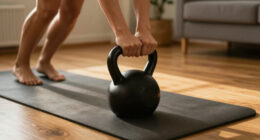
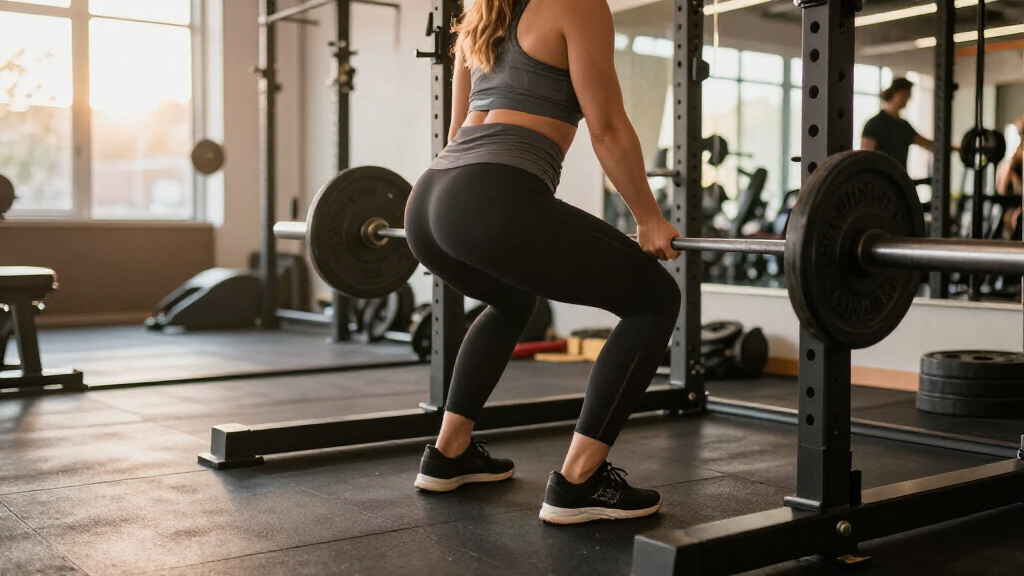
Sherwin, identified by Fit&Well as a NASM-certified trainer and strength-training specialist with Raeya Wellness in Los Angeles, says the warm-up helps activate the muscles she plans to use and gives her time to focus before a workout. The six exercises are the march and reach, the world’s greatest stretch, plank shoulder taps, squat to press, hip hinge and banded side step.
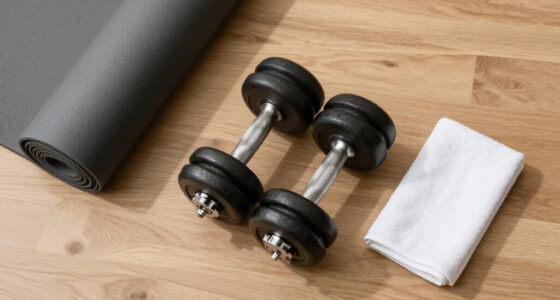
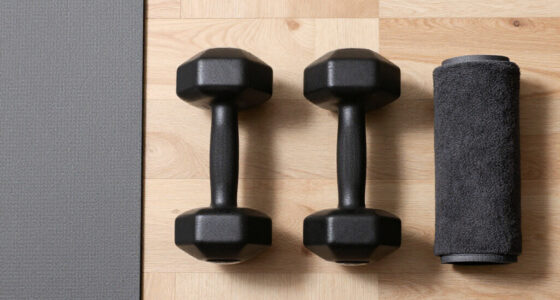
The routine includes a mix of timed and counted movements: march and reach for one minute; hold the world’s greatest stretch for 30 seconds per side; complete 20 shoulder taps per side; do 10 to 15 squat-to-press repetitions and 10 to 15 hip hinges; then take 10 banded steps in each direction. Dumbbells are used for the squat to press, and a short looped resistance band is used for the side steps.
Fit&Well’s instructions describe a progression from general movement to more specific preparation. The march raises the pace gradually, while the stretch adds a lunge and torso rotation. Shoulder taps challenge the ability to keep the body steady in a plank; the remaining exercises rehearse a squat, overhead press, hip hinge and lateral movement. The report does not specify dumbbell weight or how long the full routine should take.
A Practical Start to Strength Sessions
The routine gives readers a specific sequence rather than the brief jumping jacks and arm swings the Fit&Well writer recalls from school. Its exercises cover several movement patterns used in strength training, which may help someone organize the opening minutes of a workout. Sherwin describes the benefit as muscle activation and mental focus, not as a guarantee of stronger lifts.
Fit&Well also quotes Sherwin saying that warming up can increase blood flow and joint mobility, prepare the body for movement, and may enhance performance and reduce injury risk. Those are general claims attributed to the trainer; the source does not cite research testing this six-move sequence or quantify any effect. Readers should not interpret the recommendation as proof that the routine prevents injuries.
The article notes that warm-ups should suit the planned activity. This matters because a routine before a weight session is not necessarily the best preparation for a walk or a workout focused on a different set of movements. The report’s central point is to match preparation to the exercise ahead, while Sherwin’s sequence is offered as one strength-training option.
Products Worth Considering

BowFlex Results Series SelectTech Adjustable Dumbbells (Pair)

Oral-B iO Series 9 Limited Rechargeable Electric Toothbrush with 7 Cleaning Modes

Garmin Forerunner 55 GPS Running Smartwatch, Black
As an affiliate, we earn on qualifying purchases.
How Sherwin’s Sequence Is Structured
The report opens with the writer’s account of once viewing warm-ups as a waste of time, then describes learning to approach them differently. That is the writer’s personal experience, not evidence about how all exercisers respond. The article uses Sherwin’s routine to show one way to prepare before lifting rather than setting out a formal standard for every workout.
The six movements move through mobility, core control and loaded practice. The world’s greatest stretch begins in a high plank, with one foot stepped outside the same-side hand, followed by a gentle elbow lowering and an overhead reach with torso rotation. The plank shoulder tap alternates hands while the exerciser tries to limit body movement. In the squat to press, dumbbells travel from the sides to the shoulders and then overhead as the person stands.
For the hip hinge, the instructions call for a slight knee bend and a forward movement from the hips before returning to standing. The banded side step uses a loop above the knees, with the exerciser in a slight squat and steps taken both ways. Fit&Well says the moves should be tried before a weight-training session, but does not report that Sherwin’s routine has been compared with another warm-up.
“Warming up before exercise or lifting helps increase blood flow to your muscles, improve joint mobility, and prepare your body for movement, which can enhance performance and reduce the risk of injury.”
— Kelsey Sherwin, as quoted by Fit&Well
Evidence and Individual Fit
The source does not give a publication date, describe a study of the routine, or report measured changes in performance, mobility or injury rates. It is therefore unclear how much this exact sequence affects those outcomes. The suggested benefits are attributed to Sherwin, and readers should distinguish them from independently established results for this specific set of exercises.
The article also does not set out modifications for people with injuries, pain, limited mobility or medical conditions, nor does it prescribe dumbbell weights or a rest period between movements. The instructions allow the front foot in the stretch to land as close to the hand as mobility permits, but other adaptations are not detailed. Anyone unsure whether an exercise is appropriate can ask a qualified trainer or health professional, particularly if they have a pre-existing condition or an injury.
Trying the Routine Before Lifting
Fit&Well encourages readers to run through the six movements before a future weight-training session and observe how they move. The report gives no follow-up results, scheduled test or additional evidence about the sequence. Any account of how it feels or performs for an individual would be personal experience, not proof of a general effect.
Readers who choose to try it can follow the listed times and repetitions, use manageable resistance for the dumbbell movement, and stop if they experience pain or unusual discomfort. The next confirmed development is limited to the recommendation itself; the source does not say whether Sherwin or Fit&Well plans to publish outcome data or a revised routine.
Key Questions
What warm-up does Kelsey Sherwin recommend before lifting?
She recommends six movements: march and reach, world’s greatest stretch, plank shoulder taps, squat to press, hip hinge and banded side steps.
How long does the warm-up take?
Fit&Well gives one minute for the march and reach and 30 seconds per side for the stretch, along with repetitions for the other exercises. It does not state a total duration, including any time spent changing positions or resting.
Does the routine prevent injuries or improve lifting performance?
Sherwin says warming up can prepare the body and may enhance performance and reduce injury risk. The report does not provide research testing this six-exercise sequence or confirm those outcomes for people who use it.
Is this routine suitable for every workout?
No universal fit is established in the report. Fit&Well says a warm-up should reflect the planned activity and presents Sherwin’s sequence specifically for weight training. People with injuries, pain or pre-existing conditions may want professional guidance before trying unfamiliar movements.
Source: fitandwell.com