TL;DR

Get workout gear delivered free with Prime
- Fast, free delivery on millions of items
- Prime Video, Amazon Music and more included
- Member-only deals all year
Pilates instructor Nikkii Behrens recommends the magic circle, also called a Pilates ring, as a tool for practicing controlled movement, balance and body alignment. Her comments, reported by Fit&Well, describe it as a complement to dumbbells rather than a replacement; the article also outlines three exercises using the ring.
Pilates instructor Nikkii Behrens says a lightweight Pilates ring, also called a magic circle, can help people practice controlled movement, balance and body alignment in ways that dumbbells are not designed to emphasize. In a report by Fit&Well, Behrens frames the ring as a complement to weights, not a substitute, and shares three exercises using it.
The magic circle is a lightweight resistance tool used in Pilates. Behrens, founder of Rare Street Pilates, told Fit&Well that it adds resistance to exercises but is not intended to provide the high resistance associated with conventional gym weights. Her comparison is about the skill each tool emphasizes: dumbbells train muscles to produce force, while the ring can cue users to move with greater control and precision.
Behrens said both weights and precision equipment can belong in a well-rounded fitness routine. She associates ring work with posture, movement quality and core stability, but those are her instructional claims, not results established by evidence in the supplied report. The article gives three examples: a dead bug crunch, a squat and press, and a side-lying leg lift series.
The suggested formats are two to three rounds for each exercise. The dead bug crunch and squat and press are listed at 60 seconds, with 20 to 30 seconds of rest; the side-lying series is listed at 30 seconds per side, also with 20 to 30 seconds of rest. Fit&Well advises people new to exercise to reduce workout time as needed and take longer rests. The source does not specify a load comparison, a study, or a quantified benefit.
A Tool for Practicing Movement Control
The distinction matters for readers choosing home or studio equipment: a Pilates ring is presented as a way to add gentle resistance and movement cues, rather than as a direct replacement for dumbbells. Someone seeking to practice steady positioning and controlled repetitions may find the ring useful, while strength training focused on increasing the force muscles produce is a different aim.
Behrens’ recommendation also resists an either-or framing. Her stated view is that conventional weights and Pilates precision equipment serve different purposes and can be used together. That makes the report practical as an equipment suggestion, but it should not be read as proof that a ring is generally better or produces superior fitness outcomes. The article offers an instructor’s perspective and exercise guidance, not comparative research.
Pilates magic circle resistance ring
As an affiliate, we earn on qualifying purchases.
As an affiliate, we earn on qualifying purchases.
How the Ring Differs From Weights
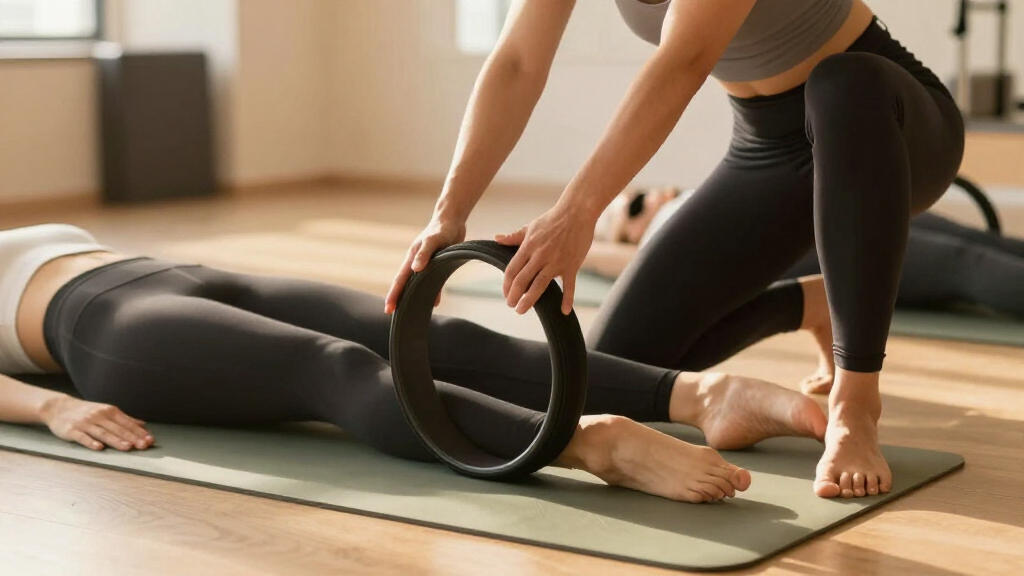
Fit&Well introduces the magic circle as a piece of equipment that may be unfamiliar to some readers. It is also known as a Pilates ring and is described as lightweight, with resistance added by pressing against it during movement. The report contrasts that use with dumbbells, which provide an external weight for resistance exercises.
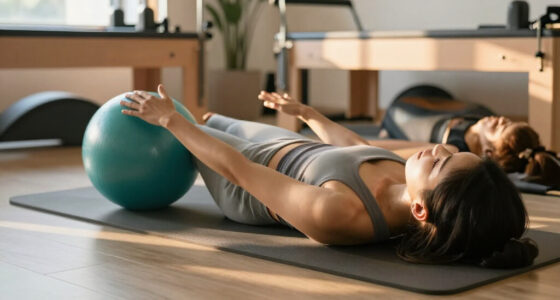
The exercises illustrate the ring’s different placements and cues. In the dead bug crunch, it is held between the knees and squeezed while the user moves the legs. In the squat and press, the user holds and presses the ring while standing and squatting. In the side-lying series, it is placed between the ankles or near the torso, depending on the movement. These examples come from the Fit&Well report and are not presented as a complete training plan.
“Dumbbells train your muscles to produce more force, while the circle trains your body to use that strength with greater control, balance and efficiency.”
— Nikkii Behrens, founder of Rare Street Pilates, speaking to Fit&Well
Pilates ring for controlled movement
As an affiliate, we earn on qualifying purchases.
As an affiliate, we earn on qualifying purchases.
Evidence Behind the Comparison
The report does not cite a study comparing Pilates rings with dumbbells, quantify how much muscle activation changes, or show that ring use improves posture, core stability or back pain. Those points are presented as Behrens’ instructional claims. It is also unclear from the source how the suggested routine would need to change for a person’s fitness level, injury history or specific goals.
The article’s title describes the equipment as better than dumbbells, but Behrens’ quoted explanation is narrower: the tools emphasize different aspects of exercise, and both may have a place in a routine. The available material does not establish that the ring is superior overall.
lightweight Pilates ring for home workouts
As an affiliate, we earn on qualifying purchases.
As an affiliate, we earn on qualifying purchases.
Using the Exercises With Care
Fit&Well’s report does not announce a new product, formal program or follow-up study. Its practical next step for readers is to try the listed movements at a manageable pace, using shorter work periods and longer rests if they are new to exercise. In the side-lying series, Behrens advises keeping the pelvis still and scaling back to the leg swings if the full sequence feels too difficult.
Readers considering the exercises should stop if a movement causes pain and adapt it to their ability. The source does not provide individualized medical advice or guidance for people with existing conditions. Any broader claim that ring training outperforms dumbbells would require evidence beyond the instructor’s comments and the exercise descriptions in this report.
Pilates ring exercises for core stability
As an affiliate, we earn on qualifying purchases.
As an affiliate, we earn on qualifying purchases.
Key Questions
What is a Pilates magic circle?
It is a lightweight resistance tool, also called a Pilates ring, that users press or squeeze during exercises.
Does Behrens say the ring should replace dumbbells?
No. Behrens told Fit&Well that both weights and precision equipment can be part of a well-rounded routine. She describes them as emphasizing different things: force production versus control and precision.
Which exercises does the report suggest?
The three examples are a dead bug crunch, a squat and press, and a side-lying leg lift series. The source gives suggested work periods and rest intervals, but does not tailor them to individual needs.
Is the ring proven to improve posture or prevent back pain?
The supplied report does not provide research establishing those outcomes. Behrens discusses posture and core control as potential training benefits, and describes back-pain reduction in her explanation of the dead bug, but those statements are not independently demonstrated in the source.
Source: rss
Halloween Picks
halloween
As an affiliate, we earn on qualifying purchases.