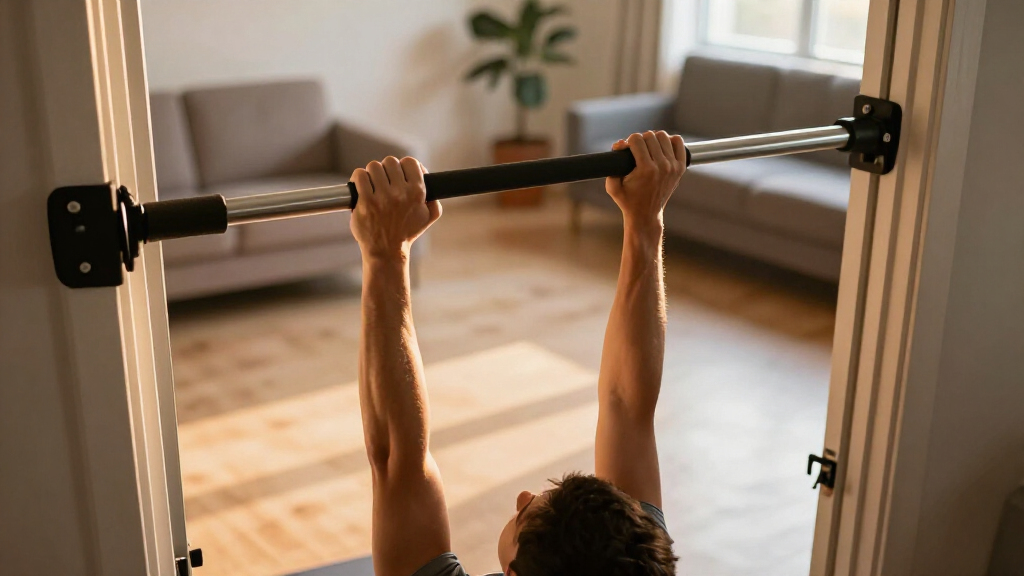
For most home workouts, I’d put the DOBESTS Foldable Power Tower Pull Up Bar first: its freestanding design avoids doorway-fit questions and supports more than pull-ups. The Jayflex CrossGrips is a stronger fit when compact storage matters, while the KAKICLAY Multi-Grip Foldable Doorway Pull-Up Bar suits buyers who want varied hand positions in a doorway setup. Portable pull-up bars trade off easy storage, stability, doorway compatibility, and exercise range; no style leads on all four. I compare all 14 options below so you can match the bar to your room, routine, and setup preferences.

Get workout gear delivered free with Prime
- Fast, free delivery on millions of items
- Prime Video, Amazon Music and more included
- Member-only deals all year
Complete the kit


Key Takeaways
- Freestanding towers such as the DOBESTS, SERTT, YYJO, JOROTO, and YICHIJIAN models offer more exercise variety than doorway bars, but need floor space and a stable assembly.
- Doorway bars are the more compact route, yet their fit depends on the opening, trim, and installation method—not just the bar’s advertised range.
- Foldability changes storage, not footprint during use: a folding tower still needs room to stand, move, and exercise safely.
- Among the doorway picks, the Jayflex CrossGrips emphasizes compactness, while the KAKICLAY model puts more emphasis on grip variety; buyers should prioritize the feature they will use most.
- The lineup includes several similar freestanding and Ally Peaks doorway options, so compare their configuration and included accessories rather than assuming shared branding means identical use.
| DOBESTS Foldable Power Tower Pull Up Bar |  | Best Overall Freestanding Pick | Brand: DOBESTS | Material: Iron | Dimensions: 49.2 × 45.7 × 90.6 inches | VIEW LATEST PRICE | See Our Full Breakdown |
| Jayflex CrossGrips Compact Doorway Pull-Up Bar |  | Best Compact Travel Pick | Brand: Jayflex | Model: CG001 | Mount type: Doorway mount | VIEW LATEST PRICE | See Our Full Breakdown |
| SERTT Foldable Power Tower for Pull-Ups, Dips, and Push-Ups |  | Best for Exercise Adjustability | Brand: SERTT | Maximum weight capacity: 440 pounds | Frame material: 2 mm thick steel tubing | VIEW LATEST PRICE | See Our Full Breakdown |
| DOBESTS Foldable Power Tower with Pull-Up Bar and Dip Station |  | Best for Small-Home Storage | Brand: DOBESTS | Maximum weight recommendation: 700 pounds | Material: Iron | VIEW LATEST PRICE | See Our Full Breakdown |
| LYHOME Portable Doorway Pull-Up Bar with Independent Handles |  | Best Independent-Grip Doorway Pick | Brand: LYHOME | Model: F10-025-4 | Material: Alloy steel | VIEW LATEST PRICE | See Our Full Breakdown |
| KAKICLAY Multi-Grip Foldable Doorway Pull-Up Bar |  | Best for Grip Variety | Mount type: Doorway mount | Material: Carbon steel | Doorway width: 21.65–36.22 in | VIEW LATEST PRICE | See Our Full Breakdown |
| Ally Peaks Adjustable Doorway Pull-Up Bar |  | Best for Broad Doorway Fit | Model: AL-O2 | Mount type: Doorway mount | Material: 1.7 mm chrome steel | VIEW LATEST PRICE | See Our Full Breakdown |
| Sportneer No-Drill Adjustable Doorway Pull-Up Bar, 29.5–37 in, 440 lb Capacity |  | Best for No-Drill Installation | Model: Y22-82000-90 | Type: Doorway pull-up bar | Installation: No-drill | VIEW LATEST PRICE | See Our Full Breakdown |
| YYJO Foldable Freestanding Pull-Up and Dip Bar |  | Best Freestanding Option | Material: Carbon steel | Height settings: 11 levels | Height range: 68.9–82.68 in | VIEW LATEST PRICE | See Our Full Breakdown |
| Ally Peaks Doorway Pull-Up Bar with Resistance Bands |  | Best for Accessory-Assisted Workouts | Material: Heavy-duty steel | Weight capacity: 440 lb | Doorway width: 24–32 in | VIEW LATEST PRICE | See Our Full Breakdown |
| TOPOKO Doorway Pull-Up Bar |  | Best for Simple, No-Drill Setup | Brand: TOPOKO | Material: Heavy-duty steel | Bar length: 36 inches | VIEW LATEST PRICE | See Our Full Breakdown |
| JOROTO Foldable Pull-Up and Dip Station |  | Best for a Multi-Exercise Portable Station | Brand: JOROTO | Material: Alloy steel | Maximum weight capacity: 450 pounds | VIEW LATEST PRICE | See Our Full Breakdown |
| Ally Peaks Doorway Pull-Up Bar, 440 lb Capacity |  | Best for a Higher Stated Capacity | Brand: Ally Peaks | Material: Heavy-duty steel | Steel thickness: 1.6 mm | VIEW LATEST PRICE | See Our Full Breakdown |
| YICHIJIAN Foldable Pull-Up Bar Station, Adjustable Height | 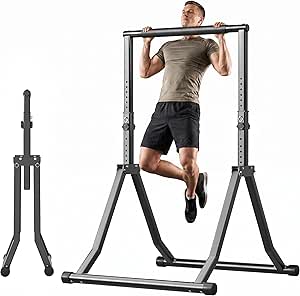 | Best for Compact Freestanding Storage | Brand: YICHIJIAN | Material: Steel | Mount type: Freestanding | VIEW LATEST PRICE | See Our Full Breakdown |
| portable pull-up bar | Material | Brand |
|---|---|---|
| DOBESTS Foldable Power Tower P | Iron | DOBESTS |
| Jayflex CrossGrips Compact Doo | Alloy steel | Jayflex |
| SERTT Foldable Power Tower for | — | SERTT |
| DOBESTS Foldable Power Tower w | Iron | DOBESTS |
| LYHOME Portable Doorway Pull-U | Alloy steel | LYHOME |
| KAKICLAY Multi-Grip Foldable D | Carbon steel | — |
| Ally Peaks Adjustable Doorway | 1.7 mm chrome steel | — |
| Sportneer No-Drill Adjustable | Steel | — |
| YYJO Foldable Freestanding Pul | Carbon steel | — |
| Ally Peaks Doorway Pull-Up Bar | Heavy-duty steel | — |
| TOPOKO Doorway Pull-Up Bar | Heavy-duty steel | TOPOKO |
| JOROTO Foldable Pull-Up and Di | Alloy steel | JOROTO |
| Ally Peaks Doorway Pull-Up Bar | Heavy-duty steel | Ally Peaks |
| YICHIJIAN Foldable Pull-Up Bar | Steel | YICHIJIAN |
More Details on Our Top Picks
DOBESTS Foldable Power Tower Pull Up Bar
I’d choose this DOBESTS tower when a portable pull-up setup needs to do more than hang from a doorway. Its freestanding frame supports pull-ups, chin-ups, dips, and core work without drilling, while eight height settings make it easier to fit different users. The wide triangular base and stated 700-pound capacity give it a sturdier, more substantial profile than the Jayflex CrossGrips, which is much easier to carry but depends on a compatible door frame and has a lower capacity. The tradeoff is space: at 49.2 by 45.7 inches, this tower needs a clear floor area when open, even though it folds for storage. Assembly is required, and it should sit on a flat, stable surface. I’d pick it for a home gym that needs exercise variety, not for workouts on the move.
Pros:- Freestanding design avoids wall drilling and doorway fit restrictions
- Supports pull-ups, chin-ups, dips, and core exercises
- Eight height settings accommodate different users
- Folds for storage and has a wide triangular support frame
Cons:- Requires adult assembly before use
- Needs a flat, stable surface and substantial floor space when open
Best for: Home exercisers who want a foldable, freestanding station for pull-ups, dips, and core exercises without modifying a doorway
Not ideal for: People who need a bar they can carry between locations or who lack floor space for a nearly four-foot-wide frame
- Brand:DOBESTS
- Material:Iron
- Dimensions:49.2 × 45.7 × 90.6 inches
- Maximum weight capacity:700 pounds
- Height adjustment:8 levels
- Frame:Freestanding triangular support
- Assembly:Required
- Warranty:1-year limited
Our verdict“Choose this DOBESTS tower if you want a versatile home workout station that folds away but do not need a compact, carry-anywhere bar.”
Jayflex CrossGrips Compact Doorway Pull-Up Bar
The Jayflex CrossGrips are the most portable choice here because the setup is a pair of interlocking handles, not a full tower or long bar. They install without tools and support narrow, wide, and neutral grips, making them a flexible option for renters or travelers who can use a suitable doorway. Compared with the LYHOME F10-025-4, CrossGrips list specific molding and frame-thickness ranges, so checking measurements before buying is especially important; LYHOME instead gives its own compatibility ranges and independent rotating handles. The Jayflex’s 250-pound capacity is a real limit, and its fit depends on both 2–4-inch molding and a 4.5–7.5-inch frame thickness. I’d choose it for easy storage and grip variety, but skip it if your door trim falls outside those dimensions or you want a freestanding station for dips and floor-based work.
Pros:- Interlocking handles pack away more easily than a full-width bar or tower
- Tool-free installation
- Supports narrow, wide, and neutral grip positions
- Can also be used for push-ups and dips
Cons:- Fits only doorways within the specified molding and frame-thickness ranges
- 250-pound maximum weight recommendation is lower than the stated capacity of the DOBESTS towers
- Doorway-dependent design does not offer the freestanding stability of a power tower
Best for: Travelers and apartment dwellers who want compact, tool-free pull-up handles and have a doorway matching the stated fit dimensions
Not ideal for: Users above the stated 250-pound limit, or anyone whose doorway falls outside the specified molding and frame-thickness ranges
- Brand:Jayflex
- Model:CG001
- Mount type:Doorway mount
- Maximum weight recommendation:250 pounds
- Door molding fit:2–4 inches
- Door frame thickness fit:4.5–7.5 inches
- Dimensions:10 inches wide × 7 inches high
- Weight:2.32 kg
- Material:Alloy steel
Our verdict“Pick the CrossGrips for compact storage and varied grips if your doorway fits and you do not need a higher-capacity freestanding station.”
SERTT Foldable Power Tower for Pull-Ups, Dips, and Push-Ups
I’d put the SERTT ahead of a basic doorway bar for buyers who want to change both their grip and the station setup between exercises. It offers five pull-up grip options, ten height positions for the pull-up bar, and ten positions for the dip and push-up handles. That adjustability makes it more adaptable than the DOBESTS Foldable Power Tower Pull Up Bar, which has eight height levels but no listed range of separate handle positions. The SERTT also folds flat and lists a 440-pound capacity, though that is below the 700-pound figure stated for the DOBESTS towers. Its 39.4-inch frame width still takes floor space during workouts, and assembly takes about 20 minutes. I’d favor it for users who want a configurable multi-exercise station; those seeking the simplest portable pull-up option may prefer the smaller Jayflex handles.
Pros:- Five pull-up grip options support varied hand positions
- Ten positions each for the pull-up bar and dip/push-up handles
- Folds flat for storage
- Designed for pull-ups, dips, knee raises, inverted rows, and push-ups
Cons:- Requires assembly, listed at about 20 minutes
- The 39.4-inch-wide frame needs dedicated floor space during use
- 440-pound stated capacity is lower than the 700-pound figures listed for the DOBESTS towers
Best for: Home trainers who want multiple grip choices and adjustable pull-up, dip, and push-up positions in one foldable station
Not ideal for: People who need a small, lightweight bar for travel or who prefer a setup that does not require assembly
- Brand:SERTT
- Maximum weight capacity:440 pounds
- Frame material:2 mm thick steel tubing
- Pull-up bar height positions:10
- Dip/push-up handle positions:10
- Pull-up grip options:5
- Dip handle width options:3
- Frame width:39.4 inches
- Warranty:24-month replacement warranty
Our verdict“Choose the SERTT if adjustable grips and handle positions matter more to you than the smallest footprint or the highest listed capacity.”
DOBESTS Foldable Power Tower with Pull-Up Bar and Dip Station
This DOBESTS tower earns its place for buyers who need a fold-flat freestanding station and want both pull-up and dip work without permanent installation. Eight height settings and rubber-coated grips cover the essentials, while the triangular support frame gives it a different use case from the Jayflex CrossGrips: the Jayflex is easier to stow and carry, but this tower lets you train without relying on a doorway. It also shares a stated 700-pound maximum recommendation with the other DOBESTS tower in this roundup, though the provided details do not list dimensions, so I can’t compare their open footprints precisely. Its main compromise is the space it occupies when set up, along with adult assembly using tools. I’d choose it for a home with a storage spot and room to open the frame, not for a tight hallway or frequent travel.
Pros:- Folds flat for storage between workouts
- Eight height settings suit users of different sizes
- Triangular support frame is designed for stability
- Rubber-coated grips add a more comfortable hand contact
Cons:- Requires adult assembly with tools
- Large footprint when fully set up may not suit very tight rooms
- Freestanding frame is less portable than the Jayflex interlocking handles
Best for: Home users who want a foldable pull-up and dip station with adjustable height and a place to store it between workouts
Not ideal for: People with very limited workout floor space or anyone who needs a lightweight doorway bar for travel
- Brand:DOBESTS
- Maximum weight recommendation:700 pounds
- Material:Iron
- Color:Black/yellow
- Handle type:Rubber
- Adjustable height levels:8
- Foldable design:Yes; folds flat
- Included components:Pull-up bar, dip handles, instruction manual, assembly tools
Our verdict“Choose this DOBESTS model if you want a foldable home pull-up and dip station and can spare floor space while it is open.”
LYHOME Portable Doorway Pull-Up Bar with Independent Handles
The LYHOME is the doorway option I’d choose when independent rotating handles matter more than having a single fixed bar. Its tool-free, no-screw setup and 3.6-pound listed weight make it easier to move and store than either DOBESTS freestanding tower. Silicone pads are intended to protect the frame, while downward force tightens the clamp. Compared with the Jayflex CrossGrips, LYHOME also offers separate handles for varied positions, but its compatibility is defined by a different set of measurements: frame height of 2.0–5.3 inches and width of 2.35–7.0 inches. Both doorway picks list a 250-pound capacity, so neither is the choice for buyers seeking the higher stated limits of the freestanding towers. Check the size guide before ordering; a no-tool setup is only useful if the frame fits.
Pros:- Lightweight at 3.6 pounds for easier storage and transport
- Two independent rotating handles offer varied grip positions
- Installs without tools or screws
- Silicone pads help protect the door frame
Cons:- Requires a doorway within the stated height and width ranges
- 250-pound maximum capacity is lower than the stated limits of the freestanding towers
- Doorway design does not provide a freestanding option for users without a compatible frame
Best for: Users who want lightweight, tool-free doorway handles with independent grip positioning and a frame that matches the listed dimensions
Not ideal for: People with incompatible door frames, users above the 250-pound capacity, or anyone who wants dips and other exercises from a freestanding tower
- Brand:LYHOME
- Model:F10-025-4
- Material:Alloy steel
- Weight:3.6 pounds
- Maximum weight capacity:250 pounds
- Mount type:Doorway mount
- Door frame height compatibility:2.0–5.3 inches
- Door frame width compatibility:2.35–7.0 inches
- Handles:2 independent rotating handles
Our verdict“Pick the LYHOME if you want lightweight, independently positioned doorway handles and have verified that your frame fits.”
KAKICLAY Multi-Grip Foldable Doorway Pull-Up Bar
I’d choose the KAKICLAY Multi-Grip for a doorway setup that can handle more than one hand position without leaving equipment permanently in the room. Its angled ergonomic grips and foam padding offer more grip options than the straight-bar Ally Peaks model with resistance bands, while the included suspension straps add workout variety. The folding design helps when the doorway needs to stay clear, and silicone protectors are intended to reduce marks on the frame.
The tradeoff is fit: its maximum doorway width is narrower than the Ally Peaks Adjustable bar’s, and the frame must be sturdy and within KAKICLAY’s specified dimensions. At 11.6 pounds, it is also less of a simple lightweight bar than a compact option. I’d skip it for hollow plasterboard walls or doorways outside its range.
Pros:- Angled multi-grip design offers more hand positions than a straight bar.
- Folds away for easier storage when the doorway needs to remain clear.
- Silicone door protectors help limit frame marks.
- Includes suspension straps for additional exercise options.
Cons:- Requires a sturdy doorframe and is unsuitable for hollow plasterboard walls.
- Fits only doorways within its stated width, depth, and trim-height limits.
Best for: Home exercisers with a sturdy, size-compatible doorway who want multiple grip positions, foam padding, and included suspension straps.
Not ideal for: People with hollow plasterboard walls, unusually wide or deep doorways, or anyone seeking a basic bar with the simplest possible setup.
- Mount type:Doorway mount
- Material:Carbon steel
- Doorway width:21.65–36.22 in
- Doorway depth:8.27 in
- Maximum trim height:3.54 in
- Weight capacity:440 lb
- Item weight:11.6 lb
- Included:Suspension straps
- Warranty:24 months
Our verdict“Choose the KAKICLAY if grip variety and fold-away storage matter more than broad doorway compatibility or a simpler bar.”
Ally Peaks Adjustable Doorway Pull-Up Bar
The Ally Peaks Adjustable is my pick when doorway dimensions are the main obstacle. Its stated width range extends to 39.37 inches, wider than the KAKICLAY Multi-Grip and Sportneer bars, and it also specifies a depth range of 4.7–8.27 inches. That broader fit gives buyers more room to match the bar to an existing frame rather than defaulting to a freestanding station.
The chrome-steel bar is listed for up to 500 pounds and can support several exercises beyond pull-ups, including dips and hanging crunches. Unlike KAKICLAY, it does not list foldable storage or suspension straps; its appeal is adjustable fit and a straightforward bar format. I’d be careful to confirm the installation is secure before every session, and anyone with a doorway outside its stated dimensions should choose another style.
Pros:- Fits doorways up to 39.37 inches wide, wider than the KAKICLAY and Sportneer options.
- Lists a 4.7–8.27-inch doorway-depth range for clearer fit checks.
- Chrome steel construction with a stated 500-pound capacity.
- Can be used for pull-ups, push-ups, dips, and hanging crunches.
Cons:- Installation must be checked for security before use.
- Does not list a foldable design or included resistance-training accessories.
Best for: Buyers with a wider-than-standard doorway who want an adjustable doorway bar for pull-ups and other upper-body exercises.
Not ideal for: People whose frames fall outside the listed width or depth range, or who want a folding design or included workout accessories.
- Model:AL-O2
- Mount type:Doorway mount
- Material:1.7 mm chrome steel
- Doorway width:21.65–39.37 in
- Doorway depth:4.7–8.27 in
- Maximum trim height:3.75 in
- Weight capacity:500 lb
- Item weight:2.82 kg
Our verdict“Pick this Ally Peaks bar if your doorway is wide and within its depth range; skip it if storage features or accessories are the priority.”
Sportneer No-Drill Adjustable Doorway Pull-Up Bar, 29.5–37 in, 440 lb Capacity
The Sportneer No-Drill suits buyers who want an adjustable bar without drilling into a frame. Its dual gear lock and large PVC pads are intended to help hold it in place, and the stated 440-pound capacity makes it a sturdier-positioned alternative to a basic tension bar. Compared with the Ally Peaks Adjustable, however, Sportneer starts at a wider minimum doorway width and has a narrower overall fit range.
That fit requirement is the deciding tradeoff: Sportneer specifies solid wood door frames measuring 29.5–37 inches wide. Its strong pad adhesion may also peel paint or plaster when removed, so “no-drill” does not mean consequence-free for every finish. I’d choose it only after checking both the frame material and the opening dimensions; the KAKICLAY is a better match for narrower doorways within its own range.
Pros:- Installs without drilling.
- Dual gear lock and large PVC pads are designed to add stability.
- Adjusts across a 29.5–37-inch doorway range.
- Lists a 440-pound capacity and ASTM, EN957, and CA65 safety certifications.
Cons:- Designed only for solid wood door frames within its specified width range.
- Strong pad adhesion may peel paint or plaster when the bar is removed.
Best for: Renters or homeowners with a solid wood frame 29.5–37 inches wide who want an adjustable bar and prefer not to drill.
Not ideal for: People with hollow, plaster, or painted-fragile frames, or doorways narrower than 29.5 inches.
- Model:Y22-82000-90
- Type:Doorway pull-up bar
- Installation:No-drill
- Material:Steel
- Adjustable doorway width:29.5–37 in
- Door frame requirement:Solid wood
- Weight capacity:440 lb
- Safety certifications:ASTM, EN957, CA65
Our verdict“Choose Sportneer if your frame is solid wood and fits its narrower range; avoid it where pad removal could damage the finish.”
YYJO Foldable Freestanding Pull-Up and Dip Bar
The YYJO Foldable Freestanding takes a different approach from the doorway-mounted bars here: it stands on its own, so buyers do not need to match a doorframe’s width or construction. Its 11 height settings and support for pull-ups, dips, and leg raises make it more adaptable for varied exercises than the doorway-focused KAKICLAY, though it has a 350-pound listed capacity compared with that model’s 440 pounds.
Folding helps reclaim floor space between sessions, but this is still a tall piece of equipment, not something that disappears into a drawer. Its folded length is 75.2 inches, and some assembly is required. I’d favor YYJO for a home with a suitable storage area and no usable doorway mount; I’d skip it if “portable” means compact enough to carry easily or store in a tight closet.
Pros:- Freestanding design avoids doorway width and frame compatibility limits.
- Eleven height settings accommodate different setups and exercises.
- Supports pull-ups, dips, leg raises, and other upper-body or core work.
- Folds for storage between workouts.
Cons:- Folded length is 75.2 inches, so storage still requires substantial vertical space.
- Assembly is required.
- Its listed 350-pound capacity is lower than the 440-pound KAKICLAY and Sportneer bars.
Best for: Home exercisers who lack a suitable doorway frame and want height adjustment plus pull-up, dip, and leg-raise options.
Not ideal for: People with very limited storage or anyone wanting a lightweight, easily carried doorway bar.
- Material:Carbon steel
- Height settings:11 levels
- Height range:68.9–82.68 in
- Interior width:24 in
- Weight capacity:350 lb
- Product dimensions:33.5 × 51.2 × 68.9 in
- Folded dimensions:33.46 × 6.3 × 75.2 in
- Included components:Pull-up bar
Our verdict“Choose YYJO when doorway mounting is not workable and you have room for a tall folding station; skip it for compact portability.”
Ally Peaks Doorway Pull-Up Bar with Resistance Bands
The Ally Peaks Doorway Pull-Up Bar with Resistance Bands is the accessory-focused choice in this group. It includes two resistance bands, handles, and a door anchor, giving buyers tools for assisted or supplementary exercises without adding a separate accessory purchase. That makes it more workout-ready out of the box than the KAKICLAY, which includes suspension straps but not this listed band-and-handle set.
Its 440-pound capacity and screw-free installation suit buyers who want a portable doorway setup, but the 24–32-inch fit range is more restrictive than the Ally Peaks Adjustable bar’s range. The included kit also cannot solve a doorway mismatch, and the bar still needs a secure installation check before use. I’d choose it for a compatible frame and a varied routine; for wider openings, the adjustable Ally Peaks model is the better fit.
Pros:- Includes two resistance bands, two handles, and a door anchor.
- Lists a 440-pound weight capacity.
- Installs without screws.
- Removable silicone pads help protect the door frame.
Cons:- Fits only doorways 24–32 inches wide.
- Requires checking that the bar is securely installed before use.
Best for: Buyers with a 24–32-inch doorway who want a pull-up bar bundled with resistance bands, handles, and a door anchor.
Not ideal for: People with doorways outside the 24–32-inch range or those who want broader adjustability than this bar provides.
- Material:Heavy-duty steel
- Weight capacity:440 lb
- Doorway width:24–32 in
- Straight rod length:36.6 in
- Curved rod length:4.3 in
- Included accessories:Two resistance bands (30 lb and 25 lb), two handles, door anchor, removable silicone pads
- Color:Black and silver
- Return guarantee:180 days
Our verdict“Choose this Ally Peaks model for its included band-and-handle kit if your doorway fits; choose the adjustable Ally Peaks bar for a wider fit range.”
TOPOKO Doorway Pull-Up Bar
The TOPOKO Doorway Pull-Up Bar is a straightforward pick for buyers who want a removable bar without giving up floor space to a freestanding station. It installs without drilling and supports pull-ups, chin-ups, and other bodyweight exercises, while foam grips and padded contact points add comfort and help shield the frame. Its 23–31-inch doorway range is narrower than the Ally Peaks Doorway Pull-Up Bar’s 24–32-inch range, so measuring the opening and jamb matters before choosing. Unlike the foldable JOROTO station, this bar is compact and avoids assembly, but it relies on a compatible doorway and a correct fit rather than standing independently. I’d shortlist it for a basic home setup, not for buyers who need broader placement options or a freestanding workout station.
Pros:- No-drill installation avoids permanent changes to the doorway.
- Foam grips support a more comfortable hold during upper-body exercises.
- Padded contact points are designed to help protect the door frame.
- Compact format takes little storage space compared with the JOROTO foldable station.
Cons:- The specified doorway width and jamb depth rule out many openings.
- Fit and installation may vary by selected style, so compatibility needs checking.
- A doorway-mounted bar offers less placement flexibility than a freestanding station.
Best for: Adults and teens who want a compact, removable bar for a doorway that measures within its stated width and jamb-depth range.
Not ideal for: Buyers with doorways outside the 23–31-inch width or 4.7–7.5-inch jamb-depth range, or anyone who wants a freestanding station for dips and floor-independent placement.
- Brand:TOPOKO
- Material:Heavy-duty steel
- Bar length:36 inches
- Doorway width:23–31 inches
- Door jamb depth:4.7–7.5 inches
- Installation:No drilling required
- Suitable age range:Adults and teens
Our verdict“Choose the TOPOKO if your doorway fits its measurements and you want a simple, removable bar rather than a freestanding station.”
JOROTO Foldable Pull-Up and Dip Station
For someone who needs more than a pull-up bar, the JOROTO Foldable Pull-Up and Dip Station combines pull-ups, chin-ups, dips, knee raises, and push-ups in a freestanding frame. Its adjustable bars and four pull-up height levels make it more adaptable than the doorway-mounted TOPOKO or Ally Peaks bars, which depend on a suitable frame and opening. The listed 450-pound capacity and leveling knobs add useful setup details, but the station weighs about 29.48 kg and still needs assembly; folding helps with storage, but it does not make the unit lightweight to carry. I’d rank it for buyers who can leave it set up between workouts or have a place to store a substantial frame. The YICHIJIAN also folds, but offers a different height range and lists a higher static capacity.
Pros:- Supports several upper-body and core exercises without relying on a doorway.
- Four pull-up height levels and seven dip-bar adjustments allow changes to the setup.
- Folding design reduces its footprint for storage.
- Leveling knobs can help accommodate uneven floors.
Cons:- At 29.48 kg, it is less convenient to carry than a removable doorway bar.
- Assembly is required before use.
- The provided product details do not establish how stable or durable it is during workouts.
Best for: Home exercisers who want pull-ups, dips, knee raises, and push-ups on one adjustable freestanding frame and have room to assemble and store it.
Not ideal for: People seeking a lightweight bar they can quickly move between locations, or buyers without space for a 41 × 44-inch unfolded footprint.
- Brand:JOROTO
- Material:Alloy steel
- Maximum weight capacity:450 pounds
- Pull-up height levels:4, from 40.4–82.8 inches
- Dip-bar adjustments:7
- Dimensions:41 × 44 × 82 inches
- Folded footprint:41.5 inches
- Item weight:29.48 kg
- Warranty:12 months of product support
Our verdict“Pick the JOROTO if you want an adjustable, multi-exercise station that folds away and can stay near your workout area.”
Ally Peaks Doorway Pull-Up Bar, 440 lb Capacity
The Ally Peaks Doorway Pull-Up Bar suits buyers who want a removable doorway option with a clearly stated 440-pound capacity and support for more than pull-ups: the listed exercises include dips, push-ups, and hanging crunches. Its leverage-mounted setup needs no screws, while silicone pads are intended to protect the frame. Compared with the TOPOKO, it fits a slightly wider stated doorway range—24–32 inches rather than 23–31—but its description does not give a jamb-depth range, so buyers still need to check their specific frame and installation instructions. It is more portable and compact than the JOROTO station, though it depends on secure placement in a compatible doorway and requires a pre-use installation check. I’d choose it over a freestanding model when easy removal matters more than having a separate exercise station.
Pros:- Lists a 440-pound weight capacity.
- Leverage-mounted installation uses no screws.
- Silicone pads are designed to protect the door frame.
- Removable design is easier to store than the JOROTO freestanding station.
Cons:- Fits only doorways within the stated 24–32-inch width range.
- The product details do not specify a door jamb-depth range.
- The fit must be checked for secure installation before each use.
Best for: Buyers who want a removable, no-screw doorway bar with a stated 440-pound capacity and a range of exercise options.
Not ideal for: People with openings outside 24–32 inches, or anyone who prefers not to rely on a correctly fitted doorway-mounted bar.
- Brand:Ally Peaks
- Material:Heavy-duty steel
- Steel thickness:1.6 mm
- Weight capacity:440 lb
- Doorway width:24–32 inches
- Straight rod length:36.6 inches
- Door anchor length:17.7 inches
- Installation:Leverage-mounted; no screws
- Color:Black and silver
Our verdict“Choose this Ally Peaks bar if your doorway fits and you want a portable option with a stated 440-pound capacity.”
YICHIJIAN Foldable Pull-Up Bar Station, Adjustable Height
The YICHIJIAN Foldable Pull-Up Bar Station offers a freestanding alternative for people who cannot or do not want to mount a bar in a doorway. Its frame folds from a 37.4 × 44.9-inch footprint to 37.4 × 13.2 inches, so it can be stored more easily than the assembled JOROTO station. The 12 height settings, adjustable non-slip feet, and reinforced triangular base are aimed at making setup more adaptable, while the manufacturer lists a 700-pound static capacity. That figure is specifically static, so I would not treat it as directly comparable to JOROTO’s 450-pound maximum weight capacity. The stated user-height guidance—up to 5’5″—is a major limit: taller buyers should look elsewhere. Compared with the doorway-based TOPOKO, this avoids doorway measurements but takes floor space when unfolded.
Pros:- Folds from a 44.9-inch-wide setup to a 13.2-inch folded width.
- Twelve height settings allow adjustment within the listed range.
- Non-slip adjustable feet and a reinforced triangular base are designed to support a stable setup.
- Freestanding design avoids the doorway fit limits of the TOPOKO.
Cons:- The product description limits its stated fit to users up to 5’5″.
- Its 700-pound figure is a static capacity and should not be compared directly with a maximum workout capacity.
- The unfolded frame still needs a 37.4 × 44.9-inch floor area.
Best for: Shorter users, up to the stated 5’5″ guidance, who want a freestanding bar that folds to a narrower storage footprint.
Not ideal for: Taller users or buyers who need a bar that can be stored without occupying floor space when opened.
- Brand:YICHIJIAN
- Material:Steel
- Mount type:Freestanding
- Maximum static weight capacity:700 lb
- Height range:58.3–76.8 inches
- Height adjustment:12 levels
- Unfolded dimensions:37.4 × 44.9 inches
- Folded dimensions:37.4 × 13.2 inches
- Warranty:1 year
Our verdict“Choose the YICHIJIAN if you are within its stated height guidance and want a foldable freestanding bar rather than a doorway-mounted model.”
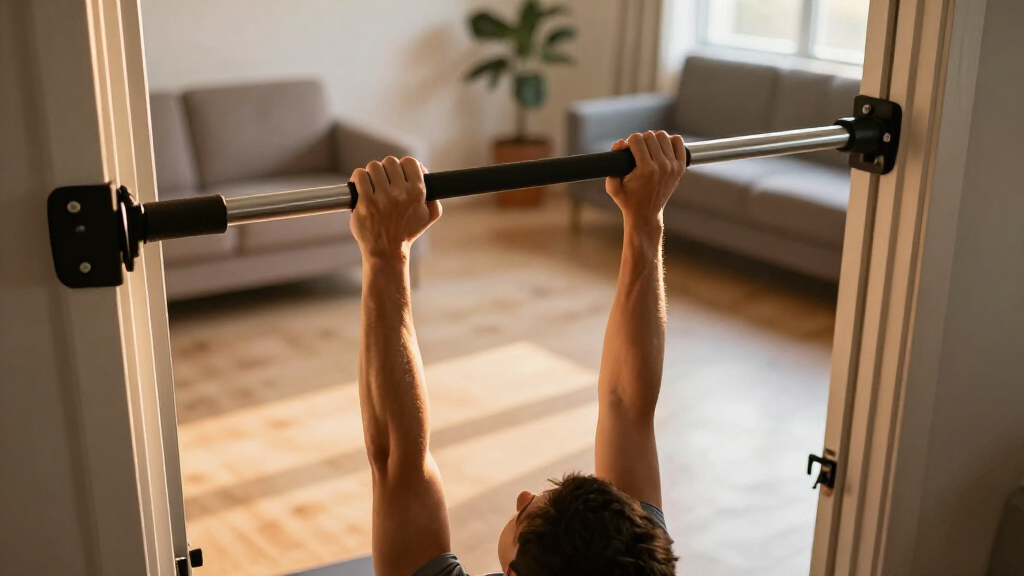
How We Picked
I ranked these bars around the practical questions that shape a portable setup: how it mounts or stands, how much room it needs, what exercises it supports, and how clearly a buyer can judge fit. Doorway models scored better for compact storage and quick access, while freestanding stations gained ground for offering pull-ups alongside dips or push-ups. I also weighed adjustability, grip choices, folding or disassembly, and whether the listed design gives buyers a clear path to checking compatibility.
The order reflects usefulness across common home setups, not a claim that one style is safest or best for every person. A tower ranks highly when its extra exercise range justifies the floor space; a doorway bar moves up for buyers who need a smaller footprint. Similar-looking products are separated by their stated configuration and intended use, and I avoid treating capacity claims as a substitute for checking the manufacturer’s installation instructions, doorway dimensions, or assembly requirements.
Factors to Consider When Choosing Portable Pull-up Bars
Before choosing a portable pull-up bar, decide where it will live and how you will use it. A bar that folds neatly may still be awkward in a narrow room, while a doorway model can be compact but unsuitable for a particular frame. These checks can prevent a mismatch that product feature lists often obscure.
Choose the mounting style before comparing features
Doorway bars and freestanding stations solve different space problems. A doorway bar keeps the workout equipment off the floor, but it depends on a compatible opening and may require careful placement or installation. A tower avoids relying on door trim, though its base occupies room even when it folds. Measure the usable workout area—not only the storage spot—and leave space for your knees, feet, and any swinging movement. A common mistake is buying for storage convenience without checking the bar’s working footprint.
Measure the whole doorway, including trim and clearance
For doorway models, measure the opening where the bar will actually rest and compare it with the manufacturer’s stated fit range. Check trim depth, molding shape, wall clearance, and whether the frame material is suitable for the product’s mounting method. Nominal doorway width alone may not reveal whether contact points will sit securely. Don’t assume that an adjustable bar fits every opening within a listed range if the trim or surrounding wall changes the contact surface. If your doorway is unusual, choose a different mounting style rather than forcing a questionable fit.
Treat capacity as one check, not a safety guarantee
A listed weight capacity can help narrow choices, but it does not describe how stable a bar feels under movement or whether your installation is sound. Dynamic exercise can place different demands on a setup than a still hang, and doorway condition, fasteners, assembly, and floor contact all matter. Follow the maker’s setup and inspection directions, and stop using equipment that shifts, loosens, or shows wear. Buyers who plan kipping or forceful swinging should verify that the product is intended for that movement; a high capacity number alone does not establish it.
Match grip options to the training you actually do
Multiple grip positions can make a bar more useful for changing hand placement, but they do not automatically make it better for every buyer. A simple grip may be easier to set up and store, while extra handles can add bulk or create more parts to position. Think about whether you need neutral, wide, or varied positions often enough to justify the added complexity. Beginners may benefit more from a stable, repeatable basic setup than from a large menu of grips. Check handle spacing and clearance against your shoulder comfort and the room around the bar.
Compare folding convenience with setup and storage effort
“Foldable” can mean a station stores more neatly, not that it is light, compact, or effortless to move. Look for how the unit folds, whether tools or disassembly are needed, and where the folded frame can be kept without blocking access. If you plan to put the bar away after each session, repeated assembly and adjustment can affect whether you use it regularly. A doorway option often wins for quick storage, while a freestanding tower may be worth the extra handling when its exercise range matters. Check the product dimensions in both open and stored configurations.
Pay for versatility only when it replaces other equipment
A station with pull-up, dip, and push-up functions can make sense if you will use those movements and have room to leave it assembled. If your routine centers on pull-ups, a simpler doorway bar may avoid paying—in space and setup—for features that remain unused. Accessories such as resistance bands can add options, but confirm what is included and whether the core bar meets your needs without them. Consider the equipment you already own before choosing a multi-function frame. The best value is the setup that supports your actual training consistently, not the one with the longest feature list.
Frequently Asked Questions
Will a doorway pull-up bar fit any standard doorway?
No. “Standard” dimensions do not account for every trim profile, frame depth, wall surface, or contact point. Measure the opening where the bar mounts and compare it with the product’s fit instructions, including any limits on molding or frame shape. If the installation method depends on pressure or contact with the frame, the condition of that surface matters too. When the manufacturer’s instructions do not clearly cover your doorway, a freestanding option avoids that particular compatibility issue.
Is a freestanding tower a better choice than a doorway bar for pull-ups?
It depends on whether you value a self-supporting frame and extra exercise options more than a small footprint. Towers can pair pull-ups with dips or push-ups, but they take up floor space and require assembly and a level, stable setup. Doorway bars are usually easier to store, though they rely on a suitable frame and offer fewer exercise stations. If pull-ups are your only priority and your doorway is compatible, a doorway bar may be the simpler fit. Choose a tower when its broader workout role justifies the room it occupies.
Can I use a portable pull-up bar for swinging or kipping pull-ups?
Do not assume a portable bar is designed for swinging just because it supports a stated user weight. Dynamic movement can stress a doorway mount or freestanding base differently from controlled repetitions. Check the product’s intended-use instructions and ask the manufacturer if they do not address the movements you plan to do. Inspect the mount, frame, and fasteners before use, and stop if anything shifts. For a routine built around forceful movement, choose equipment expressly suited to that use rather than relying on a capacity figure alone.
Is a foldable pull-up tower practical for a small apartment?
It can be, but folding does not remove the space needed while exercising. Measure both the open footprint and the storage dimensions, then check whether moving or folding the frame requires repeated disassembly. Leave enough clearance for your body and the exercises you plan to perform, not just enough room for the base. If that area is difficult to spare, a doorway bar may be more practical, provided your frame is compatible. A tower makes more sense in a small home when it can stay assembled or has a clear storage spot.
Should I choose a multi-grip doorway bar or a simpler model?
Choose multi-grip handles if you expect to use different hand positions regularly and the added width fits your doorway and shoulder spacing. A simpler bar can be easier to store and may reduce setup complexity, which matters if you need to remove it often. Extra grip positions do not correct a poor fit or unstable installation. Before buying, compare the handle layout with your intended exercises and check how the product contacts the frame. If you mainly want straightforward pull-ups, prioritize fit and secure setup over the number of grip choices.
Conclusion
For the broadest home-workout role, I’d choose the DOBESTS Foldable Power Tower Pull Up Bar as the best overall pick, provided you have room for a freestanding frame. The Jayflex CrossGrips is my best compact choice for buyers focused on minimizing storage demands, while the KAKICLAY Multi-Grip Foldable Doorway Pull-Up Bar suits people who value varied hand positions and have a compatible doorway. For beginners, I’d favor a straightforward setup that fits the home reliably over a tower or bar with features they may not use yet. Buyers seeking a best-value option should compare the simpler doorway models—Ally Peaks Adjustable, TOPOKO, and Ally Peaks 440 lb Capacity—against their own fit requirements, rather than choosing by a capacity claim alone. For the best premium-style versatility, the SERTT Foldable Power Tower is the freestanding pick to examine; for dips and push-ups in a compact training station, compare the YYJO and JOROTO designs. My final rule: choose the mounting style and fit first, then pay for extra grips or exercises only if they match your routine.
Halloween Picks
halloween
As an affiliate, we earn on qualifying purchases.