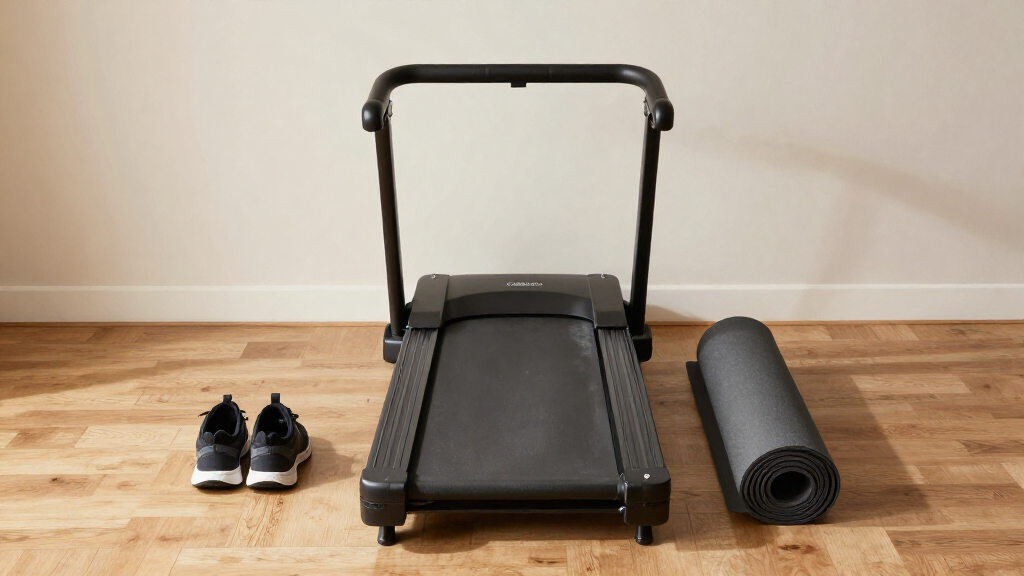
Foldable treadmills for home workouts have to solve two problems at once: they need to deliver a real training session, then disappear into a closet or slide under a sofa when you’re done. That balance is exactly where most models compromise — the slimmest walking pads rarely offer incline or handrails, while the more full-featured folders take up far more floor space than their photos suggest. After comparing 15 popular options, the Cursor Fitness Folding Treadmill with 16% Manual Incline stands out as the best overall pick because it pairs the steepest incline range in this lineup with a genuinely practical folding design. The NordicTrack T6.5S is the stronger choice if you want a traditional running deck with built-in programs, while the LONTEK Walking Pad with 15% Incline suits anyone prioritizing compact storage without giving up hill training. Keep reading for the full breakdown, including which budget models are actually worth it and which cut corners you’ll feel within a month.

Get workout gear delivered free with Prime
- Fast, free delivery on millions of items
- Prime Video, Amazon Music and more included
- Member-only deals all year
Complete the kit


Key Takeaways
- Manual incline separated the top tier from the rest: the Cursor Fitness (16%), LONTEK (15%), and the 12% incline 3.0 HP model allow meaningful hill training, while several similarly priced rivals stay flat.
- Walking pads with permanent handlebars, like the Terluxra and KASSADIN Model 380AM-VVB, fold less flat than rail-free pads but offer noticeably better balance support — a genuine tradeoff, not a free upgrade.
- Multi-function models (the KALWOL 6-in-1 and FOUSAE 5-in-1) bundle speakers, app connectivity, and incline, but their fold mechanisms are more complex, which adds weight and potential failure points.
- The NordicTrack T6.5S is the only true running treadmill here; every other pick is built for walking or light jogging, so runners should not be tempted by the slimmer walking pads regardless of price.
- Motor power varied widely — from modest walking-pad motors to the 3.0 HP folder — and this is the single best predictor of whether a machine stays smooth and quiet after months of daily use.
| Foldable Walking Pad Treadmill with Manual Incline |  | Best for Sliding Under the Sofa | Running area: 35 × 14.4 in | Folded dimensions: 40.5 × 18 × 4.7 in | Speed range: 0.6–6.2 mph | VIEW LATEST PRICE | See Our Full Breakdown |
| Terluxra Foldable Walking Pad Treadmill with Handlebar |  | Best for Desk-Side Walking | Motor: 2.0 HP | Speed range: 0.6–4 mph | Maximum weight capacity: 110 kg (242 lbs) | VIEW LATEST PRICE | See Our Full Breakdown |
| Foldable Walking Pad Treadmill with Manual Incline |  | Best Budget All-Rounder | Running area: 35 × 14.4 in | Folded dimensions: 40.5 × 18 × 4.7 in | Speed range: 0.6–6.2 mph | VIEW LATEST PRICE | See Our Full Breakdown |
| Cursor Fitness Folding Treadmill with 16% Manual Incline and LED Displays |  | Best for Heavier Users and Hill Work | Motor: 3.0 HP peak brushless | Speed range: 0.6–7.0 mph | Incline: Manual: 0%, 8%, or 16% | VIEW LATEST PRICE | See Our Full Breakdown |
| KALWOL 6-in-1 Foldable Treadmill with Speaker, App Compatibility, and 10% Incline |  | Best Overall | Speed range: 0.6–7.5 mph | Motor: 3.0 HP brushless | Incline: 10% manual adjustment | VIEW LATEST PRICE | See Our Full Breakdown |
| Foldable Incline Treadmill with Handle |  | Best for High-Incline Training | Maximum incline: 16% | Motor: 3.0 HP | Weight capacity: 400 lbs | VIEW LATEST PRICE | See Our Full Breakdown |
| FOUSAE 5-in-1 Foldable Treadmill with 10% Incline |  | Best for Programmed HIIT Workouts | Speed range: 0.6–7.5 MPH | Incline: 10% | Motor: 3.0 HP brushless | VIEW LATEST PRICE | See Our Full Breakdown |
| KASSADIN Model 380AM-VVB Folding Walking Pad Treadmill with Handle Bar and Incline |  | Best Motor and Speed Range | Motor: 3.5 HP | Speed range: 0.6–10 MPH | Incline: Supported (range unspecified) | VIEW LATEST PRICE | See Our Full Breakdown |
| LONTEK Walking Pad Treadmill with Handles, 15% Incline |  | Best Quiet Walking Pad | Incline options: Flat, 10%, 15% (manual) | Motor: 3.0 HP brushless | Speed range: 0.6–6.2 MPH | VIEW LATEST PRICE | See Our Full Breakdown |
| Foldable Home Treadmill with 3.0 HP Motor and 12% Manual Incline |  | Best Budget-Friendly Basics | Motor: 3.0 HP brushless | Incline: 12% manual | Speed range: 0.6–6.2 MPH | VIEW LATEST PRICE | See Our Full Breakdown |
| NordicTrack T6.5S Treadmill |  | Best for Interactive Training | Maximum speed: 10 mph | Incline range: 0–10% | Cushioning: KeyFlex | VIEW LATEST PRICE | See Our Full Breakdown |
| Foldable Walking Pad Treadmill with Handlebar |  | Best for Under-Desk Use | Speed modes: Walking 0.6–1.2 mph; jogging 1.9–2.5 mph; running 3.1–4 mph | Motor power: 440 W | Maximum user weight: 264 lb | VIEW LATEST PRICE | See Our Full Breakdown |
| Cardirun Foldable Treadmill with 10% Manual Incline |  | Best for Heavier Users | Motor: 3.5 HP brushless | Speed range: 1.0–7.6 mph | Incline: Manual: 0%, 3%, 10% | VIEW LATEST PRICE | See Our Full Breakdown |
| Foldable Treadmill with Handlebar for Home and Under-Desk Walking |  | Best for Programmed Walking Workouts | Speed range: 0.6–6.2 mph (1–10 km/h) | Preset programs: 12 | Countdown modes: Time, distance, calories | VIEW LATEST PRICE | See Our Full Breakdown |
| Superun Folding Incline Walking Pad Treadmill with Handrails |  | Best Slim Design with Built-In Incline | Incline: 5% fixed | Motor: 3.0 HP | Speed range: 0.6–7.5 mph | VIEW LATEST PRICE | See Our Full Breakdown |
| foldable treadmills for home workout | Speed range | Motor | Incline |
|---|---|---|---|
| Foldable Walking Pad Treadmill | 0.6–6.2 mph | 480W | Manual incline support feet |
| Terluxra Foldable Walking Pad | 0.6–4 mph | 2.0 HP | — |
| Foldable Walking Pad Treadmill | 0.6–6.2 mph | 480 W | Manual |
| Cursor Fitness Folding Treadmi | 0.6–7.0 mph | 3.0 HP peak brushless | Manual: 0%, 8%, or 16% |
| KALWOL 6-in-1 Foldable Treadmi | 0.6–7.5 mph | 3.0 HP brushless | 10% manual adjustment |
| Foldable Incline Treadmill wit | — | 3.0 HP | — |
| FOUSAE 5-in-1 Foldable Treadmi | 0.6–7.5 MPH | 3.0 HP brushless | 10% |
| KASSADIN Model 380AM-VVB Foldi | 0.6–10 MPH | 3.5 HP | Supported (range unspecified) |
| LONTEK Walking Pad Treadmill w | 0.6–6.2 MPH | 3.0 HP brushless | — |
| Foldable Home Treadmill with 3 | 0.6–6.2 MPH | 3.0 HP brushless | 12% manual |
| NordicTrack T6.5S Treadmill | — | — | — |
| Foldable Walking Pad Treadmill | — | — | — |
| Cardirun Foldable Treadmill wi | 1.0–7.6 mph | 3.5 HP brushless | Manual: 0%, 3%, 10% |
| Foldable Treadmill with Handle | 0.6–6.2 mph (1–10 km/h) | — | — |
| Superun Folding Incline Walkin | 0.6–7.5 mph | 3.0 HP | 5% fixed |
More Details on Our Top Picks
Foldable Walking Pad Treadmill with Manual Incline
This model’s defining strength is its 4.7-inch folded profile, which slides under most beds and couches — a storage advantage the Cursor Fitness treadmill can’t match at nearly the same slimness. The 6.2 mph top speed covers genuine jogging, not just strolling, and the 12 preset programs give structure to sessions that the simpler Terluxra pad lacks. Safety handrails add confidence for users who want something to grab, which matters if balance is a concern.
The tradeoffs are real, though. The 220 lb weight limit is among the lowest in this lineup, and the manual incline requires bending down to reposition support feet — fine for occasional use, tedious if you change elevation every workout. The 480W motor is adequate for walking and light jogging but will strain under sustained running.
Pros:- Ultra-thin 4.7-inch folded profile for under-furniture storage
- 6.2 mph top speed supports jogging, not just walking
- 12 preset programs plus time, distance, and calorie countdown modes
- Safety handrails and cushioned 5-layer belt
Cons:- 220 lb weight capacity excludes many adult users
- Manual incline requires stopping to adjust support feet
Best for: Apartment dwellers who need a treadmill that disappears under furniture between workouts and mostly walk or lightly jog
Not ideal for: Runners over 200 lbs or anyone wanting push-button incline changes mid-workout
- Running area:35 × 14.4 in
- Folded dimensions:40.5 × 18 × 4.7 in
- Speed range:0.6–6.2 mph
- Motor:480W
- Maximum user weight:220 lbs
- Programs:12 preset programs
- Incline:Manual incline support feet
- Display:LCD showing speed, time, distance, calories
Our verdict“Choose this if slide-away storage matters more than motor power or incline convenience.”
Terluxra Foldable Walking Pad Treadmill with Handlebar
The Terluxra is built around one idea: low-intensity movement while you work. Its three-mode structure — walking at 0.6–1.5 mph, jogging, then a capped running mode — keeps speeds in the zone where you can still type or take a call. Compare that with the KALWOL 6-in-1, which pushes to 7.5 mph: more versatile, but overkill if your goal is hitting step counts during meetings. The remote control here is genuinely useful for hands-free speed changes from a standing desk.
Where it falls short is ceiling. A 4 mph maximum means no real running, and the 242 lb capacity sits below the Cursor Fitness’s 400 lb rating. The 2.0 HP motor is smooth at walking pace but this is a commuter’s tool, not a training machine — anyone building cardio fitness will outgrow it quickly.
Pros:- Three clearly separated walking, jogging, and running modes suited to desk work
- Remote control allows speed changes without bending down
- LED display tracks speed, distance, time, and calories
- Shock-absorbing, anti-slip belt keeps noise and vibration down
Cons:- 4 mph top speed rules out genuine running
- Weight capacity of 242 lbs is lower than larger models in this roundup
Best for: Remote workers who want to accumulate steps during calls and emails without breaking a sweat
Not ideal for: Anyone who wants to run, or jog at more than a brisk 4 mph clip
- Motor:2.0 HP
- Speed range:0.6–4 mph
- Maximum weight capacity:110 kg (242 lbs)
- Display:LED; tracks speed, distance, time, calories
- Controls:Remote control
- Running belt:PVC multi-layer composite, anti-slip pattern
- Storage:Foldable with front rollers
Our verdict“A focused walking pad for workday movement — skip it if you ever plan to run.”
Foldable Walking Pad Treadmill with Manual Incline
This walking pad shares its core platform with the B0H462GMJP model — same 35 × 14.4-inch belt, same 4.7-inch fold, same 12 programs — and that’s exactly the point: it delivers the essential formula at the most accessible position in this roundup. You get a workable speed range to 6.2 mph, countdown modes for time, distance, or calories, and handrails that many bare walking pads omit. For a first home treadmill, that package covers the fundamentals without paying for extras like app connectivity or speakers, which the KALWOL adds at a higher tier.
Be honest about the limits, though. The 14.4-inch belt width feels tight compared with the KALWOL’s 16-inch surface, especially at jogging speeds, and the 220 lb cap is restrictive. The manual incline means changing elevation is a hands-on chore rather than a mid-run adjustment.
Pros:- Full feature set including 12 programs and three countdown modes
- Folds to a slim under-furniture profile
- Handrails provide stability most budget walking pads skip
- Speed range extends to genuine jogging at 6.2 mph
Cons:- Narrow 14.4-inch belt can feel confining at faster paces
- Manual incline requires stopping to adjust
- 220 lb weight limit is low for a household treadmill
Best for: First-time treadmill buyers who want core features — programs, handrails, a real fold — without paying for smart extras
Not ideal for: Taller or broader runners who need a wider, longer deck and higher weight capacity
- Running area:35 × 14.4 in
- Folded dimensions:40.5 × 18 × 4.7 in
- Speed range:0.6–6.2 mph
- Motor:480 W
- Weight capacity:220 lbs
- Programs:12 preset programs
- Incline:Manual
- Display:LCD showing speed, time, distance, calories
Our verdict“The sensible entry point of this lineup — solid fundamentals, as long as you fit within its size and weight limits.”
Cursor Fitness Folding Treadmill with 16% Manual Incline and LED Displays
The Cursor Fitness stands apart on two numbers: a 400 lb weight capacity — nearly double the walking pads in this lineup — and a 16% maximum incline that turns walks into genuine hill training. Steep incline work at walking speed burns calories comparable to flat running, which makes this model well suited to users who can’t or prefer not to run. Compared with the KALWOL, the three-position incline (0%, 8%, 16%) is blunter but simpler, and the 3.0 HP brushless motor with a sub-45 dB rating keeps things apartment-friendly.
Drawbacks exist. The 15-inch belt width is tighter than the KALWOL’s 16 inches, and at 40.8 lbs with a larger folded footprint (over 44 inches long), it’s less of a slide-under-the-sofa machine than the slim walking pads. Incline changes still require manual repositioning.
Pros:- 400 lb weight capacity is the highest in this batch
- 16% manual incline enables demanding hill workouts at walking pace
- Quiet brushless 3.0 HP motor rated at 45 dB or less
- Three LED displays plus cup holder and device holder
Cons:- 15-inch belt width feels narrow for larger frames
- Folded footprint is too long for under-bed storage
- Incline changes require stopping and repositioning
Best for: Users over 250 lbs and walkers who want serious hill-style calorie burn without high impact
Not ideal for: Anyone storing the treadmill under low furniture — the folded length exceeds 44 inches
- Motor:3.0 HP peak brushless
- Speed range:0.6–7.0 mph
- Incline:Manual: 0%, 8%, or 16%
- Weight capacity:400 lbs
- Running surface:37.5 × 15.0 in
- Folded dimensions:44.29 × 21.77 × 4.13 in
- Noise level:≤45 dB
- Displays:3 LED displays
Our verdict“The strength-and-slope pick — best for heavier users who train with incline rather than speed.”
KALWOL 6-in-1 Foldable Treadmill with Speaker, App Compatibility, and 10% Incline
This is the most complete package in the batch, and it earns the top spot on breadth rather than any single spec. With speeds to 7.5 mph, a 40 × 16-inch belt — the largest running surface here — and four use modes from under-desk walking to running, it covers scenarios that otherwise require two machines: the Terluxra handles desk work, the Cursor Fitness handles hills, but the KALWOL does both reasonably well. App support for FITSHOW, KINOMAP, and ZWIFT plus 12 HIIT programs gives it the structured-training depth no other pick matches, and arriving fully assembled removes the most common setup headache.
It isn’t flawless. The 10% incline is manual, so it loses to the Cursor Fitness’s 16% ceiling, and at 350 lbs the capacity also trails that model. The built-in speaker is a convenience, not a sound system. Still, for a one-machine household, nothing else here is as versatile.
Pros:- Largest belt in this batch at 40 × 16 inches
- Widest speed range at 0.6–7.5 mph with 12 HIIT programs
- App connectivity with FITSHOW, KINOMAP, and ZWIFT
- Arrives fully assembled with transport wheels
Cons:- Manual incline capped at 10%, below the Cursor Fitness’s 16%
- 350 lb weight capacity trails the Cursor Fitness’s 400 lbs
Best for: Households where one treadmill must serve walking, jogging, running, and under-desk duty with guided programs
Not ideal for: Maximum-incline hill trainers and users over 350 lbs — the Cursor Fitness serves both better
- Speed range:0.6–7.5 mph
- Motor:3.0 HP brushless
- Incline:10% manual adjustment
- Maximum weight capacity:350 lb
- Running belt:40 × 16 in
- Programs:12 HIIT programs
- App compatibility:FITSHOW, KINOMAP, ZWIFT
- Noise level:≤40 dB
- Assembly:None required
Our verdict“The most versatile foldable treadmill in this lineup — the right call if you want one machine for every workout style.”
Foldable Incline Treadmill with Handle
This model stands out for its 16% incline range, the steepest in this batch, which turns a folding treadmill into a legitimate hill-training tool rather than a flat walking pad. Where the LONTEK Walking Pad tops out at 15% and requires manual adjustment, this treadmill lets you push incline training harder without stepping off the deck. The 400 lb weight capacity and 42-inch handrails make it better suited to heavier runners and anyone who wants stability at incline, and the three-screen display with a pause button is a practical touch for interval sessions.
The tradeoff is complexity. Twelve preset programs and a motorized frame mean more potential failure points than simpler walking pads, and the 7-layer shock absorption system adds weight despite the slim 4-inch folded profile.
Pros:- 16% incline is the steepest in this batch for serious hill work
- 400 lb weight capacity accommodates heavier users
- Three-screen display with pause button suits interval training
- Arrives 90% pre-assembled, so setup is minimal
Cons:- Feature-heavy design means more components that can fail over time
- Heavier build makes it less convenient to move and store than slim walking pads despite the 4-inch fold
Best for: Walkers and runners who want steep incline training with high weight capacity and handrail stability
Not ideal for: Buyers wanting the simplest possible walking pad — the program-laden console is overkill for casual under-desk walking
- Maximum incline:16%
- Motor:3.0 HP
- Weight capacity:400 lbs
- Handrail height:42 inches
- Display:3-screen with pause button
- Preset speed programs:12
- Folded thickness:Approximately 4 inches
- Assembly:90% pre-assembled
Our verdict“This pick makes the most sense for users who prioritize steep incline training and a high weight ceiling over minimalist design.”
FOUSAE 5-in-1 Foldable Treadmill with 10% Incline
The FOUSAE earns its spot with 12 built-in HIIT programs and app connectivity, making it the strongest choice for buyers who want structured training without paying for a coach or subscription class. Compared with the Foldable Home Treadmill with 12% Manual Incline, which offers no programming at all, this model gives you interval structure out of the box, and the no-assembly requirement means it works the moment it’s unboxed. The 0.6–7.5 MPH range covers walking through steady running, sitting above the 6.2 MPH ceiling of most walking pads in this lineup.
The compromises are real, though. The 40 × 16 inch deck runs narrow for taller runners with longer strides, and the vague app compatibility details mean you should verify your preferred fitness app works before committing.
Pros:- 12 HIIT programs provide structured interval training out of the box
- No assembly required — usable immediately
- 7.5 MPH top speed exceeds most walking pads in this roundup
- App connectivity plus remote control offers flexible workout control
Cons:- Running deck is narrow for taller users or longer strides
- App compatibility details are unspecified, which creates uncertainty before purchase
Best for: Interval-training enthusiasts who want preset HIIT structure and app connectivity without assembly hassle
Not ideal for: Tall runners or anyone with a wide stride — the 16-inch deck width feels cramped at running speeds
- Speed range:0.6–7.5 MPH
- Incline:10%
- Motor:3.0 HP brushless
- HIIT programs:12
- Weight capacity:400 lbs
- Running deck:40 × 16 inches
- Connectivity:Compatible with fitness apps
- Assembly:No assembly required
Our verdict“Choose this one if guided HIIT programming and zero setup matter more to you than a spacious running surface.”
KASSADIN Model 380AM-VVB Folding Walking Pad Treadmill with Handle Bar and Incline
The KASSADIN’s 3.5 HP motor is the most powerful in this batch, paired with a 0.6–10 MPH speed range that outpaces both the FOUSAE (7.5 MPH) and every 6.2 MPH walking pad here. For runners who actually want to do tempo work at home, that ceiling matters — most folding treadmills in this category quietly cap out at jogging pace. The stable handles and multi-layer anti-slip deck round out a package built for genuine running rather than desk-side strolling, and the 400 lb capacity matches the FOUSAE for the highest in this group.
Two caveats keep it from a higher ranking. The incline range is unspecified, so buyers comparing hill-training options can’t verify what they’re getting, and the “quiet” motor claim comes without a decibel figure — unlike the LONTEK, which quantifies its noise below 45 dB.
Pros:- 3.5 HP motor is the most powerful in this batch
- 0.6–10 MPH range accommodates genuine running, not just walking
- Stable handles and anti-slip cushioned deck suit higher-speed workouts
- 365-day customer support with 24/7 access adds post-purchase reassurance
Cons:- Incline range is not specified, making comparison with rivals difficult
- Noise claims are unquantified despite the quiet description
Best for: Home runners who need a 10 MPH top speed and strong motor for tempo and interval runs
Not ideal for: Incline-focused buyers — without a published incline range, hill-training value can’t be verified before purchase
- Motor:3.5 HP
- Speed range:0.6–10 MPH
- Incline:Supported (range unspecified)
- Weight capacity:400 lbs
- Preset programs:12
- Deck:Multi-layer cushioning with anti-slip texture
- Customer support:365-day service access; 24/7 assistance
Our verdict“This model is better suited to runners who prioritize speed ceiling and motor power over verified incline data.”
LONTEK Walking Pad Treadmill with Handles, 15% Incline
At below 45 dB, the LONTEK is the quietest treadmill in this roundup with a published noise figure — a meaningful advantage for apartment dwellers, early-morning walkers, and anyone sharing thin walls. The three-position incline (flat, 10%, 15%) gives it more hill flexibility than the Foldable Home Treadmill’s single 12% setting, though the manual adjustment means pausing your workout to change it. Storage is a genuine strength: at 45 lb and 4.4 inches thick, it slides under furniture or stands upright, outclassing heavier options like the 16% incline model above.
The tradeoffs follow from its walking-pad identity. The 6.2 MPH ceiling limits you to walking and light jogging, and the 37.4 × 15 inch surface is narrow enough that runners should look elsewhere — the KASSADIN’s 10 MPH range exists for a reason.
Pros:- Below 45 dB operation is the quietest documented figure in this batch
- Three incline positions (flat, 10%, 15%) offer workout variety
- Stores under furniture or upright at just 45 lb
- Removable device holder and cushioned belt add daily-use comfort
Cons:- Incline changes require manual adjustment mid-workout
- Running surface is narrow and short for taller users
Best for: Apartment dwellers and shared-space users who need near-silent walking with incline options
Not ideal for: Runners — the 6.2 MPH limit and narrow 15-inch belt rule out anything faster than a light jog
- Incline options:Flat, 10%, 15% (manual)
- Motor:3.0 HP brushless
- Speed range:0.6–6.2 MPH
- Weight capacity:350 lb
- Noise level:Below 45 dB
- Running surface:37.4 × 15 in
- Item weight:45 lb
Our verdict“This pick makes the most sense for quiet-zone walkers who value discreet storage and verified low noise over speed.”
Foldable Home Treadmill with 3.0 HP Motor and 12% Manual Incline
This treadmill covers the fundamentals — incline, cushioning, folding storage, metric tracking — without the programming or app layers that push other models up in price. Compared with the FOUSAE’s 12 HIIT programs, this one offers none, but not every buyer wants them; if your routine is self-directed walking with occasional hill work, the 12% manual incline and six-layer cushioned belt deliver that reliably. A thoughtful touch is the display that saves your workout data when paused, so interruptions don’t erase your session stats — a small feature the LONTEK doesn’t advertise.
The limits are clear at both ends. The 6.2 MPH maximum speed confines you to walking pace, and the 300 lb weight capacity is the lowest in this batch, well under the 400 lb ratings of the KASSADIN and FOUSAE. Heavier users should skip it outright.
Pros:- 12% manual incline enables hill-style walking workouts
- Display retains workout metrics through pauses
- Six-layer cushioned belt reduces joint impact
- Folds with built-in wheels for easy small-space storage
Cons:- 300 lb weight capacity is the lowest in this roundup
- 6.2 MPH ceiling limits use to walking and light jogging
- Manual incline requires stopping to adjust
Best for: Budget-conscious walkers who want incline and data tracking without paying for programs they won’t use
Not ideal for: Users over 300 lbs or anyone wanting to run — the capacity and speed ceilings are the lowest here
- Motor:3.0 HP brushless
- Incline:12% manual
- Speed range:0.6–6.2 MPH
- Maximum user weight:300 lbs
- Noise level:Below 50 dB
- Running surface:38 × 15 inches
- Cushioning:6-layer non-slip belt with shock absorption
- Storage:Folds down with built-in wheels
Our verdict“A sensible choice for lighter-weight walkers who want incline capability and basic tracking at the entry end of this lineup.”
NordicTrack T6.5S Treadmill
This option stands out for buyers who want a structured, trainer-led experience rather than just a slab of moving belt. The real draw is iFIT: automatic speed and incline adjustments during guided workouts turn a basic session into something closer to a studio class, and syncing with Strava, Garmin, and Apple Health keeps training data in one place. Compared with the Cardirun, which offers a 10% manual incline and a stronger weight capacity but no coaching ecosystem, the T6.5S trades raw value for connectivity and motivation. KeyFlex cushioning is a genuine plus for runners who log frequent miles and want less joint punishment. The tradeoff is hard to ignore, though: without a paid iFIT membership, many of the connected features — including the ActivePulse heart-rate programming — sit behind a paywall, and the Bluetooth monitor costs extra.
Pros:- Trainer-led iFIT workouts with automatic speed and incline adjustments
- 10 mph top speed and 10% incline cover walking through running
- KeyFlex cushioning reduces joint impact for frequent runners
- Syncs training data with Strava, Garmin, and Apple Health
Cons:- Core connected features locked behind a paid iFIT membership
- Bluetooth heart-rate monitor sold separately
Best for: Runners who thrive on guided, trainer-led workouts and want automatic incline and speed adjustments during sessions
Not ideal for: Budget-conscious buyers who dislike subscriptions — most connected features require a paid iFIT membership, and the heart-rate monitor is a separate purchase
- Maximum speed:10 mph
- Incline range:0–10%
- Cushioning:KeyFlex
- Frame:Foldable
- Display:LCD
- Connectivity:Strava, Garmin, and Apple Health via iFIT membership
- Heart-rate feature:ActivePulse; Bluetooth monitor sold separately
- Membership:iFIT Train required for connected features
Our verdict“Choose the T6.5S if coaching and app connectivity drive your workouts — and skip it if you want a fully featured treadmill without a subscription.”
Foldable Walking Pad Treadmill with Handlebar
If the goal is stacking steps during work hours, this model makes more sense than anything else in the lineup. The removable handlebar lets it double as an under-desk walking pad, and the 10.5 cm folded profile slides under a bed or behind a sofa — noticeably slimmer than the Superun, which folds flat but keeps fixed handrails permanently attached. The 440 W motor runs quietly enough for shared offices and calls. That said, the speed ceiling is the story here: 4 mph means brisk walking at best, so runners should look at the NordicTrack T6.5S or Cardirun instead. Converting between handlebar and desk modes also means unscrewing bolts, which discourages frequent back-and-forth switching. Compared with the similarly compact B0GWR4874N, it trades jogging capability for a more office-friendly footprint and a lower-profile fold.
Pros:- Ultra-slim 10.5 cm fold fits under beds and desks
- Removable handlebar converts it to an under-desk walking pad
- Quiet 440 W motor suits shared workspaces
- Remote control and LED display for easy mid-task adjustments
Cons:- Maximum speed of 4 mph is walking-only
- Handlebar removal requires unscrewing bolts
Best for: Remote workers and office users who want a walking pad that slides under a desk and stores in a closet or under furniture
Not ideal for: Runners or anyone who wants to jog — the 4 mph ceiling limits this to walking paces
- Speed modes:Walking 0.6–1.2 mph; jogging 1.9–2.5 mph; running 3.1–4 mph
- Motor power:440 W
- Maximum user weight:264 lb
- Running area:90 × 38 cm
- Folded dimensions:104 × 48.7 × 10.5 cm
- Display:Time, speed, calories, distance (LED)
- Features:Remote control, pause button, removable handlebar, phone holder, built-in wheels, five-layer non-slip belt
- Frequency:50–60 Hz
Our verdict“A strong pick for desk-based walkers who value storage over speed — not for anyone who plans to run.”
Cardirun Foldable Treadmill with 10% Manual Incline
The 400 lb weight capacity is what sets this model apart — most walking pads in this roundup, like the Superun at 300 lbs or the under-desk pads at 264 lbs, cap out well below it. That sturdier build comes with a genuinely capable 3.5 HP brushless motor that stays under 45 dB, plus three manual incline positions up to 10% for calorie-burning hill work without increasing speed. Unlike the NordicTrack T6.5S, there’s no subscription required to unlock features: 12 preset programs, app control, and voice control all work out of the box. The compromises are real, though. Incline changes mean stepping off and repositioning the deck manually, and the 7.6 mph top speed falls short of the T6.5S’s 10 mph, limiting serious tempo runs.
Pros:- 400 lb weight capacity, well above typical folding treadmills
- Three manual incline settings up to 10%
- Powerful 3.5 HP brushless motor under 45 dB
- 12 preset programs, app and voice control with no subscription
Cons:- Incline must be adjusted manually by repositioning the deck
- 7.6 mph maximum speed caps serious running
Best for: Heavier users up to 400 lbs who want a stable, subscription-free treadmill with incline training
Not ideal for: Faster runners chasing tempo or interval paces — the 7.6 mph ceiling and manual incline adjustments slow them down
- Motor:3.5 HP brushless
- Speed range:1.0–7.6 mph
- Incline:Manual: 0%, 3%, 10%
- Maximum weight capacity:400 lbs
- Running area:16 × 40 in
- Noise level:Under 45 dB
- Programs:12 preset programs, 3 countdown modes
- Folded dimensions:20.5 × 23.6 × 47.2 in
- Assembly:95% pre-assembled
Our verdict“The pick for bigger riders who refuse to sacrifice incline training or program variety — just accept manual incline changes and a moderate speed ceiling.”
Foldable Treadmill with Handlebar for Home and Under-Desk Walking
Where most budget walking pads hand you a belt and a remote, this model adds 12 preset programs plus three countdown modes for time, distance, and calories — a level of structure usually reserved for pricier machines like the NordicTrack T6.5S. That makes it a smart fit for walkers who want goal-driven sessions without paying for a coaching membership. The speed range of 0.6 to 6.2 mph comfortably covers brisk walking and light jogging, giving it more range than the 4 mph under-desk walking pad while keeping the same 264 lb capacity. At 48.5 lbs with a 5.7-inch folded height, it’s reasonably easy to stash away. The main drawback is the 15-inch belt width, which feels tight for broader strides or anyone who shifts position while moving — wider-footed walkers may prefer the Cardirun’s 16-inch deck.
Pros:- 12 preset programs plus time, distance, and calorie countdown modes
- 0.6–6.2 mph range covers walking through light jogging
- Light at 48.5 lbs with a slim 5.7-inch folded profile
- 5-layer cushioned belt with 6 silicone pads and handlebar support
Cons:- Running belt is only 15 inches wide
- Not built for faster running beyond light jogging
Best for: Walkers and light joggers who want structured, goal-based workout programs without a subscription
Not ideal for: Users with wide strides or larger frames — the 15-inch belt and 264 lb capacity feel restrictive
- Speed range:0.6–6.2 mph (1–10 km/h)
- Preset programs:12
- Countdown modes:Time, distance, calories
- Running belt:15 × 39.4 in, 5-layer cushioning
- Shock absorption:6 silicone pads and 8 shock-absorbing elements
- Maximum user weight:264 lbs (120 kg)
- Folded dimensions:45.4 × 21.9 × 5.7 in
- Weight:48.5 lbs (22 kg)
Our verdict“A well-rounded choice for structured walking routines on a budget — pass it by if you need a wider deck or running speeds.”
Superun Folding Incline Walking Pad Treadmill with Handrails
This model’s pitch is simple: a permanent 5% incline baked into a 7-inch-tall folding frame. That fixed tilt means every session burns more calories and engages more muscle than flat walking pads, with zero setup or fiddling — a contrast to the Cardirun, which reaches 10% but requires manually repositioning the deck. Handrails and an emergency safety key add confidence for balance-conscious users, something the bare under-desk walking pads skip entirely. Control flexibility is solid, with app, remote, and console options. The catches: because the incline never changes, there’s no flat-walking option for easy recovery days, and the 7.5 mph ceiling sits below the NordicTrack T6.5S’s 10 mph. Compared with other slim pads, though, it offers more speed range and more safety hardware for the footprint.
Pros:- Fixed 5% incline boosts calorie burn with zero setup
- 7-inch slim folding design with transport wheels
- Handrails and emergency safety key for secure workouts
- App, remote, and console control options with Bluetooth
Cons:- Incline is fixed and cannot be adjusted or leveled out
- Top speed limited to 7.5 mph
Best for: Space-limited users who want built-in incline training and handrail safety without any setup hassle
Not ideal for: Anyone who wants adjustable or flat-walking options — the fixed 5% grade is always on
- Incline:5% fixed
- Motor:3.0 HP
- Speed range:0.6–7.5 mph
- Weight capacity:300 lbs
- Noise level:Less than 45 dB
- Dimensions:52 × 19 × 7 in
- Controls:App, remote, and console (Bluetooth)
- Material:Alloy steel
Our verdict“Ideal for compact-space buyers who want effortless incline walking with safety rails — a poor match for runners or anyone who wants flat-deck variety.”

How We Picked
My ranking logic starts with the defining promise of this category: a treadmill that folds small enough to live in a small space without feeling like a compromised machine. I evaluated each model on folded footprint and whether it could slide under furniture or needed wall storage, since that determines whether the machine actually gets used daily or becomes an obstacle. From there, I compared training capability — incline range, motor output, speed ceiling, and weight capacity — because a folding mechanism means nothing if the workout itself plateaus within a month. Stability and support mattered too: models with handlebars and longer decks scored better for walkers with balance concerns, while rail-free pads earned points for storage.
Finally, I weighed build quality signals like deck cushioning, display usability, and warranty coverage against the feature set, because foldable designs introduce hinges and moving parts that cheap construction handles poorly. Products that bundle features (apps, speakers, multiple training modes) were judged on whether those extras genuinely improved workouts or just inflated the spec sheet. The final order reflects a simple hierarchy: machines that fold compactly and train hard rank highest, one-dimensional but excellent-value options sit in the middle, and models with meaningful compromises in stability, incline, or fold design rank lower regardless of their feature count.
Factors to Consider When Choosing Foldable Treadmills For Home Workouts
Choosing between foldable treadmills comes down to honestly assessing three things: how much floor space you can spare, whether you walk or run, and how important incline training is to your routine. The guide below covers the factors that most often make or break the purchase.Folding Style: Under-Desk Pad vs. Upright Folder
The single biggest decision is which type of folding mechanism fits your home. Walking pads like the LONTEK or Superun fold in half lengthwise and slide under a bed or sofa, which makes them nearly invisible when not in use — but their decks are narrower and their speed ceilings are lower. Traditional upright folders like the NordicTrack T6.5S hinge at the base and stand vertically against a wall, preserving a full-size running deck at the cost of a bulky silhouette even when folded. A common mistake is buying an upright folder for an apartment and discovering it still dominates the room when stored. Measure your storage space in all three dimensions before choosing, and remember that a machine you have to wrestle into storage will stop being folded at all within weeks.
Manual Incline: How Much Hill Do You Actually Need?
Incline is the cheapest way to multiply the value of a walking workout, and the difference between a flat deck and a 15% grade is enormous — roughly doubling calorie burn at the same walking speed. But manual incline means you set it before your session and can’t change it mid-workout, which is why range matters more than adjustability here. The steep options in this lineup (12–16%) let you simulate serious hills, while 10% models cover the middle ground most walkers actually use daily. One mistake I see often: buyers assume more incline is always better, but steep settings raise the deck height, which matters if you have low ceilings or plan to walk under a standing desk. If your goal is casual daily movement rather than conditioning, a flat or shallow-incline pad will serve you fine and fold flatter.
Motor Power and Weight Capacity
Motor output determines not just top speed but how smooth and quiet the machine stays over time. Underpowered motors working near their limit run hot, degrade faster, and produce the belt stutter that ruins a walking session. As a rule, walking-only users can get by with a smaller motor, but anyone over 200 pounds or planning daily sessions should favor the stronger options — the 3.0 HP folder in this roundup is the clearest example of a motor built to last. Weight capacity is the honest proxy for overall build quality: a higher limit usually means a sturdier frame, thicker deck, and better bearings. Don’t buy a machine rated barely above your body weight, because that rating assumes ideal conditions, not daily use with slight belt misalignment.
Handrails and Stability vs. Slimness
Handlebars are the most underrated decision point in this category. Models like the Terluxra and KASSADIN add front handlebars that help with balance, getting on and off safely, and holding a phone steady — real benefits for older walkers or anyone rehabilitating an injury. The tradeoff is structural: rails add width, weight, and hinge points, so these machines never fold as thin as rail-free pads. If you’re a confident walker in a small space, skip the rails and enjoy the slimmer fold. If you’ve ever felt wobbly on gym equipment or plan to walk while watching a screen hands-free, the rail-equipped models earn their extra bulk. There’s no universally right answer here, only the one that matches your body and habits.
Smart Features: What’s Worth Paying For
App connectivity, built-in speakers, and preset programs are where brands pad spec sheets, so judge these extras coldly. App compatibility is worthwhile if you actually follow structured workouts — the KALWOL’s app support gives you guided sessions that keep a walking routine from going stale. Speakers, by contrast, are almost always worse than any Bluetooth speaker you already own, and their inclusion often signals a higher price without a better walk. Preset programs matter more on motorized-incline machines, where they can automate intensity; on manual-incline folders they’re mostly timer variations. My advice: pay for motor, deck, and fold quality first, and treat every smart feature as a bonus rather than a reason to choose one model over another.
Deck Size and Cushioning
Deck dimensions are where compact treadmills quietly compromise, and it’s the spec buyers most often regret ignoring. A short or narrow deck forces a shortened, careful stride — tolerable for slow walking, miserable for anything brisker. Taller users with long strides should prioritize running-belt lengths found on traditional folders like the NordicTrack over the compact pads. Cushioning follows the same logic: thin walking-pad decks transmit more impact into your joints and more vibration into the floor, which matters if you live above neighbors. If joint comfort or downstairs neighbors are part of your situation, a thicker cushioned deck is worth both the extra folded bulk and the higher price. Walk on the side of generosity when sizing your deck — your stride at the end of a tired session is longer than you think.
Frequently Asked Questions
Can you actually run on a foldable walking pad, or is walking the limit?
For most walking pads in this category, walking and light jogging are the realistic limit — their motors, belts, and decks simply aren’t built for the repeated impact of a running stride. The exceptions are traditional folding treadmills with full-size decks, like the NordicTrack T6.5S, which handles genuine running the way a gym machine does. A useful rule: if the deck folds in half lengthwise and slides under a sofa, treat it as a walker. Pushing a walking pad to run daily will shorten the motor’s life, loosen the belt, and void most warranties. If running is your primary goal, accept the larger folded footprint of an upright folding treadmill from the start rather than replacing a broken pad in a year.
Is a 16% manual incline noticeably better than a 10% one?
Yes, and the difference is larger than the numbers suggest. Incline effects compound — at walking speeds, moving from 10% to 16% raises calorie burn and leg engagement disproportionately because you’re lifting your bodyweight through a much steeper angle. The Cursor Fitness with its 16% range can replicate serious hill training, while 10% models like the KALWOL or FOUSAE top out at a moderate hill. That said, most people’s everyday comfortable walking incline sits between 4% and 10%, so if your goal is steady daily movement, the extra range may go unused. Choose the steeper machine if weight loss or hiking conditioning is a goal; choose the flatter-folding 10% models if compact storage matters more than maximum intensity.
Do handlebars get in the way of using a treadmill under a standing desk?
They can, and this is one of the most common setup disappointments. Fixed handlebars add height that often collides with the desk surface, forcing an awkward desk raise or making you walk off-center on the belt. Rail-free pads like the standard walking pads in this lineup are the natural fit for under-desk use because their profile stays below typical desktop height. Handlebar-equipped models such as the Terluxra or LONTEK work better positioned in front of a desk or facing a wall-mounted screen instead. Before buying, measure both the pad’s height with rails attached and your desk’s clearance — the difference between a smooth dual-purpose setup and a returned product is usually just a few inches.
How much floor space do I need for a foldable treadmill once it’s unfolded?
Plan for the machine’s full working footprint plus buffer space on all sides — roughly the length of the deck plus two feet behind you for safe mounting and dismounting. A typical walking pad needs an area around 5 feet long by 2 feet wide when in use, while a traditional folding treadmill demands closer to 7 by 3 feet. Also account for ceiling height if you’ve chosen a steep manual incline, since a raised deck plus your own height can surprise you under a sloped or low ceiling. Check whether the folded machine needs to stay plugged in or can be stored flat in another room entirely. Buyers who measure only the folded dimensions routinely discover the unfolded footprint doesn’t fit their walkway, which is a problem no folding mechanism solves.
Are the budget folding treadmills durable enough for daily use?
It depends entirely on how you use them. A budget walking pad carrying a lighter user at moderate walking speeds for 30–45 minutes a day will generally hold up, and options like the Cardirun or standard foldable pads deliver honest value at that usage level. The failure points appear when you exceed the design envelope: heavier users, near-maximum speeds, or multi-hour daily sessions overwhelm small motors and thin decks, producing belt drift, motor noise, and eventually failure. Check the stated weight capacity and stay at least 15–20% under it for long-term durability. If your routine involves daily long sessions or a higher body weight, spending up for the 3.0 HP model or the NordicTrack is cheaper than replacing a budget machine twice.
Conclusion
After comparing all 15 models, the right choice comes down to matching the machine to your space and training goals rather than chasing the longest spec sheet. For the best overall balance, the Cursor Fitness Folding Treadmill wins with its category-leading 16% incline and practical folding design — it trains hard and stores easily, which is the whole point of this category. For the best value, the Cardirun with 10% manual incline delivers the core foldable-treadmill experience without paying for extras you may never use. For the premium choice, the NordicTrack T6.5S is the only pick here built like a real gym treadmill, with the deck size and program library to back it up — accept the larger footprint in exchange. For beginners, the Terluxra with its handlebar offers reassuring stability while you build the walking habit, and for under-desk and small-space walkers, the rail-free foldable pads that slide under furniture are the clear fit. Whatever you choose, prioritize the fold mechanism you’ll actually use daily and an incline range that matches your ambition — those two factors separated the winners from the compromises in this lineup more than any other.
Halloween Picks
halloween
As an affiliate, we earn on qualifying purchases.