
TL;DR

Get workout gear delivered free with Prime
- Fast, free delivery on millions of items
- Prime Video, Amazon Music and more included
- Member-only deals all year
Fit&Well reports that physical therapist Erin Cannon recommends thread the needle, banded shoulder external rotations and shoulder CARs as mobility exercises for maintaining shoulder range of motion. Cannon suggests starting with two to three sets of five to 10 repetitions three times weekly, while adjusting the workload to individual ability and consulting a doctor about injuries or mobility concerns.
Fit&Well has reported that Erin Cannon, a physical therapist with Hackensack Meridian JFK Johnson Rehabilitation Institute, recommends three mobility exercises for people seeking to maintain shoulder movement as they age: thread the needle, banded shoulder external rotations and shoulder CARs. Cannon says the movements may help maintain range of motion and encourage circulation around the joint; the report does not present them as a guarantee against injury.
The exercises use a combination of body-weight movement and resistance-band work. Thread the needle is performed on hands and knees: rotate the torso and reach one arm upward, then bring that shoulder toward the mat while sliding the arm beneath the body. The sequence is repeated on both sides, with the core engaged and without excessive rounding or arching through the back.
For banded external rotations, stand with feet hip-width apart, hold a resistance band and bend the elbows to about 90 degrees. Keep the elbows close to the sides while rotating the shoulders to pull the band apart, then return to the starting position. Cannon’s form guidance includes avoiding excessive arching in the lower back. A rolled towel between the elbows and torso can help keep the elbows in place.
Shoulder CARs, or controlled articular rotations, are performed standing. Slowly move one arm through a controlled circle, keeping it as close to the body as possible and staying within a comfortable range. The source recommends repeating in both directions and on both sides. Cannon suggests two to three sets of five to 10 repetitions, three times per week, but says the suitable volume varies by person. People new to regular exercise are advised to begin at the lower end of the range and build gradually.
Keeping Everyday Shoulder Movement
Shoulder discomfort can interfere with routine activities such as getting dressed or putting away shopping, the Fit&Well report notes. Mobility work is one practical way to include controlled shoulder movement in an exercise routine, alongside strengthening the muscles around the joint. The report attributes the recommendation to Cannon, but supplies no study results showing that these three specific exercises prevent injuries or provide the same benefit for everyone.
The guidance also emphasizes that exercise should be adapted to the individual. A suggested repetition range is a starting point, not a fixed prescription: the source says sets and repetitions can differ from person to person. That distinction matters for readers who may have pain, restricted movement or a prior injury, since the article directs those with injuries or mobility concerns to speak with a doctor before attempting the moves.
Products Worth Considering

Fitbit Sense Advanced Smartwatch – Sage Grey/Silver (One Size, S & L Bands Included)

Fitbit Versa Smart Watch – Black Aluminum, One Size (S & L Bands Included)

Bowflex SelectTech 840 Adjustable Kettlebell
As an affiliate, we earn on qualifying purchases.
The PT’s Exercise Guidance
The Fit&Well report presents mobility work as a complement to strengthening the muscles around the shoulder, rather than as a replacement for strength training. Its three selections cover different types of movement: torso rotation and reaching in thread the needle, resisted outward rotation with a band, and slow circular movement through the shoulder’s available range in CARs.
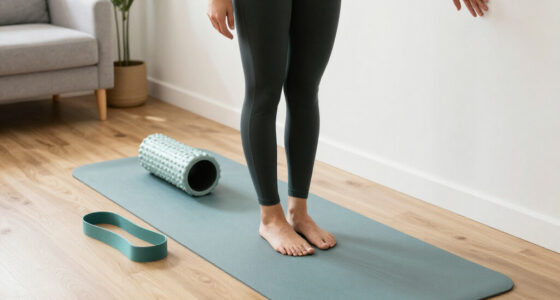
The article recommends an exercise mat and resistance band for the full routine. Across the movements, the form cues focus on keeping the trunk steady, engaging the core and avoiding forceful movement beyond a comfortable range. Cannon also advises maintaining vertical posture to support shoulder range of motion. The source does not provide a clinical trial, a comparison with other routines or a detailed schedule for people with specific shoulder conditions.
“A general standard to follow could be two to three sets of five to 10 reps, three times per week.”
— Erin Cannon, physical therapist at Hackensack Meridian JFK Johnson Rehabilitation Institute, as quoted by Fit&Well
Limits of the Exercise Advice
The supplied report does not give a publication date, cite research testing these three exercises as a set, or quantify how much they affect shoulder mobility or injury risk. Cannon’s reported rationale is that the movements can help maintain range of motion and encourage circulation; readers should not interpret that as proof that the routine will prevent shoulder problems.
It is also unclear from the article how the routine should be modified for particular diagnoses, persistent pain or substantial limitations in movement. The report advises people with injuries or mobility concerns to speak with a doctor before trying the exercises. It does not provide individual medical assessment, and the suggested frequency and repetitions are not presented as suitable for everyone.
How Readers Can Apply the Routine
The report does not announce a follow-up study or a further clinical milestone. For readers considering the exercises, the next step is to use the described form cues, begin with fewer repetitions if new to regular exercise, and increase gradually only as comfortable. Anyone with an injury or mobility concern should seek medical advice before starting, as Cannon recommends.
During each movement, keep the range controlled and avoid forcing the shoulder or arching and rounding the back. If the exercises cause pain or feel unsuitable, stop rather than treating the article’s general repetition guidance as a requirement. The source does not set out a specific response plan for pain, so individual concerns should be discussed with a qualified health professional.
Key Questions
Which three shoulder mobility exercises does the physical therapist recommend?
Fit&Well reports that Erin Cannon recommends thread the needle, banded shoulder external rotations and shoulder CARs (controlled articular rotations).
How often does the report suggest doing the exercises?
Cannon gives a general guide of two to three sets of five to 10 repetitions, three times per week. She says the appropriate amount can vary by person, and beginners should start at the lower end and build gradually.
What equipment is needed?
The reported routine calls for an exercise mat and a resistance band. The mat is used for thread the needle, while the band is used for external rotations.
Should someone with shoulder pain or an injury try these moves?
The report advises speaking with a doctor before attempting the exercises if you have an injury or mobility concerns. It does not provide individualized guidance for particular conditions.
Are these exercises proven to prevent shoulder injuries?
The supplied report does not establish that the three exercises prevent injuries. It attributes to Cannon the view that they can help maintain range of motion and encourage circulation around the joint.
Source: fitandwell.com