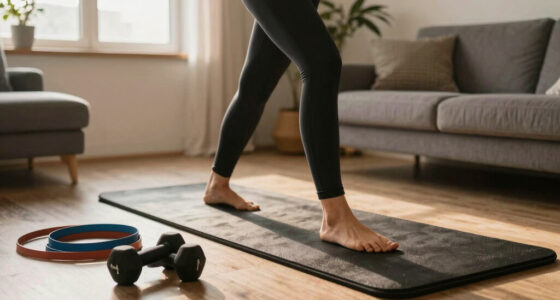

The right exercise mat for home workouts depends on one big tradeoff: cushioning versus stability. Thick mats like the Retrospec Solana 1-Inch protect your knees and spine during floor work but feel squishy under jumping jacks or dumbbell work, while firmer, high-density options like the CAP Barbell Folding Mat handle high-impact circuits and equipment better. For most home gyms, the GXMMAT Extra Wide Exercise Mat takes the top spot because its massive footprint covers a full workout area and its 7mm thickness balances grip, cushioning, and stability. Budget buyers get real value from the Amazon Basics Extra Thick Mat with Carrying Strap, and anyone doing intense HIIT or kettlebell training should look at the SUPERJARE Rubber Top Mat. Read on for the full breakdown, including which mats to skip and why.

Get workout gear delivered free with Prime
- Fast, free delivery on millions of items
- Prime Video, Amazon Music and more included
- Member-only deals all year
Complete the kit


Key Takeaways
- Extra-large mats (6’x4′ and bigger) dominated the top of the ranking because home workouts involve more lateral movement than studio classes — a standard 68-inch mat forces you to reposition constantly during burpees, mountain climbers, and dumbbell work.
- Thickness beyond amazon.com/dp/B01LP0UX9G?tag=thefitnessdailyreport-20&ascsubtag=dc-601895″ target=”_blank” rel=”nofollow sponsored noopener”>amazon.com/dp/B0DR5SMHVB?tag=thefitnessdailyreport-20&ascsubtag=dc-601895″ target=”_blank” rel=”nofollow sponsored noopener”>8mm hurt performance for anything except stretching and Pilates; the 1-inch options (Retrospec Solana, SUPERJARE) were the best knee-savers but the worst choices for balance poses and plyometrics.
- The biggest quality dividing line in this lineup was surface material, not foam density — rubber-top mats like the SUPERJARE held grip when sweaty, while cheaper PVC surfaces became slippery within a hard session.
- Two products appear twice in this list under identical or near-identical listings (Amazon Basics and Retrospec Solana), which usually signals popular marketplace listings worth comparing on price at checkout rather than treating as separate options.
- Folding panel mats like the CAP Barbell 72-inch model solved a problem rolled mats cannot: easy storage in small apartments and stable, equipment-friendly platforms — but they cost meaningfully more per square foot.
- Bulk packs like the LEIFIDE 10-Pack only make sense for families or trainers; solo buyers pay a premium for quantity they will never use.




| exercise mats for home workout | Thickness | Material | Dimensions | Surface |
|---|---|---|---|---|
| 8mm & 10mm Thick Large Yoga Ma | 8mm or 10mm | POE (eco-friendly) | 6′ x 4′ | Non-slip reversible texture |
| CAP Barbell 1/2-Inch High Dens | 1/2 inch | NBR foam | 68 x 24 inches | Textured |
| CAP Barbell Folding Exercise M | — | High-density foam | 72" L x 24" W x 2" thick | — |
| Amazon Basics Extra Thick Exer | 0.5 inches | Foam | 74 x 24 x 0.5 inches | Textured for traction |
| GXMMAT Extra Wide Large Exerci | 7mm | High-density memory foam | — | Double-sided non-slip |
| GymCope Large Exercise Mat for | 7mm | High-density PVC | — | Anti-slip, shock-absorbing |
| Amazon Basics Extra Thick Exer | 0.5 inches | NBR foam | 74 x 24 x 0.5 inches | Textured for traction |
| Retrospec Solana Yoga Mat 1 In | 1 inch | Non-slip, BPA-free foam | 72 x 24 inches | — |
| Gogokiwi Large Yoga Mat | 1/2 inch (12mm); also available in 1/4 inch | 100% recyclable Recfoam | 72 x 48 inches (6′ x 4′) | — |
| SUPERJARE 1-Inch Extra-Thick R | 1 inch | — | — | Non-slip rubber |
| VTORY Extra Large Exercise Mat | — | — | — | — |
| LEIFIDE 10 Pack Yoga Mat 68” | — | — | — | — |
| Retrospec Solana Yoga Mat 1" T | — | — | — | — |
More Details on Our Top Picks
8mm & 10mm Thick Large Yoga Mat (6’x 4′) – Extra Long and Wide Non-Slip Eco-Friendly Exercise Mat for Yoga and Pilates
This mat earns the top spot because it balances size, cushioning, and clean materials better than anything else in this lineup. The 6’x4′ footprint gives room for full-body stretches and floor work without the bulk of a folding panel mat, while the choice between 8mm and 10mm thickness lets buyers tune the firmness to their routine. Compared with the Amazon Basics Extra Thick mat, the larger dimensions make it far better suited to home workouts that involve movement across the floor rather than stationary poses. The odorless POE construction also matters here — many foam mats carry a chemical smell for weeks, and this one avoids that entirely.
The tradeoff is handling. At 2.3 kg and unrolled daily, it tends to curl at the inner end until it breaks in, and it’s heavier than a standard 24-inch mat if you plan to move it between rooms.
Pros:- Generous 6’x4′ footprint accommodates full-body movements
- Eco-friendly, odorless POE material with no break-in smell
- Two thickness options (8mm/10mm) for different comfort needs
- Reversible double-textured design effectively gives you two mats
Cons:- Inner end stays curled after unrolling until broken in
- At 2.3 kg it’s heavier than standard mats for frequent moving
Best for: Home users who want one generous mat for yoga, Pilates, and stretching without chemical odors
Not ideal for: Anyone who needs to roll up and stow the mat after every session — the weight and initial curling get annoying fast
- Dimensions:6′ x 4′
- Thickness:8mm or 10mm
- Material:POE (eco-friendly)
- Weight:2.3 kg
- Surface:Non-slip reversible texture
- Odor:Odorless
- Best use:Yoga, Pilates, home floor work
Our verdict“The most well-rounded pick for a dedicated home workout space where the mat can stay laid out.”
CAP Barbell 1/2-Inch High Density Exercise Yoga Mat with Strap
For the price-conscious buyer, this CAP Barbell mat delivers the essentials — 1/2-inch NBR foam cushioning, latex-free construction, and a carrying strap — without the premium you pay for oversized options. It’s a traditional 68 x 24-inch format, which means it costs far less than the 6’x4′ eco-friendly mat while still offering comparable thickness for joint comfort during floor exercises and stretching. The mold and mildew resistance is a practical bonus for basements or humid home gyms where cheaper mats can degrade.
Where it falls short is stability and size. Unlike the GXMMAT’s double-sided non-slip surface, no non-slip backing is specified, so it can slide on hard floors during dynamic movements. And the narrow width limits side lunges and floor circuits — buyers who need space should step up to a large-format mat.
Pros:- 1/2-inch high-density NBR foam cushions knees and spine well
- Latex-free and mold/mildew resistant for sensitive users and damp spaces
- Lightweight with included carrying strap for easy transport
Cons:- No non-slip backing specified, so it can shift on smooth floors
- Standard 24-inch width is cramped for full-body or lateral movements
Best for: Budget-minded buyers doing yoga, stretching, and ab work who want thick cushioning for under the price of a large mat
Not ideal for: People doing cardio or dynamic floor circuits — the narrow width and unconfirmed grip make it prone to sliding
- Material:NBR foam
- Thickness:1/2 inch
- Dimensions:68 x 24 inches
- Surface:Textured
- Hypoallergenic:Latex-free
- Resistance:Mold and mildew resistant
- Includes:Carrying strap
Our verdict“A sensible budget pick for stationary stretching and yoga, as long as you don’t need grip or extra room.”
CAP Barbell Folding Exercise Mat – 72″L x 24″W x 2″ Thick
When a workout involves jumping, gymnastics moves, or strength training on the floor, rolled foam mats simply aren’t thick enough. This 2-inch high-density folding mat solves that with serious impact absorption, and its tri-fold design with handles makes storage genuinely easy — something the GXMMAT extra-wide mat, which must be rolled and can weigh a great deal at its largest sizes, can’t match. The ability to connect multiple mats with Velcro also means you can build a padded zone over time rather than buying one huge surface upfront.
The tradeoff is precision. Two inches of foam is far too soft and thick for balance poses or yoga flows — you’ll wobble in standing postures. It’s also a firm rectangular panel rather than something you’d roll, so it lives folded in a closet or under a bed. For anything requiring floor feel, the thinner mats in this roundup are better choices.
Pros:- 2-inch high-density foam absorbs impact far beyond any rolled mat here
- Folds flat with handles for compact storage and carrying
- Connects with additional mats to expand a home gym floor
- Non-toxic materials safe for kids and adults
Cons:- Too thick and soft for yoga, balance work, or proprioceptive exercises
- Panel format takes up flat storage space instead of rolling compactly
Best for: Home gym users doing HIIT, core work on hard floors, gymnastics, or strength training that needs serious padding
Not ideal for: Yoga practitioners — the 2-inch foam is too unstable for balance poses and grounded postures
- Dimensions:72″ L x 24″ W x 2″ thick
- Material:High-density foam
- Cover:Anti-tear outer shell
- Design:Folding panels with carry handles
- Expandable:Connectable with other mats
- Safety:Non-toxic materials
- Color:Black
Our verdict“The clear pick for high-impact home training, and the wrong one for anyone who mainly does yoga.”
Amazon Basics Extra Thick Exercise Yoga Mat with Carrying Strap
This is the no-frills starter mat: 1/2 inch of foam, a textured surface, and a carrying strap at a price that makes it easy to commit to before knowing whether home workouts will stick. Compared with the CAP Barbell 1/2-inch mat, it offers a slightly longer 74-inch length that helps taller beginners keep their head and feet on the mat during savasana or floor stretches. The extra-thick foam is forgiving on knees and tailbone, which is exactly what a newcomer notices first.
The compromises are real, though. The foam is softer and less dense than premium options, so it compresses over months of use and offers little stability for balance poses — experienced yogis will find it squishy. It’s also bulky when rolled, and there’s no mention of a non-slip underside, so a towel underneath helps on hardwood.
Pros:- 1/2-inch thickness cushions joints well for new exercisers
- 74-inch length suits taller users better than standard 68-inch mats
- Carrying strap included for gym or class transport
- Textured surface provides basic traction
Cons:- Foam compresses and loses support with regular long-term use
- Bulky when rolled and lacks a stated non-slip backing
Best for: Workout beginners and casual users who want comfortable cushioning cheaply while testing the habit
Not ideal for: Serious yogis or anyone over 6 feet doing dynamic flows — the foam is too soft and it’s a narrow standard width
- Material:Foam
- Thickness:0.5 inches
- Dimensions:74 x 24 x 0.5 inches
- Surface:Textured for traction
- Color:Pink
- Includes:Carrying strap
- Best use:Yoga, gym workouts, daily exercise
Our verdict“A low-risk first mat for building the workout habit — upgrade later if you stick with it.”
GXMMAT Extra Wide Large Exercise Mat 12’x7’/10’x7’/8’x7′ (7mm)
This is less a mat and more a portable workout floor. At up to 12’x7′, it covers the footprint of a whole home gym zone, which is what cardio dance, Insanity-style routines, and kettlebell flows actually require — the 8mm 6’x4′ yoga mat simply can’t contain lateral shuffles or traveling moves. The double-sided non-slip surface is the standout safety feature here: unlike the CAP Barbell folding mat, which is padded but panel-based, this gives continuous grip across the entire area while still offering 7mm of cushioning. The included gloves, Velcro straps, and carry bag round out a genuinely complete package.
The price of that coverage is practicality. At these dimensions the mat is heavy and awkward to move regularly, and storing a rolled 12-foot cylinder demands serious closet or garage space. It makes sense only if you have a dedicated workout room.
Pros:- Up to 12’x7′ coverage replaces multiple separate mats
- Double-sided non-slip surface keeps footing safe during cardio
- 7mm high-density memory foam cushions jumps and floor work
- Includes gloves, Velcro straps, and carry bag
Cons:- Very heavy and difficult to move or roll at larger sizes
- Huge rolled footprint makes storage in small homes impractical
Best for: Home gym owners with a dedicated space who do cardio, dance, or equipment-based workouts across a large floor area
Not ideal for: Apartment dwellers or anyone sharing space — the largest sizes are heavy, hard to roll alone, and dominate a room
- Available sizes:12’x7′, 10’x7′, 8’x7′
- Thickness:7mm
- Material:High-density memory foam
- Surface:Double-sided non-slip
- Safety:Non-toxic materials
- Includes:Gloves, Velcro straps, carry bag
- Best use:Cardio, dance, home gym workouts
Our verdict“If you have a dedicated workout room and move around a lot, this replaces every small mat you’d otherwise buy.”
GymCope Large Exercise Mat for Home Workouts
Most mats in this roundup are sized for one person, which is exactly why the GymCope stands out: its six size options, ranging from 6×4 ft up to a massive 12×6 ft, give families or couples enough shared floor space to work out side by side. The 7mm high-density PVC hits a middle ground — thicker and more tear-resistant than the CAP Barbell 1/2-inch mat, but firmer than the 1-inch Retrospec Solana, so it handles jumping jacks and kettlebell flows without bottoming out. Compared with the Gogokiwi 6×4 mat, it trades cushioning for raw durability and area coverage. The tradeoff is storage: the larger sizes roll into a bulky, heavy cylinder, so apartment dwellers will struggle to stash it in a closet. Still, for a garage or basement setup where two or more people train together, nothing else here covers this much ground.
Pros:- Six size options from 6×4 ft to 12×6 ft for multi-person workouts
- Tear-resistant high-density PVC survives high-intensity training
- Shock-absorbing, anti-slip surface keeps landings stable
- Includes carrying bag, three straps, and a microfiber towel
Cons:- Largest sizes are cumbersome to store when rolled up
- 7mm thickness is firm underfoot for extended floor work
Best for: Families or couples who want a single mat large enough for two or more people to train on together
Not ideal for: Apartment dwellers with limited storage — the large sizes are heavy and bulky to roll up and stash
- Sizes:12×6, 10×6, 9×6, 8×6, 7×5, 6×4 ft
- Thickness:7mm
- Material:High-density PVC
- Surface:Anti-slip, shock-absorbing
- Includes:Carrying bag, 3 hook-and-loop straps, microfiber towel
- Best Use:Solo, couple, or family home workouts
Our verdict“Buy this if two or more people in your household train together and you have the floor space to justify it.”
Amazon Basics Extra Thick Exercise Yoga Mat with Carrying Strap
At its price point, the Amazon Basics Extra Thick mat delivers the kind of 0.5-inch NBR foam cushioning that usually costs considerably more. The padding is noticeably softer than the firmer GymCope PVC mat, making floor exercises like sit-ups and stretching more comfortable, though anyone doing balance poses will find it too squishy underfoot — a tradeoff shared with the even thicker 1-inch Retrospec Solana. The textured surface gives reasonable grip, and the included carry strap is a small but real convenience compared with mats that ship with nothing. It lacks the oversized footprint of the Gogokiwi or VTORY options, so dynamic full-body routines will spill off the edges. As a low-cost entry point for casual daily exercise at home, though, this pick makes the most sense for buyers who want comfort first and don’t want to pay for features they won’t use.
Pros:- Half-inch NBR foam is plush under knees, hips, and spine
- Textured surface adds traction on hard floors
- Carrying strap included at no extra cost
- Easy to wipe clean after sweaty sessions
Cons:- Bulky rolled profile takes up more closet space than thin mats
- Excess cushioning undermines stability for standing and balance work
Best for: Budget-conscious beginners doing bodyweight, stretching, and ab work at home
Not ideal for: Yogis who need stable ground contact — the thick foam compresses under hands and feet in balance poses
- Material:NBR foam
- Thickness:0.5 inches
- Dimensions:74 x 24 x 0.5 inches
- Surface:Textured for traction
- Includes:Carrying strap
- Color:Black
Our verdict“The cheapest comfortable way to start a home floor-workout routine — just don’t expect yoga-studio stability.”
Retrospec Solana Yoga Mat 1 Inch Thick with Nylon Strap
The Solana’s full inch of padding is the standout feature here — thicker than the Amazon Basics mat’s half-inch and dramatically softer than the 7mm GymCope, making it the friendliest option in this batch for sensitive knees, hips, and tailbones. That plushness comes at a price in stability: compared with the thinner CAP Barbell 1/2-inch mat, the surface compresses more under hands and feet, which experienced yogis will notice in balance postures. The BPA-free, non-slip construction and included nylon strap round out a well-thought-out package for gentle home practice. Buyers should know it arrives with a harmless initial odor that needs a few days to off-gas, and cleaning requires air drying rather than a quick hose-off. This model is better suited to restorative yoga, stretching, and seniors than to HIIT or plyometrics, where a firmer, wider mat wins.
Pros:- Full 1 inch of padding protects knees, hips, and spine
- Non-slip surface keeps poses stable despite the thickness
- BPA-free material safe for daily skin contact
- Nylon strap makes it easy to roll and carry
Cons:- Emits a harmless odor for the first several days
- Cannot be submerged in water and requires air drying after cleaning
Best for: Older adults, restorative yogis, and anyone with sensitive joints doing low-impact floor work
Not ideal for: HIIT and plyometric training — the soft 1-inch surface is unstable for jumps and dynamic movement
- Thickness:1 inch
- Dimensions:72 x 24 inches
- Material:Non-slip, BPA-free foam
- Includes:Nylon carrying strap
- Best Use:Yoga, Pilates, stretching
- Care:Spot clean only, air dry
Our verdict“The most joint-friendly mat in this lineup for gentle yoga and stretching — skip it for high-impact training.”
Gogokiwi Large Yoga Mat (6’x4′)
The Gogokiwi splits the difference between oversized floor mats and comfort mats, and that positioning is its whole appeal. At 72 x 48 inches, it offers over twice the surface of a standard mat — room for full sprawls, dumbbell work, or a stretching partner — while the 12mm Recfoam cushioning approaches the plushness of the Retrospec Solana without going full pillow-soft. Compared with the GymCope, it trades durability and family-scale coverage for a lighter, easier-to-roll design with a hook-and-loop strap; compared with the narrower Amazon Basics mat, it simply erases the constant repositioning that comes with a 24-inch width. The patterned top is a genuine plus if your workout area doubles as living space. The tradeoff: at this size and thickness, rolling it up is still a two-arm workout, and the foam surface won’t shrug off shoe traffic or dropped weights the way a rubber-topped mat will.
Pros:- 72 x 48 inches gives 112% more space than a standard mat
- 12mm of cushioning supports joints, seniors, and plus-size users
- 100% recyclable Recfoam is a healthier, greener material choice
- Stylish patterns suit visible living-space workout areas
Cons:- Large, thick roll is awkward to store daily
- Foam surface is less durable than PVC or rubber tops under heavy use
Best for: People doing floor-based workouts at home who keep sliding off a standard mat and want comfort plus room to spread out
Not ideal for: Shoe-wearing or equipment-heavy training — the foam surface marks and compresses under repeated impact
- Dimensions:72 x 48 inches (6′ x 4′)
- Thickness:1/2 inch (12mm); also available in 1/4 inch
- Material:100% recyclable Recfoam
- Coverage:112% more area than a standard mat
- Includes:Hook-and-loop roll-up strap
- Best Use:Yoga, Pilates, stretching, floor fitness
Our verdict“The best pick for sprawling floor workouts at home when you want cushioning and space in one mat — as long as training stays shoeless.”
SUPERJARE 1-Inch Extra-Thick Rubber Top Exercise Mat
This is the only option in the lineup built like actual gym flooring rather than a personal mat. Twelve interlocking 24 x 24-inch tiles cover 48 square feet with a rubber top over EVA foam, which means dropped weights, kettlebell swings, and jumping rope stay quiet while the subfloor stays intact — something no roll-out mat here can claim, including the tough-but-thinner GymCope. The interlocking format also lets you customize or expand coverage, unlike fixed-size options from VTORY or GXMMAT. The flip side is weight and permanence: these tiles are heavy to move alone, the seams can loosen at the edges over time in high-traffic zones, and the rubber layer carries an initial odor. Compared with the Gogokiwi, this trades softness for armor. This pick makes the most sense for a dedicated garage or basement gym where equipment lives on the floor permanently.
Pros:- Rubber top layer withstands dropped weights and equipment
- Excellent shock absorption cuts noise for downstairs neighbors
- Interlocking tiles allow custom layouts and expansion
- 12 tiles cover 48 sq ft — far more than any single mat here
Cons:- Heavy and awkward to rearrange or move by yourself
- Interlocking edges can separate over time in high-traffic areas
- Rubber surface emits an odor when new
Best for: Home gym owners in garages or basements who drop weights and need floor and noise protection
Not ideal for: Renters or anyone wanting a roll-out mat for yoga — these tiles are heavy, semi-permanent, and firm underfoot
- Thickness:1 inch
- Tile Size:24 x 24 inches
- Number of Tiles:12
- Total Coverage:48 sq ft
- Construction:High-density EVA foam base with rubber top
- Surface:Non-slip rubber
- Best Use:Home gyms, garages, basements
Our verdict“If your home workouts involve a barbell and a rack, this is the floor protection your subfloor needs — everyone else should stick with a roll-out mat.”
VTORY Extra Large Exercise Mat – 8mm Thick, Multiple Sizes
The VTORY Extra Large Exercise Mat stands out for buyers whose home workouts go beyond yoga — think burpees, mountain climbers, and dumbbell work that demand room to move. With five size options up to a sprawling 10’x5′ and 8mm of shock absorption, it covers more floor than the standard 68-inch mats in this roundup, meaning knees and elbows stay protected during floor-based cardio. Compared with the GXMMAT Extra Wide Large Exercise Mat, the VTORY trades a slightly thinner profile for tear-resistant HPE construction that holds up under shoe-wearing HIIT sessions. The double-sided texture keeps grip reliable on both carpet and hardwood. The tradeoff is portability: at these dimensions it’s heavy and awkward to relocate, so it works best as a semi-permanent fixture in a dedicated workout corner rather than something you roll out and stow daily.
Pros:- Five size options up to 10’x5′ accommodate jumping, lunging, and full-body movement
- 8mm shock absorption protects joints during high-impact cardio
- Tear-resistant HPE material survives shoe-wearing workouts better than standard yoga mats
- Double-sided non-slip texture works on both carpet and hard flooring
Cons:- Heavy and cumbersome to move or reposition frequently
- Grip degrades without regular cleaning, especially with sweat buildup
Best for: Home HIIT and cardio enthusiasts who need a large, durable surface they can leave laid out in a dedicated workout space
Not ideal for: Apartment dwellers or multi-use living rooms where the mat must be moved and stored after every session
Our verdict“If your living room doubles as a HIIT studio and you can leave a mat down permanently, this is the spacious, joint-friendly platform to build around.”
LEIFIDE 10 Pack Yoga Mat 68” x 24” x 4mm
Most mats in this roundup are built for one person; the LEIFIDE 10 Pack exists for households where everyone works out at once. At roughly the price of a single premium mat like the Retrospec Solana, you get ten individual mats with embossed non-slip texture and included carry straps — a math that makes sense for family fitness nights, kids’ stretching routines, or anyone running small group sessions from home. The 4mm EVA foam is lightweight and waterproof, wiping clean easily after sweaty sessions. But the tradeoffs are real: 4mm is thin for kneeling or floor work compared with the 8mm VTORY, quality control is looser in bulk sets (small holes have been reported), and there’s a noticeable initial odor that takes days to air out. This is quantity over refinement — and for the right buyer, that’s exactly the point.
Pros:- Ten mats at a per-unit cost far below buying individually
- Embossed anti-slip texture delivers solid grip despite the low price
- Lightweight with included straps for easy carrying to outdoor sessions
- Waterproof EVA foam wipes clean quickly between users
Cons:- Mild chemical odor on arrival that can take days to dissipate
- Occasional small holes reported due to bulk manufacturing tolerances
- 4mm thickness offers minimal cushioning for knees and spine
Best for: Families, home-school fitness programs, or small group instructors who need multiple mats at a low per-mat price
Not ideal for: Solo practitioners who want one high-cushion mat for daily yoga or joint-sensitive floor work
Our verdict“Buy this when headcount matters more than plushness — one serious yogi should look elsewhere in this roundup.”
Retrospec Solana Yoga Mat 1″ Thick with Nylon Strap
At a full inch of thickness, the Retrospec Solana is the softest landing in this lineup, aimed squarely at buyers whose knees, hips, or spine complain on thinner mats. Where the CAP Barbell 1/2-Inch High Density Mat balances cushion against stability, the Solana goes all-in on comfort — seated poses, stretching, and restorative yoga feel noticeably better on it. The nylon carry strap makes it easy to move between rooms or take outdoors, and the chemical-free construction appeals to anyone sensitive to strong smells… though this mat still carries a mild initial odor that needs airing out. The honest tradeoff: an inch of foam means an inch of wobble. Balance poses and fast position changes feel less planted than on firmer mats, and it must be air-dried rather than soaked. It’s a comfort-first choice, and it doesn’t pretend otherwise.
Pros:- Full inch of thickness provides the deepest cushioning in this roundup
- Non-slip surface keeps poses steady despite the plush foam
- Included nylon strap makes it genuinely portable for a mat this thick
- Free of harmful chemicals for daily bare-skin contact
Cons:- Extra thickness creates instability during balance poses
- Must be air-dried and cannot be submerged, slowing cleanup
Best for: Older adults, restorative yoga practitioners, and anyone with sensitive joints who prioritizes cushioning over stability
Not ideal for: Balance-focused yogis and fast-flow practitioners who need a firmer, more stable surface for standing poses
Our verdict“If sore knees dictate your practice, this is the most forgiving mat here — just don’t expect rock-solid footing in tree pose.”
How We Picked
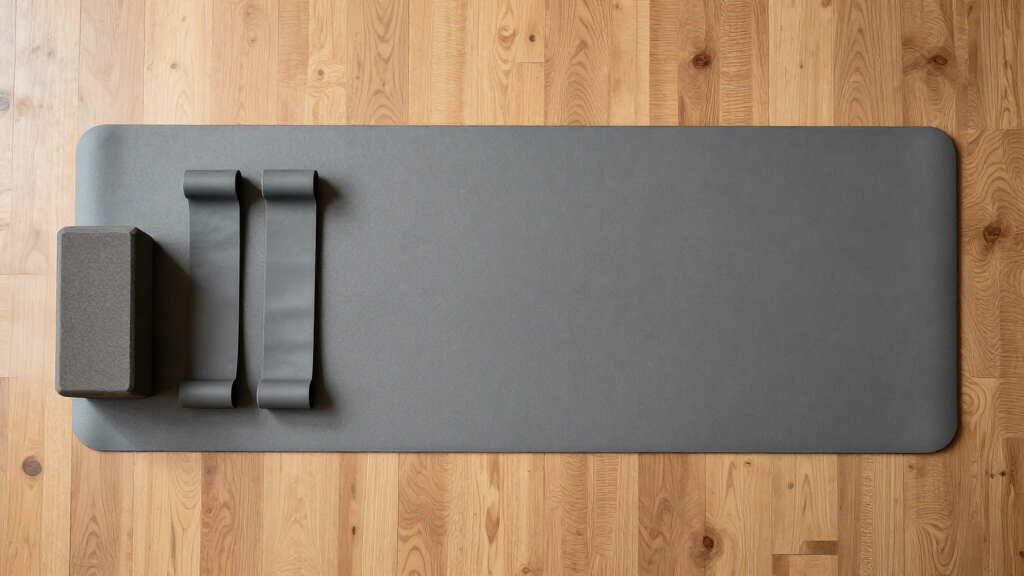
I evaluated every mat in this lineup against the demands of home workouts specifically, not studio yoga. That meant scoring each option on five factors: cushioning versus stability (does it protect joints without wobbling under lunges or jump squats), size and coverage (can it host a full circuit without stepping off the edge), grip and surface durability (does it hold when sweaty, and does it resist tearing under shoes and equipment), storage and portability (a real constraint when your gym is also your living room), and price per usable square foot rather than sticker price alone.
The ranking order reflects a simple priority: mats that work for the widest range of home training — strength, cardio, stretching, and floor work — placed higher than mats optimized for a single activity. That is why the large-format mats lead the list and the thick 1-inch recovery mats sit lower despite their plushness. Where two listings were essentially the same product, I treated them as one pick and noted the duplication so you can just buy whichever is cheaper on the day.
| exercise mats for home workout | Surface | Includes |
|---|---|---|
| 8mm & 10mm Thick Large Yoga Ma | Non-slip reversible texture | — |
| CAP Barbell 1/2-Inch High Dens | Textured | Carrying strap |
| CAP Barbell Folding Exercise M | — | — |
| Amazon Basics Extra Thick Exer | Textured for traction | Carrying strap |
| GXMMAT Extra Wide Large Exerci | Double-sided non-slip | Gloves, Velcro straps, carry bag |
| GymCope Large Exercise Mat for | Anti-slip, shock-absorbing | Carrying bag, 3 hook-and-loop straps, microfiber towel |
| Amazon Basics Extra Thick Exer | Textured for traction | Carrying strap |
| Retrospec Solana Yoga Mat 1 In | — | Nylon carrying strap |
| Gogokiwi Large Yoga Mat | — | Hook-and-loop roll-up strap |
| SUPERJARE 1-Inch Extra-Thick R | Non-slip rubber | — |
| VTORY Extra Large Exercise Mat | — | — |
| LEIFIDE 10 Pack Yoga Mat 68” | — | — |
| Retrospec Solana Yoga Mat 1" T | — | — |
Factors to Consider When Choosing Exercise Mats For Home Workouts
Before clicking buy on the first thick mat you see, it helps to understand what actually separates a mat that lasts years from one that curls, slips, and smells like chemicals within a month. These are the factors that shaped my ranking — and the mistakes I saw repeated across dozens of buyer reviews.
Thickness: Where Most Buyers Go Wrong
The most common mistake is assuming thicker is always better. Anything over 10mm of low-density foam creates instability — your hands sink during planks, your feet wobble during lunges, and single-leg balance work becomes frustrating. A 1-inch mat is genuinely great for sit-ups, stretching, and rehab-style movement, but it is the wrong tool for HIIT or strength circuits. For mixed home training, 6mm to 8mm of high-density foam hits the sweet spot: enough cushioning for floor work, firm enough for footwork. High-density foam at 6mm will outperform cheap low-density foam at 12mm every time, which is why I prioritized density over raw thickness in the rankings.
Size: Buy for Your Workout Footprint, Not Your Body
Standard yoga mats are 68 inches long and 24 inches wide, which is fine for a static practice and cramped for everything else. Home workouts involve lateral movement — skaters, jumping jacks, renegade rows — and a mat narrower than 4 feet turns every exercise into a boundary-management problem. Measure your actual workout space and the footprint of your widest movement before choosing. Oversized mats (the GXMMAT, VTORY, and 6’x4′ options in this list) also protect your floor from dropped dumbbells and sweat, which is a hidden cost saver if you train over hardwood. The tradeoff: giant mats are heavy, awkward to roll, and harder to store, so they suit a dedicated workout corner rather than a multipurpose room.
Surface Material and Grip When Sweaty
Foam density gets all the marketing attention, but the surface layer is what determines whether a mat keeps you safe mid-session. PVC surfaces common on budget mats feel grippy when dry and become ice rinks once your palms sweat — a genuine injury risk during plank variations and push-ups. Rubber or textured TPE surfaces, like the SUPERJARE’s rubber top, maintain traction under moisture. If you already own a slippery mat, a towel over the contact zones is a legitimate fix, but buying the right surface from the start is cheaper. Also check whether the mat is rated for shoes; some surfaces scuff and tear permanently under cross-trainers.
Storage Reality: Rolling Versus Folding
Be honest about where the mat lives between workouts. A 10mm rolled mat 6 feet wide does not disappear into a closet — it becomes furniture. Folding panel mats exist precisely for small-space athletes: they slide under a bed or sofa in seconds and lay completely flat with no curling at the edges. Rolled mats, by contrast, arrive curled and can take days to flatten, and cheap ones never fully recover. If your workout space doubles as a living room, prioritize folding construction or a mat with a strap that stays tightly wound. This single practical factor disqualified some otherwise excellent oversized mats for apartment dwellers.
Chemical Smell and Off-Gassing
Cheap PVC and low-grade EVA foam mats arrive with a strong chemical odor that can linger for weeks and signals higher off-gassing — a real issue if you train face-down on the mat daily. Higher-quality TPE and natural rubber options cost more but are typically non-toxic certified and smell-free within a day or two. Airing out any new mat for 48 to 72 hours before first use helps, but it will not fix a genuinely cheap one. Buyers with chemical sensitivities, kids who share the mat, or anyone doing breathing-focused work on the floor should treat material quality as a health purchase, not a luxury. This is one area where spending $20 more genuinely changes the product you get.
When to Pay More — and When Not To
Premium pricing in this category buys three things: durable surface material, consistent foam density that does not compress permanently within months, and larger formats. If you train five or more times per week with weights or shoes, a premium mat pays for itself because budget mats under heavy use develop compressed dead zones within a season. If you do gentle stretching, yoga, or occasional core work two or three times a week, a $25 to $40 mat is completely adequate — the extra money buys durability you will not consume. Multipacks are only a value for families, studios, or coaches; a solo buyer should never pay for nine spare mats.
Frequently Asked Questions
Is a 1-inch thick mat better than an 8mm mat for home workouts?
Only for specific activities. A 1-inch mat excels at floor-based work — sit-ups, stretching, Pilates, and anything where your spine or knees press into the ground — and it is the better choice if you have sensitive joints. But for mixed training that includes planks, lunges, balance work, or plyometrics, that same thickness becomes a liability because your hands and feet sink into the foam and destabilize your form. An 8mm high-density mat handles the widest variety of movements, which is why it won most of the top slots in this comparison. If your workouts are 80 percent cardio and strength with occasional floor work, go 8mm; if they are mostly stretching and core work on the floor, go thicker.
What size exercise mat do I need if my workout space is small?
For apartments and small rooms, the practical decision is between a large mat you leave down permanently and a folding mat you stow after each session. If your space must return to living-room duty daily, a folding panel mat like the CAP Barbell 72-inch model is the smarter buy — it stores under a bed and lays perfectly flat. If you have a dedicated corner, an oversized rolled mat up to about 6’x4′ still works as long as you accept it stays out. Measure your widest movement (jumping jacks with arms overhead need roughly 7 feet horizontally) and buy for that, not your height. Going too small is the most common regret in this category because the mat ends up defining your workout space instead of supporting it.
Why do two products in this list appear twice?
The Amazon Basics Extra Thick Mat and the Retrospec Solana appear as duplicate or near-duplicate listings, which is common on large marketplaces when a product is sold through multiple sellers or listing variations. Rather than padding the list with different products to reach thirteen, I kept both listings visible because they rank on price at different times — the same mat is often $10 to $15 cheaper through one listing on a given day. Treat them as one pick and buy whichever version is cheaper when you check out. This is also a useful signal: duplicated listings usually indicate a genuinely popular product with enough demand to sustain multiple sellers.
Can I use dumbbells and wear shoes on these mats?
It depends on the surface, and this is where cheap mats fail fastest. Foam-only mats will dent permanently if you drop a dumbbell on them, and shoe treads can scuff and tear PVC surfaces within weeks. The SUPERJARE with its rubber top layer is the best option in this lineup for shoe and equipment use because rubber resists abrasion and impact far better than foam. If you plan to lift on the mat regularly, either choose a rubber-surfaced model, add a dedicated rubber tile zone for drops, or accept that a soft mat will need replacing. For shoe-free bodyweight and yoga work, surface durability matters much less and any well-made mat will hold up for years.
How do I stop a new exercise mat from being slippery or curling?
Both problems are common and mostly temporary. New mats ship with a release residue from manufacturing — wiping the surface with a diluted vinegar solution or mild soap and water, then letting it dry fully, removes most of the factory slipperiness within one or two cleaning sessions. Curling happens because mats are stored rolled for months; unroll yours flat, weigh the corners with books or dumbbells for 24 to 72 hours, and it will flatten in most cases. If a mat is still slippery after cleaning or still curled after three days, that points to low-grade material rather than a break-in issue, and returning it is reasonable. Spending the first two days prepping a mat properly is the difference between loving it and replacing it.
Conclusion
Matching the right mat to your training style matters more than any single spec on a product page. Best overall goes to the GXMMAT Extra Wide Exercise Mat — its huge footprint and balanced 7mm thickness handle strength, cardio, and floor work in one surface, which is exactly what mixed home training demands. Best value is the Amazon Basics Extra Thick Mat with Carrying Strap, which delivers dependable cushioning and storage at a price that leaves room in the budget for actual equipment. Best premium pick is the SUPERJARE Rubber Top Mat: the rubber surface justifies the higher cost for anyone training in shoes or with weights.
For beginners, the Retrospec Solana 1-Inch is the gentlest entry point — plush enough that sore joints never become an excuse to skip a session, as long as your workouts stay floor-focused. Small-space buyers should choose the CAP Barbell Folding Mat for its under-the-bed storage, while families or trainers are the only group for whom the LEIFIDE 10-Pack makes financial sense. Whatever you choose, size for your movement footprint, match thickness to your training style, and do not pay for plushness you will not use.
Halloween Picks
halloween
As an affiliate, we earn on qualifying purchases.