
TL;DR

Get workout gear delivered free with Prime
- Fast, free delivery on millions of items
- Prime Video, Amazon Music and more included
- Member-only deals all year
Physical therapist Dr. Marivi Lao recommends a figure four, kneeling hip flexor stretch and supine hip twist for people looking to work on hip mobility. She suggests one to three repetitions, holding each for 20–30 seconds per side, two to four times a week, while avoiding pain or forcing a deeper stretch.
Physical therapist Dr. Marivi Lao recommends three stretches—the figure four, kneeling hip flexor stretch and supine hip twist—for people who want to work on hip mobility. In a Fit&Well report, Lao says to start with one to three repetitions and hold each stretch for about 20–30 seconds per side, two to four times a week, with a gentle rather than painful sensation.
Lao, who works with Spear Physical Therapy, says prolonged sitting keeps the hips bent and can leave some people feeling stiff or tight when they stand. She recommends moving around regularly as well as trying targeted stretches. Her suggested schedule is a starting point, not a requirement: people who enjoy stretching and find it comfortable can include the movements in a daily routine.
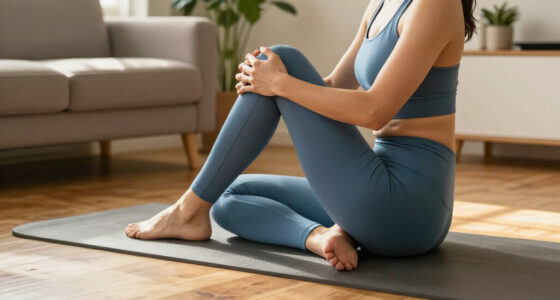
For the figure four, lie on your back with knees bent, place one ankle above the opposite knee, then lift the supporting foot and gently draw that thigh toward your chest. Lao advises keeping the crossed foot flexed and relaxing the shoulders and pelvis. The stretch should be felt mainly around the glute and outer hip; discomfort in the knee or a pinching feeling in the hip is a reason to ease off and adjust. A bed can be used if getting down to the floor is difficult.
The kneeling hip flexor stretch starts in a half-kneeling position, with the front knee bent and the other knee on the floor. Slightly tilt the pelvis and move forward until there is a stretch at the front of the back hip; squeezing that side’s glute can deepen the sensation. Lao warns against arching the lower back to push farther forward. The supine hip twist is done lying on your back with knees bent, slowly lowering them from side to side for 20–30 seconds. Lao describes it as gentle rotation, not an effort to reach the floor.
A Gentle Range, Not a Test
The advice offers readers a practical routine while making clear that mobility differs from person to person. Lao defines it as having enough comfortable range of motion for everyday movement without feeling restricted, rather than achieving a particular depth in a stretch. That distinction matters because trying to force a position can shift movement into other areas, such as the lower back, or cause discomfort.
Lao says a stretch should create a gentle-to-moderate pull, not pain. Holding your breath, tensing your whole body or fighting to get farther are signals to back off. The report also notes that stretching is not the only element of a mobility routine: Lao recommends pairing it with hip-strengthening work, such as resistance-band marches. The material does not establish that these stretches prevent or treat a medical condition.
As an affiliate, we earn on qualifying purchases.
Sitting and Hip Stiffness
The report focuses on people who spend much of the day seated. Lao explains that remaining with the hips bent for hours may be followed by a feeling of stiffness or tightness on standing. Her response is to combine regular movement breaks with targeted stretches, rather than relying on a single movement or demanding an identical range of motion from everyone.
Fit&Well presents the routine as practical exercise guidance attributed to Lao, not as a clinical trial or a formal treatment protocol. The suggested frequency—two to four times weekly—and duration of 20–30 seconds per side are her recommendations in the report. It also offers adjustments: the figure four and supine twist can be done on a bed, while a standing lunge variation can replace the kneeling hip flexor stretch for people who prefer not to kneel.
“I think of mobility as having enough comfortable range of motion to move through your day without feeling restricted.”
— Dr. Marivi Lao, physical therapist with Spear Physical Therapy, as quoted by Fit&Well
As an affiliate, we earn on qualifying purchases.
Limits of the Stretching Advice
The supplied report does not state when the article was published, cite research testing this exact three-stretch sequence, or provide evidence that it produces a particular outcome. Lao’s frequency and form guidance is expert advice attributed to her; the report does not establish how quickly someone might notice a change or whether the routine is suitable for every person.
It is also not clear from the material whether a reader’s stiffness has another cause. The advice is framed for general mobility, not diagnosis or treatment. Anyone who experiences pain, persistent symptoms or difficulty performing the movements should avoid forcing them and seek guidance from a qualified health professional.
As an affiliate, we earn on qualifying purchases.
How to Start the Routine
Lao’s suggested starting point is to try one to three repetitions of each stretch, holding for 20–30 seconds per side, two to four times per week. Move slowly, breathe normally and stop or adjust if a position causes pain, pinching or marked tension. People can use a bed for the floor-based movements if that makes them easier to perform, or choose the standing lunge version of the hip flexor stretch.
The report does not announce a follow-up study or a new clinical guideline. For readers who try the routine, the next step is to judge it by comfort and everyday movement rather than by how far the hips rotate or stretch. Lao also recommends adding targeted hip-strengthening exercises, including resistance-band marches, while the article provides no detailed strength program or individualized plan.
As an affiliate, we earn on qualifying purchases.
Key Questions
Which three stretches does the physical therapist recommend?
Dr. Marivi Lao recommends the figure four, a kneeling hip flexor stretch and a supine hip twist.
How long and how often should I hold the stretches?
Lao suggests one to three repetitions, holding each for about 20–30 seconds per side, two to four times weekly. She says people who enjoy the stretches and find them comfortable may do them daily.
Should the stretches hurt?
No. Lao says to expect a gentle-to-moderate pulling sensation, not pain. Ease off if you are holding your breath, tensing, forcing the position or feeling a pinch.
What if I cannot get down to the floor?
The report says the figure four and supine twist can be done on a bed. Lao also suggests a standing lunge variation for people who prefer not to kneel for the hip flexor stretch.
Are the stretches a treatment for hip pain?
The report presents them as general mobility exercises, not as treatment for a condition. It does not establish that they resolve pain or diagnose its cause; seek professional advice for persistent symptoms or pain.
Source: rss
Halloween Picks
halloween
As an affiliate, we earn on qualifying purchases.